
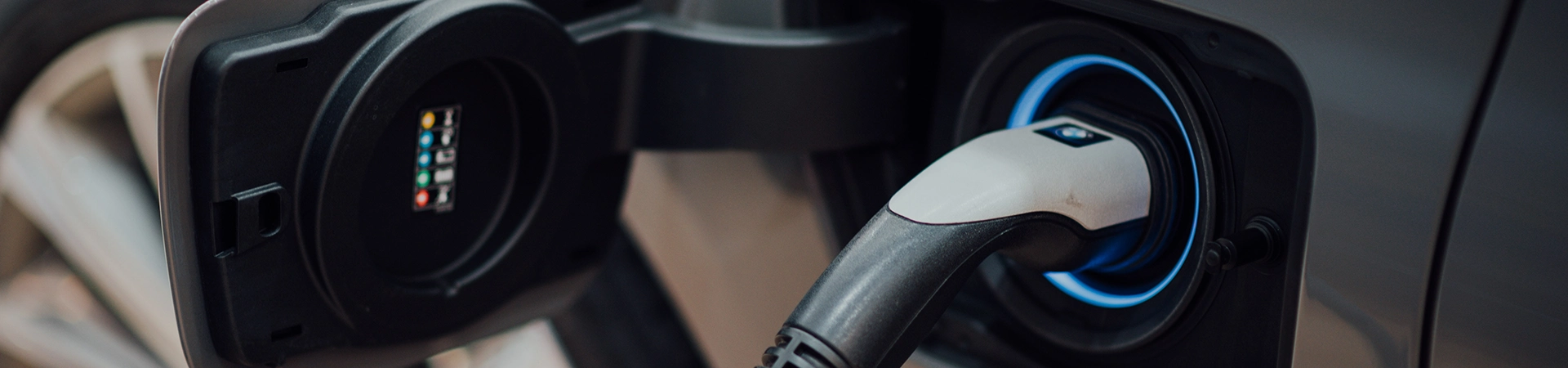
EV charger installer in Luxembourg
Your EV charger, correctly sized
Ecoclima assesses and installs smart EV chargers for homes, residential buildings and businesses in Luxembourg. Each project is sized according to the vehicle, electrical panel, available power and charging habits.
Where relevant, we also integrate dynamic load balancing, energy monitoring and solar surplus charging.
- Electrical assessment
- Panel, grid connection, protection devices and cable route
- Smart charging
- Load balancing, monitoring and solar surplus where relevant
- Local service
- Based in Munsbach, serving Luxembourg
5+ years of expertise, 1,000+ buildings equipped and a displayed rating of 4.9/5 across all Ecoclima activities.
View our referencesHome EV charging
An installation designed around your parking space
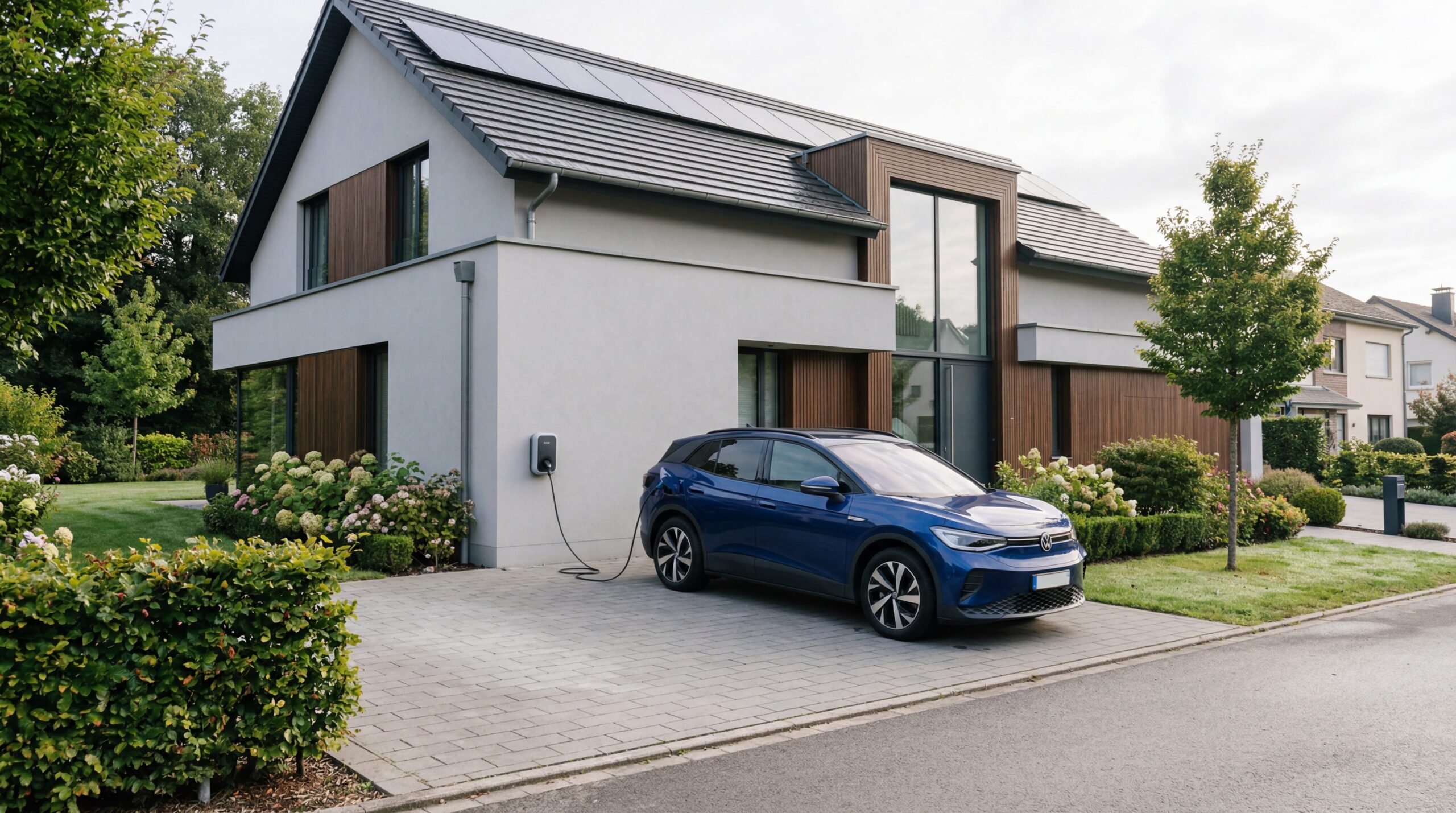
Garage, carport or external wall: Ecoclima assesses the cable route, charger protection and everyday access before defining the installation location.
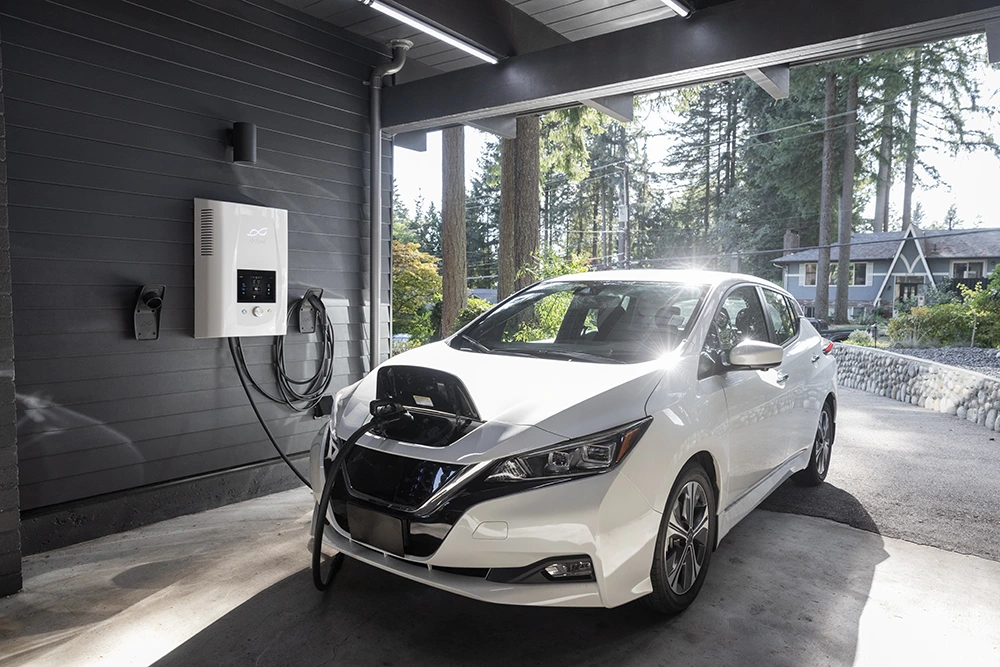
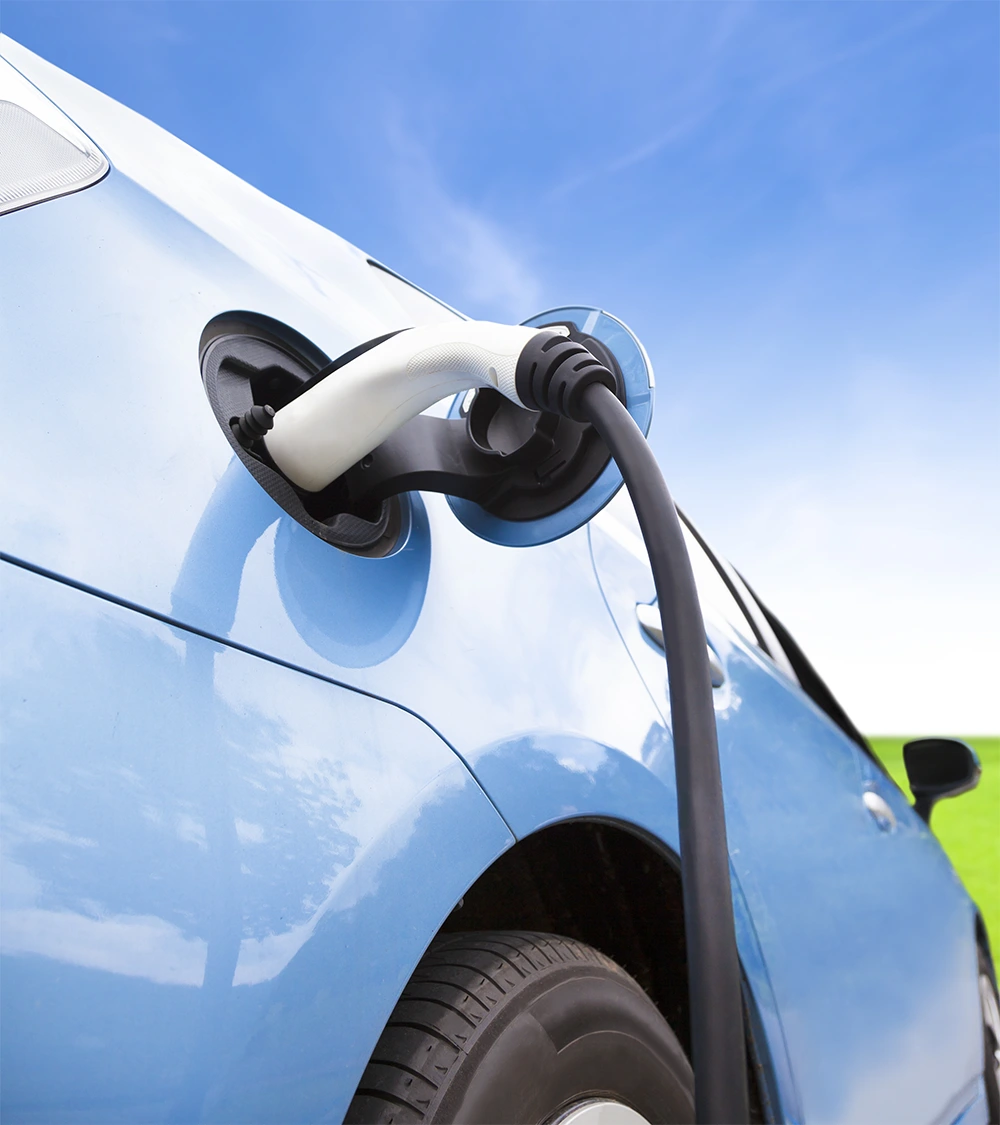
Illustrative images. View Ecoclima projects in Luxembourg.
7.4 kW, 11 kW or 22 kW
7.4, 11 or 22 kW: choosing the power you actually need
Usable charging power is limited by the weakest link: the wallbox, the vehicle’s onboard charger, the grid connection, grid approval or load management settings.
Ecoclima’s answer: for a single-family home in Luxembourg, Klima-Agence generally indicates 11 kW as the maximum project power. A 22 kW charger will therefore not automatically charge faster and must be assessed in a different context with the grid operator.
We size the system according to the daily range to recover, parking time and the building’s other electrical loads.
- 7.4 kW
- Up to 32 A single-phase. Relevant when overnight charging comfortably covers daily driving.
- 11 kW
- 16 A three-phase. Often the best balance for a three-phase home and a compatible vehicle.
- 22 kW
- 32 A three-phase. Useful only when the vehicle, building and grid operator allow it.
- Charging time
- To add 50 kWh, allow approximately 4 hours 30 minutes at 11 kW, excluding losses and power modulation.
- Simultaneous loads
- Dynamic load management adapts charging power to the capacity left available by other appliances.
Ecoclima EV charging solutions
A solution for every type of building
Homes, apartment buildings and businesses have different charging profiles and electrical constraints.
Single-family home
7.4 or 11 kW wallbox, dedicated circuit, protection devices and load management matched to daily use.
Solar EV charging
A compatible charger can follow the available solar surplus. Performance depends on production, other electrical loads and when the vehicle is parked at home.
Apartment building and shared parking
We assess shared power, pre-cabling, metering and dynamic load sharing. The announced 2026 scheme notably requires OCPP 1.6+, an equivalent open protocol or smart collective management.
Business and private fleet
We size the complete infrastructure around vehicle availability, power distribution, access control and consumption monitoring.
Expert insight: a charger marketed as ‘smart’ is not necessarily compatible with your solar inverter, energy management system or billing requirements. Ecoclima checks every interface instead of relying on a product label.
EV charger installation cost in Luxembourg in 2026
The building affects the budget as much as the wallbox
As a market guideline, a complete residential 7.4 or 11 kW installation frequently costs around €1,200 to €2,800 including VAT before grants. Long cable runs, trenching, electrical panel work or advanced management can increase this budget. Only an Ecoclima quotation is contractually binding.
The wallbox
Power rating, tethered cable or socket, connectivity, RFID, solar functions, OCPP and warranty all affect the price.
The electrical installation
Cable, routing, dedicated circuit, protection devices, panel work and earthing represent a significant part of the cost.
Control and load management
A controller may be required for dynamic load balancing, solar surplus charging or multiple chargers.
Additional works
A pedestal, trenching, fire stopping, impact protection or an electrical upgrade are priced when required.
A comparable quotation should specify: model, power rating, protection devices, cabling, load management, grid procedures, commissioning and documents supplied.
Your project with Ecoclima
From the electrical assessment to everyday charging
One coherent technical process connects assessment, procedures, installation and commissioning.
- Needs and site assessmentVehicle, usage, electrical panel, available power, earthing, cable route and any existing solar system.
- Design and quotationUsable power, charger model, protection devices, controls and clearly priced services.
- Procedures and installationRequired grid procedure, dedicated circuit, wallbox installation and testing.
- Commissioning and documentsSettings, user guidance and the documents required for the project’s administrative follow-up.
Grants and grid connection · checked on 9 August 2026
EV charger grants: the 2026 framework
Guichet.lu has published new grant amounts for private chargers but states that the corresponding legal framework has not yet been definitively published. Ecoclima therefore presents these amounts as provisional parameters, never as a guaranteed grant.
- The announced scope covers invoices from 1 January 2026 to 31 December 2030 for a new charger above 3.7 kW installed on a private parking space in Luxembourg.
- Installation by an approved electrician; announced support of 50% of the cost excluding VAT, capped at €750 for a standard charger or €1,200 for a smart charger.
- Announced cap of €1,400 for EN ISO 15118-20:2022 with an invoice dated no later than 31 December 2026; €1,200 from 2027.
- For shared buildings: an announced €1,200 subject to conditions for an OCPP 1.6+ charger or equivalent. The application deadline is one year after 31 December of the invoice year.
Grid connection: for a single-family home, Klima-Agence indicates a maximum power of 11 kW and validation by the grid operator. On the Creos network, an application is required from 7 kW for a three-phase connection or above 4.6 kW for a single-phase connection. Procedures may differ between operators; we check the rules for the relevant connection point.
Official sources consulted on 9 August 2026: Guichet.lu, Chamber of Deputies, Klima-Agence and Creos. Eligibility and the final amount are determined by the competent authority.
A complete installation
What Ecoclima integrates around the wallbox
Quality depends as much on the circuit, protection devices and controls as on the charger itself.
Our standard: a reliable, documented and maintainable solution suited to the building.
- Wallbox and Type 2 connector
- Adjustable power, tethered cable or socket, for indoor or outdoor use.
- Dedicated circuit and protection devices
- Correctly sized cable, circuit breaker, residual-current protection and any required panel adaptation.
- Metering and load management
- A controller that adapts charging power to the building’s actual consumption.
- Connectivity and solar integration
- App, RFID, OCPP or photovoltaic interface according to the project.
Manufacturers selected for each project
Ecoclima selects manufacturers such as Fronius, Huawei, Alfen or Zaptec according to the functions required.



These brands are examples of available solutions, not a promise that the same model is used for every installation. View the Ecoclima product catalogue.
Ecoclima expertise in Luxembourg
Expertise connecting EV charging, solar and the electrical installation
Our expertise in electrical work, photovoltaics and energy management allows the charger to be integrated with existing and future equipment.
Technical decision before product selection
Power, site limitations and useful functions are defined before a model is selected.
Integrated solar expertise
We verify compatibility between metering, inverter and charger for genuine solar surplus charging.
Luxembourg grid context
The grid operator, approved power, documents and current grant status are checked for each project.
Transparent recommendation
The quotation distinguishes what is included, useful options and any points still to be confirmed.
Ecoclima is based at 125, rue Principale, L-5366 Munsbach. Our teams work throughout Luxembourg. The figures shown — 5+ years, 1,000+ buildings and 4.9/5 — cover all of our energy activities.
Luxembourg EV charger FAQ
Clear answers before installation
What EV charger power should I choose for a home in Luxembourg?
The choice depends on the AC power accepted by the vehicle, the grid connection, simultaneous electrical loads and parking time. Klima-Agence indicates a maximum of 11 kW for a single-family home. A 22 kW charger will not save time if the vehicle or connection is limited to 11 kW.
How long does it take to charge an electric car at home?
Charging time depends on the energy to be added. For 50 kWh, the theoretical calculation gives approximately 6 hours 45 minutes at 7.4 kW or 4 hours 30 minutes at 11 kW. Allow for losses, reduced power near the end of charging and possible load modulation by the building.
Can I charge every day from a domestic socket?
An ordinary socket is not the recommended choice for regular, prolonged charging without a specific assessment. A wallbox has a dedicated circuit and protection devices, communicates with the vehicle and can manage power more safely.
What is a smart EV charger?
A smart charger can schedule, monitor or modulate charging. With dynamic load management, it measures the building’s consumption and adapts power to the available capacity. Depending on the model, it can also manage users, communicate via OCPP or follow solar surplus.
Can an EV charger use only solar-panel electricity?
Yes, provided that the charger, metering and inverter or energy manager are compatible and the surplus reaches the required threshold. Results vary with the weather, when the vehicle is at home and other consumption. Ecoclima checks the complete chain before promising this operating mode.
How much does an installed EV charger cost in Luxembourg in 2026?
As a market guideline, a complete residential 7.4 or 11 kW installation frequently costs around €1,200 to €2,800 including VAT before grants. The model, cable length, electrical panel, protection devices, load balancing and external works can change or exceed this range. Only a quotation following an assessment determines the Ecoclima price.
What grant is planned for a private EV charger in 2026?
The amounts published by Guichet.lu provide for 50% of the cost excluding VAT, capped at €750 for a standard charger, €1,200 for a smart charger and, for an invoice dated no later than 31 December 2026, €1,400 for EN ISO 15118-20:2022. As of 9 August 2026, this framework remains a draft: no cap is guaranteed before the application is approved.
Is an ISO 15118-20 charger automatically V2G-compatible?
No. The standard is an important building block, but bidirectional charging also requires a compatible vehicle, charger, control system, contract and grid framework. In 2026, Ecoclima recommends discussing readiness or upgradeability, rather than promising operational V2G in every case.
Does the EV charger need to be declared to the grid operator?
The procedure depends on the power and grid operator. On the Creos network, an application is required from 7 kW for three-phase or above 4.6 kW for single-phase. Three-phase is not mandatory for 7.4 kW, but 11 kW charging normally uses it. Ecoclima checks the electrical panel and prepares the appropriate procedure.
Can EV chargers be installed in an apartment building or shared residence?
Yes, but the complete infrastructure must be designed: shared power, pre-cabling, communication, metering and load distribution. The announced 2026 scheme sets specific smart-charging and OCPP criteria for multi-unit buildings.
Can a tenant apply for an EV charger grant?
The indicative 2026 scheme also covers an individual who rents the parking space where the new charger is installed, subject to the necessary evidence and authorisations. Final eligibility must be checked on Guichet.lu when the application is made.
Where does Ecoclima install EV chargers?
Ecoclima is based in Munsbach and assesses EV charging projects throughout Luxembourg. Feasibility, timing and any required works are confirmed after analysing the address and electrical installation.
Explore your project further
Ecoclima guides to smart EV charging
- Charging an electric car with solar panelsSolar surplus, charging power and good practice in Luxembourg.
- Reference power and EV chargingUnderstand how peak power demand affects the grid.
- V2G in Luxembourg in 2026What is already credible and what still needs to be confirmed.
- EV chargers offered by EcoclimaProduct examples and selection criteria.
Your EV charger in Luxembourg
Let’s start with the right calculations
Tell us the vehicle, address, parking location, approximate distance to the electrical panel, and whether three-phase power and solar panels are present. Ecoclima can then assess the appropriate power, required works and useful functions more quickly.