
Solar backup in Luxembourg: how it works, what you need, and what to expect
A solar backup system lets your home keep powering selected circuits when the public grid goes down. It sounds simple, but in practice it is a specific electrical design with dedicated safety hardware.
Key point: many inverters are “backup-ready”, but that does not mean you automatically have backup power just because you chose that inverter. Backup must be designed, wired, and commissioned, and it requires a transfer switch (source changeover) in one form or another.
At Ecoclima, backup is not included by default because the Luxembourg grid is generally very stable. It is a nice-to-have, not a must-have. If you want it, we can include it in your quote and implement it properly.
In one sentence: a solar backup system is not a simple checkbox on an inverter, it is a safe grid isolation solution plus a dedicated backup wiring strategy.
In short: what you need for real backup power
- A compatible inverter (backup-ready or capable of operating in islanding mode).
- Usually a battery (to stabilize power and provide energy during the outage).
- A transfer switch (manual or automatic) to isolate your home from the grid.
- A plan for the loads you want to back up (critical circuits only, or the whole house with load management).
- Commissioning tests to confirm safe behavior in a real outage scenario.
What is a solar backup system
A solar backup system is the combination of equipment and an electrical design that allows your home to operate in “islanding mode” when the public grid is unavailable. Put simply: the system disconnects your home from the grid, then powers selected circuits using the battery and, depending on the configuration, solar production.
Most residential backup projects in Luxembourg are designed as whole home backup. That means the backup system supplies the main distribution board, so the entire house can run on backup power when the grid goes down.
In practice, the available backup power is still limited by the inverter and battery size, so very large loads (EV charging, cooking appliances, whole home heating) may require load management or a system specifically sized for those uses.
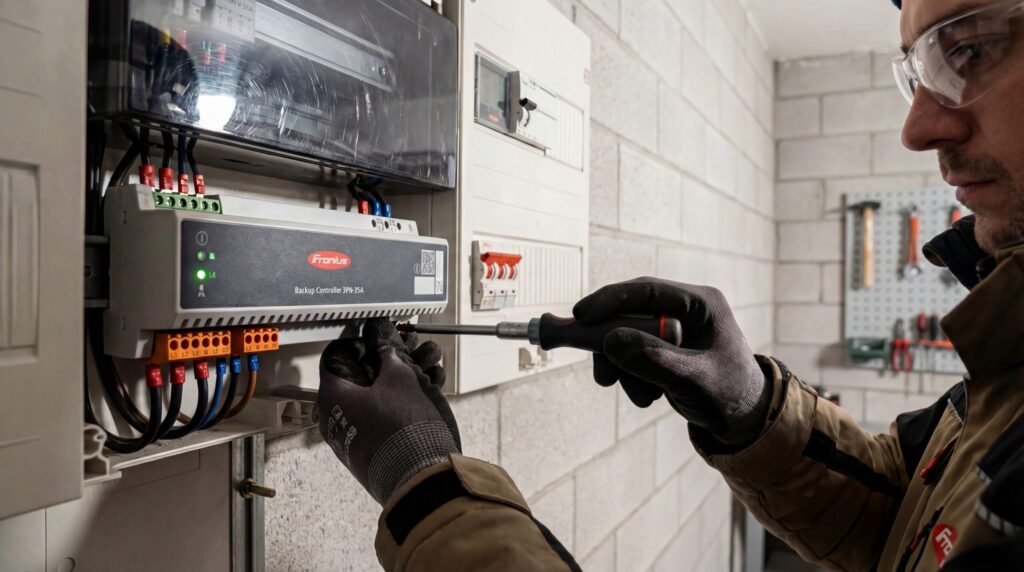
A “backup-ready” inverter does not mean you will have backup power
This is the most common misunderstanding. When brands advertise “backup integration” or an “EPS output”, it means the inverter can be part of a backup configuration. It does not mean the installation will provide backup power by default.
To actually have backup power, the system must be designed and built for it, including:
- a transfer switch (manual or automatic) that isolates the home from the grid during an outage,
- a defined backup load strategy (a critical-load panel, or whole-home backup with load management),
- the correct protections, wiring, labeling, and commissioning tests,
- clear documentation for safe operation.
Without a transfer switch or an equivalent approved switching device, the system cannot safely put your home into islanding mode. In that case, the inverter will shut down during a grid outage, even if you have solar panels on the roof.
Why a transfer switch is mandatory for safe backup in Luxembourg
Backup is not only about comfort. It is a grid safety topic. During an outage, your home must be electrically separated from the public grid. This prevents any risk of backfeeding energy into the grid while technicians are working on it.
That is why a backup system needs a transfer switch in one form or another. It can be manual or automatic, but it must ensure reliable isolation and be installed in accordance with the applicable technical connection requirements.
At Ecoclima, we only install certified transfer switches with galvanic isolation, supplied directly by the PV manufacturers, and designed for the specific inverter platform.
Useful official references for Luxembourg:
- Creos: “I produce electricity” (procedure and requirements)
- Creos: TAB (technical connection conditions)
How Ecoclima implements backup systems
Ecoclima has solid experience installing backup systems in Luxembourg. What matters is not the marketing feature on the inverter datasheet. What matters is the real design: which circuits you want to protect, how fast the switchover should be, what battery capacity is realistic, and how to keep behavior compliant, safe, and predictable.
For backup switching, we use manufacturer proprietary transfer switches or backup controllers. This approach improves compatibility, commissioning reliability, and alignment with grid safety expectations for disconnection and reconnection.
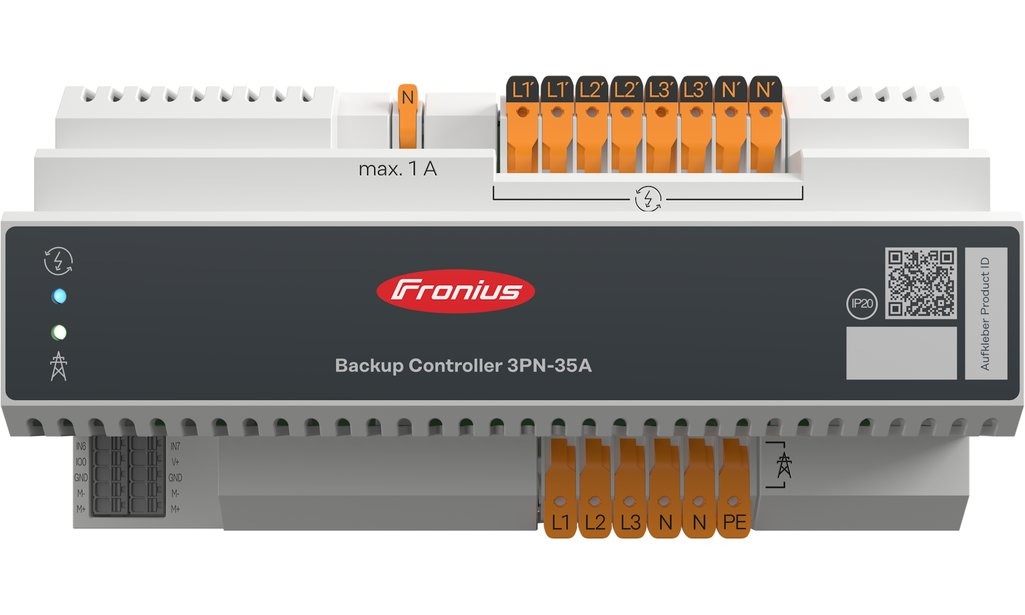
Examples of transfer solutions we use
Here are common examples, depending on the brand and system architecture (manual or automatic, partial backup or whole-home):
Manual vs automatic backup: what changes day to day
The backup experience mainly depends on how the system switches from grid mode to backup mode.
| Topic | Manual transfer switch | Automatic backup controller |
|---|---|---|
| Switchover | You activate backup manually | Automatic detection and switchover |
| Comfort | Good, but requires you to be present | Best-in-class, protects you even when you are away |
| Complexity | Lower | Higher, more engineering and wiring |
| Typical use | Occasional outages, nice-to-have | Remote work, sensitive devices, higher comfort |
| Budget impact | Often lower | Often higher |
In both cases, we always define what is backed up and how. Backup is not a “everything stays on” promise unless you explicitly design and size a whole-home backup solution.
Partial backup vs whole-home backup
There are two main approaches. Most homes choose whole-home backup because it is practical and cost-effective.
| Approach | What it powers during backup | Benefits | Limits |
|---|---|---|---|
| Partial backup (critical loads) | Selected circuits only | Smaller battery possible, simpler design, clear priorities | Large loads remain off |
| Whole-home backup | Most or all circuits | Maximum comfort | Requires larger sizing and load management, higher complexity |
What you can realistically power during an outage
Backup performance is limited by two things:
- Power (kW): what the backup output can deliver at a given moment.
- Energy (kWh): how long the battery can sustain the loads.
That is why two homes can both have “backup” but see very different results during the same outage.
Typical list of critical loads
- Fridge, freezer (one or two circuits)
- Internet, WiFi, home office outlet (limited)
- A few lighting circuits
- Garage door, gate motor
- Alarm and security equipment
- A few general outlets (selected)
Loads usually excluded in the case of partial load backup
- EV charger
- Cooking appliances (oven, induction)
- Large resistive heaters
- Whole-home heating or running a large heat pump, unless specifically designed
Another important point: during a grid outage, solar production does not continue automatically. Standard grid-tied PV systems shut down when the grid is down. For solar to keep producing during an outage, the system must be designed to operate in islanding mode, usually with a battery and brand-specific logic.
Myth vs reality: the 5 most common misconceptions about backup
| Myth | Reality |
|---|---|
| “I have solar panels, so I will have power during an outage.” | Most PV systems shut down when the grid is down, unless a backup solution is designed and installed. |
| “My inverter supports backup, so I am covered.” | You still need a transfer switch and a dedicated backup wiring strategy. |
| “Backup means the whole house stays on.” | Dans la plupart des cas, avec une solution de secours pour toute la maison. |
| “Solar will recharge my battery automatically during the outage.” | Only if PV production in islanding mode is enabled and configured for your equipment. |
| “A bigger battery solves everything.” | Power limits (kW) and load spikes still matter. Load planning is essential. |
How we design a backup system at Ecoclima
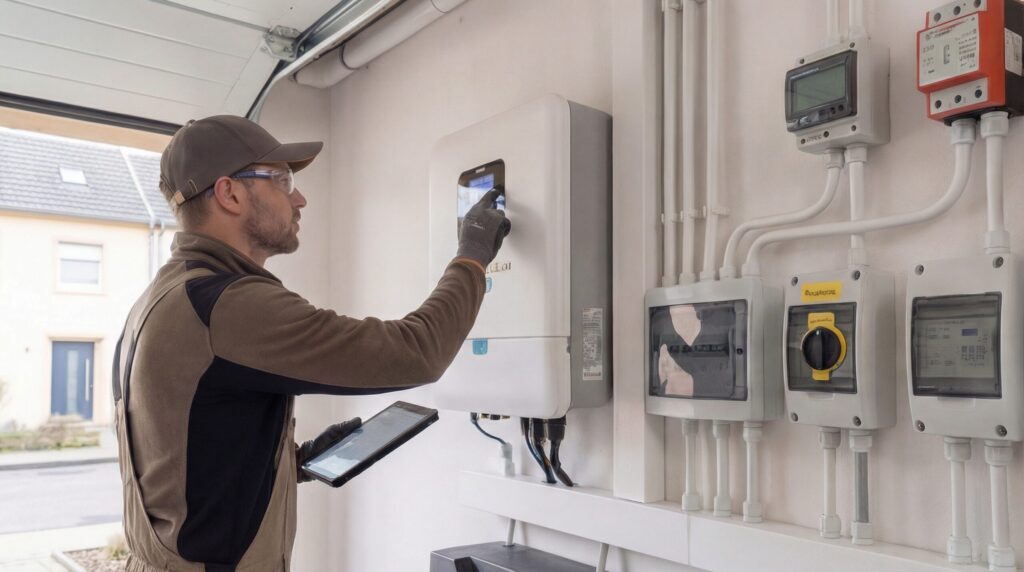
When a client asks for backup, we treat it as a dedicated electrical project within the solar project. Typical steps:
- Define the goal: comfort, critical loads, or whole-home backup.
- List the circuits: we validate peaks and priorities, and identify “must-have” vs “comfort” loads.
- Choose the transfer type: manual or automatic, depending on your usage.
- Validate compatibility: inverter, battery, and backup device must be compatible.
- Design wiring and protections: critical-load panel, breakers, labeling, safe isolation.
- Commission and test: simulated outage tests and safe return to grid operation.
- Explain how it works: what happens during an outage, what to avoid, and how to reset.
If you want reliable backup, ask this question: “How is the house isolated from the grid, and which circuits are powered?”
Is a backup system worth it in Luxembourg
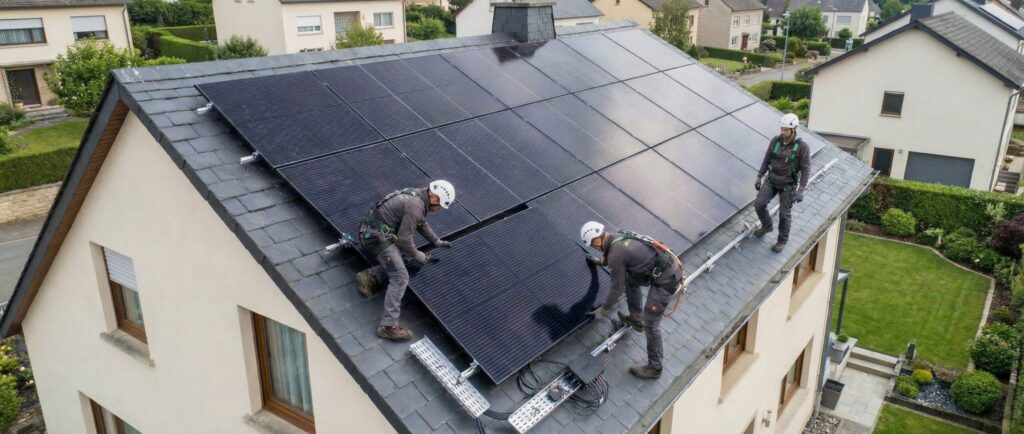
For most homes, the reliability of the Luxembourg grid makes backup a comfort option, not a requirement. That is why Ecoclima does not install it by default. Most clients prefer to invest the budget first in PV sizing, quality equipment, and a clean installation.
Backup becomes more relevant when you have a clear need, for example:
- remote work with low tolerance for interruptions,
- security systems or IT equipment you want to keep online,
- medical or care-related devices,
- freezers, fridges, and basic household continuity,
- areas where restoration can take longer.
If you tell us your priority circuits and your expected comfort level, we can include a backup option in the offer. Clear scope, clear behavior, and a solution built around your inverter brand.
Quick checklist before requesting a backup quote
If you want backup, this is the fastest way to get an accurate quote. Send us this short list and we can properly frame the design.
- Your must-have circuits (5 to 10 items).
- Any sensitive equipment (IT, security, medical, freezer).
- Your comfort goal: manual switchover is OK, or you want automatic backup.
- Your preference: critical loads only, or whole-home backup.
- Existing constraints: limited space in the electrical panel, access, single-phase or three-phase context if known.
Common mistakes to avoid
- Assuming “backup-ready” means backup is included.
- Trying to power the whole house without setting priorities.
- Mixing incompatible components or switching solutions.
- Ignoring load peaks (inrush currents) when choosing what to back up.
- Skipping commissioning with a simulated outage test.
Useful resources and related reading
Official references for Luxembourg:
- Klima-Agence: steps of a photovoltaic project (Luxembourg)
- Creos: connection procedure for generation
- Creos TAB: technical connection conditions
Ecoclima internal reading:
- Are solar panels still profitable in Luxembourg (2025-2026)
- Roof mounting guide (tile, slate, metal, flat roof)
Request a quote with a backup option
If you want backup, send us your must-have circuits (5 to 10 items). We will propose a clear and safe solution, with manual or automatic switchover, aligned with your inverter brand and the technical requirements in force in Luxembourg.
Note: rules and accepted practices can evolve. Always validate details based on the conditions in force at the time of your project, especially for grid connection and switching devices.
Frequently asked questions about solar backup in Luxembourg
Not automatically. Standard grid-tied PV systems stop when the grid is down. To keep power, you need a backup design with grid isolation and usually a battery.
No. Backup-ready means the inverter can be integrated into a backup configuration. You still need a transfer switch and a dedicated backup wiring strategy.
In most real-world cases, yes. A battery provides energy during the outage and stabilizes power. The exact behavior depends on the brand and the islanding configuration.
No. For most homes, it is optional. The grid is generally stable. Backup is a comfort and resilience upgrade you can add if you want.
We design correct isolation from the grid and integrate manufacturer proprietary transfer solutions matched to the inverter and battery. Final details depend on the configuration and the technical requirements in force at the time of the project.