
How to select the best battery for your solar PV system?
How to choose the right solar battery for your home in Luxembourg
Looking to get the most out of your solar panels? Adding a battery can help you store unused energy, reduce your electricity bills and make your home more resilient to outages. But with so many battery options on the market, how do you know which one is right for you?
With energy prices on the rise and self-sufficiency becoming a top priority, more homeowners in Luxembourg are investing in solar battery storage. But how do you choose the right one? At Ecoclima, we help families across Luxembourg find the ideal photovoltaic system and battery solution for their specific needs. Here’s our expert guide to the key criteria you should consider.
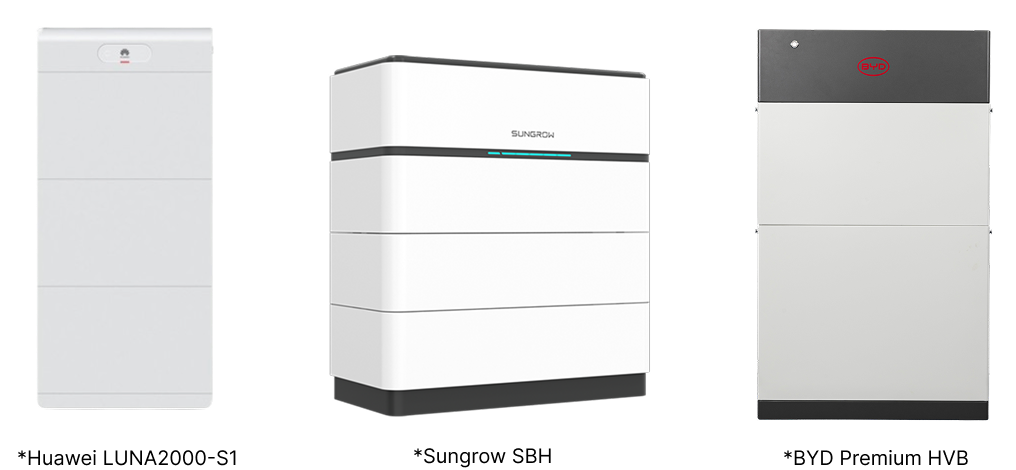
Battery size, match capacity to your needs
In Luxembourg, the subsidized battery range is between 4 kWh and 12 kWh, with common sizes being 5 kWh, 7 kWh, and 10 kWh within this range.
Larger sizes are also available outside of subsidy limits. For most households, a 10 kWh battery will be the preferred option, as it provides reasonable capacity for daily use. (For comparison, modern electric car batteries typically hold upwards of 80-90 kWh). Most batteries are also modular and expandable, allowing you to add capacity as your energy needs grow over time.
At Ecoclima, we analyze your historical electricity usage and solar production to recommend the right size, ensuring your battery works efficiently year round, especially during Luxembourg’s darker winter months.
Inverter compatibility, ensure perfect integration
Your battery must be compatible with your inverter. Most modern batteries, like those from BYD, Huawei, or Sungrow, operate at high voltage and pair seamlessly with hybrid inverters. For example, Huawei’s LUNA 2000 battery matches perfectly with its SUN 2000 hybrid inverter.
At Ecoclima, we ensure all system components communicate effectively, avoiding mismatches that could lead to inefficiencies or failures. We only install systems with proven compatibility.
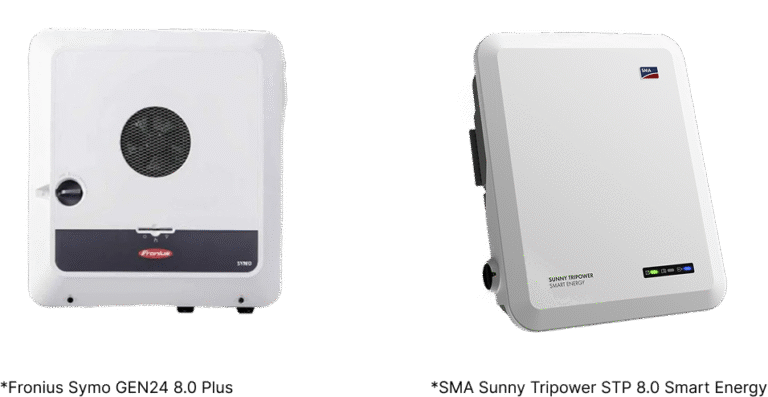
Discharge power, can it power your essentials?
Discharge power (measured in kilowatts) defines how much energy the battery can deliver at once. A 5 kW continuous output is common and sufficient for most homes. Some batteries, like Huawei’s LUNA2000 or BYD’s Battery Box, can deliver higher peak power to handle appliance surges like fridge compressors or pumps.
Having a higher discharge power potential becomes especially important if your home includes larger electrical consumers such as an electric vehicle charger, a heat pump, or a swimming pool system. These devices often demand significant power either at startup or during operation. Without enough discharge capacity, your battery system might not be able to support them effectively, especially during grid outages.
We help you choose a battery powerful enough to keep your lights, fridge, internet and heating systems running, even during grid outages and properly assess your home’s full power demands to size your system accordingly.
Warranty, know what you’re covered for
Most lithium batteries come with a 10 year warranty. But it’s not just about time, warranties also include a throughput limit, often around 3 MWh per kWh of capacity. That means a 10 kWh battery is typically covered for up to 30 MWh of energy over its lifetime.
It’s also important to check what performance level the warranty guarantees after 10 years. Most manufacturers ensure that the battery will still retain at least 60% to 70% of its original capacity. This means that even after a decade of use, your battery should still operate reliably though with reduced storage.
Some brands, like BYD or Sungrow, even go further by offering higher throughput limits or more flexible conditions if the battery is only partially cycled each day. That’s why comparing warranty details can help you identify the most robust and long-lasting solution for your home.
At Ecoclima, we only recommend brands with strong, transparent warranties and verified performance data. We also ensure you get local support for any warranty claims or maintenance, so you can invest with confidence and peace of mind.
Scalability, expand your system later
Thinking of adding an EV or heat pump later? Choose a modular battery system that grows with your lifestyle. Brands like BYD and Sungrow allow you to start small (e.g. 5 kWh) and scale up to over 30 or even 100 kWh depending on the model. Huawei’s modular LUNA system is designed with flexibility in mind, letting you add new blocks as your needs evolve, without impacting the performance of existing modules.
Modular systems are especially useful if you’re not sure how your energy needs will change whether you’re planning home renovations, a swimming pool, or installing a second EV charger in the future. By planning ahead with scalable storage, you avoid costly replacements later.
At Ecoclima, we help you size your initial system and map out possible future extensions. We ensure the inverter, wiring and layout are designed to support upgrades, so your solar investment remains future-proof and adaptable.
Physical installation, don’t forget the practical side
Residential batteries can be large and heavy, some over 150 kg. For example, the BYD Battery-Box HVS with 10.2 kWh of capacity weighs around 167 kg and measures approximately 1.2 m tall by 0.6 m wide. Huawei’s LUNA2000 battery, with two 5 kWh modules and a control unit, is also over 1 meter tall, 0.67 m wide, and weighs more than 150 kg when fully stacked.
Make sure you have enough space in a garage, utility room, or sheltered outdoor area. Although many batteries are IP rated for outdoor use (typically IP55 or IP65), we usually recommend a sheltered, temperature stable location for optimal performance and longevity.
When choosing the installation location, there are important safety and technical factors to consider. Batteries must not be installed near high-pressure water pipes, gas infrastructure, or sources of intense heat. The area should be well-ventilated, protected from direct sunlight, and meet local fire and electrical safety regulations. Adequate space must also be provided for maintenance and cable routing, and the surface should be strong enough to support the battery’s weight.
Our installation team at Ecoclima handles everything, from technical planning and placement strategy to neat, safe, and regulation compliant installation.
Ready to store your solar energy?
At Ecoclima, we’re experts in residential solar systems and battery storage in Luxembourg. We guide you from sizing to system design, permitting, installation, and after sales support. Whether you want more independence, lower bills, or backup during outages, we’ll help you choose a battery that fits your home and goals.
Have questions about solar energy or want to know what’s possible on your roof? Don’t hesitate to reach out, the quote is free.