
Selling Your Solar Power in 2025: Still Worth It?
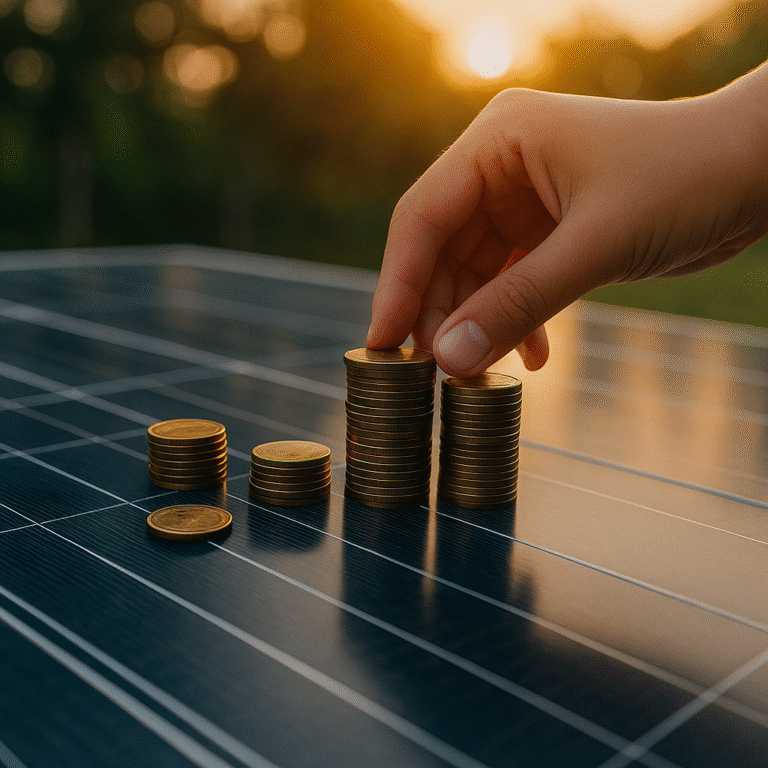
Why is photovoltaic still a safe investment despite decreasing feed-in tariffs?
In recent years, Luxembourg has accelerated its energy transition efforts, encouraging households and businesses to turn to clean energy sources. Solar photovoltaic (PV) systems have become a cornerstone of this transition, offering a sustainable and increasingly cost-effective alternative to traditional electricity sources. However, with evolving government policies and adjustments to solar feed-in tariffs, a crucial question arises:
Is investing in solar energy still financially viable in 2025?
The short answer is Yes ! but the equation has changed.
Whether you’re planning a new photovoltaic installation or trying to understand how current rates and subsidies affect your existing system, it’s important to stay informed. Let’s break down what 2025 looks like for solar energy in Luxembourg.
Why are feed-in tariffs decreasing?
Feed-in tariffs the rates paid to solar energy producers for the electricity they inject into the national grid have historically been one of the strongest incentives to install PV systems. These tariffs are fixed by the government and guaranteed for 15 years for small and medium sized installations.
Over time, as the cost of photovoltaic equipment has dropped and solar technology has become more widespread, the government has gradually reduced these tariffs. The goal is to reflect the actual investment costs while keeping the solar market sustainable in the long run.
That said, even though these feed-in rates are slightly lower in 2025 compared to previous years, they remain attractive, particularly when combined with self-consumption and generous financial incentives.
2025 Feed-in tariffs in Luxembourg
For systems commissioned in 2025, the following feed-in tariffs apply (guaranteed for 15 years):
- 0 to 10 kWp: €0.1374/kWh
- 10 to 30 kWp: €0.1291/kWh
- 30 to 100 kWp: €0.1057/kWh
These values are determined by national regulations and subject to periodic review. They reflect a fair balance between investment return and public spending, especially in a context where solar panel costs have significantly dropped over the past decade.
While some prospective users may be disappointed to see slightly lower rates, the real value today lies in optimizing your energy production through self-consumption.
Self-Consumption: More relevant than ever
Since January 2025, Luxembourg has implemented a new grid tariff structure that increasingly encourages consumers to use the electricity they produce themselves. This shift is part of a broader European strategy to decentralize energy production and reduce pressure on the electricity grid.
By prioritizing self-consumption, you consume the electricity generated by your solar panels directly in your home or building avoiding the rising retail cost of electricity and improving your overall return on investment.
For example:
If your home consumes a large portion of its electricity during daylight hours (e.g., heat pump, charging an EV, running appliances), your savings will increase significantly.
Adding a battery storage system can further enhance this dynamic, allowing you to store excess energy produced during the day for use in the evening or during peak times.
Financial aids still make the difference
To further support solar adoption, the Luxembourg government continues to offer subsidies under the Klimabonus program. These subsidies cover a substantial part of installation costs, making the financial barrier to entry much lower.
Here’s what’s available:
- 50% of the total installation cost, capped at €1,250/kWp
- 62.5% of the cost, capped at €1,562.5/kWp, for installations ordered between January 1, 2023 and September 30, 2024, and invoiced before December 31, 2025
This support applies to both individual homes and shared installations for multi-family buildings. It’s important to note that the eligibility criteria and administrative steps must be respected to benefit from these aids, something our team at Ecoclima can help you navigate.
So, is solar still a good investment in 2025?
The profitability of a solar PV system in Luxembourg today is no longer driven solely by feed-in tariffs. Instead, it’s built on:
- Strategic self-consumption, reducing your electricity bills
- Stable, long-term tariffs for excess energy fed into the grid
- Substantial public subsidies that reduce your upfront investment
- Rising grid electricity prices, which make producing your own power more attractive than ever
Whether you’re a homeowner, a co-ownership syndicate, or a business, the 2025 framework offers a mature, secure, and future-proof environment for solar energy investment.
Need help evaluating your project?
At Ecoclima, we specialize in solar solutions adapted to your building, your consumption profile, and your budget. Our team handles every step of the process, from technical analysis and permit support, to installation and subsidy application.
If you’re considering installing solar panels and want to better understand what’s technically and financially feasible, feel free to reach out, the quote is always free.