
GMPPT vs MPPT: what’s the difference and why it matters for your solar system
GMPPT a smarter solar tracking technology when it makes sense
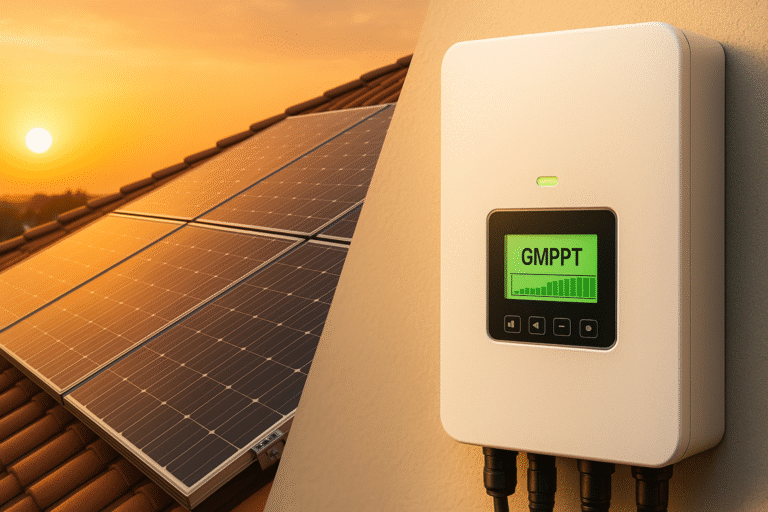
In the world of solar energy, every kilowatt-hour matters. A partially optimized system can lead to invisible but very real performance losses over time.
At Ecoclima, our priority is to provide solutions that match the real-world conditions of each project, not to push the latest technologies by default. One of the most advanced tools available today is GMPPT (Global Maximum Power Point Tracking), which takes optimization beyond traditional MPPT – especially on complex rooftops.
GMPPT is not necessary for every installation. It becomes valuable in specific, well-defined situations. Let’s break it down.
What is GMPPT?
Solar panels don’t produce energy at a fixed rate. Their output depends constantly on sunlight, temperature, and environmental conditions.
Traditional MPPT (Maximum Power Point Tracking) inverters adjust voltage to ensure panels operate at their optimal point. However, this tracking is local, it looks for the best point around the current operating value.
GMPPT goes further. At regular intervals, it scans the entire power curve to identify the true global maximum even if it’s hidden due to shading, dirt, or panel mismatch.
How traditional MPPT works ?
The way traditional MPPT works is through a method called Perturb and Observe
The inverter slightly shifts the voltage in one direction and checks if energy production increases
- If the output improves, it continues pushing in that direction
- If the output drops, it reverses or stops
This method works well under stable and ideal conditions, but it has a major limitation
Once the inverter finds a peak, it assumes it’s the best one and stops searching
This is how it can miss a better peak further along the power curve because it never checks beyond what it already considers optimal That’s where GMPPT comes in with its ability to scan the full curve and identify the true global maximum, even in complex or shaded conditions
MPPT vs GMPPT: what’s the real difference?
- MPPT searches locally it can get stuck on a “false” local maximum.
- GMPPT performs a broader sweep allowing it to find the global peak, even if it’s not obvious.
2. comparison table
| Feature | MPPT (traditional) | GMPPT (global tracking) |
| Type of optimization | Local, continuous | Global, based on timed sweeping scans |
| Shading resistance | Moderate | Excellent |
| Curve complexity handling | Can miss the real peak | Designed to identify multiple power peaks |
| Frequency of analysis | Constant but limited in scope | Every 1–4 hours, depending on configuration |
| Best suited for | Simple, unshaded rooftops | Complex rooftops with shading or multiple angles |
When does GMPPT make a real difference?
GMPPT shows its value in the following scenarios:
- Partially shaded rooftops (trees, chimneys, nearby buildings)
- Multi-orientation layouts (east/west or mixed angles)
- Panel mismatch or aging (different module types or wear)
- Urban environments where shadows change throughout the day
According to a study published in Renewable and Sustainable Energy Reviews, GMPPT can deliver 5–10% more energy in these conditions compared to MPPT alone.
Other reports, such as Solar Builder Magazine, estimate up to 25% gain in extreme cases involving significant shading or module mismatch.
Is GMPPT useful in all installations?
No and that’s where Ecoclima’s expertise matters.
On well-exposed rooftops with consistent sunlight and identical panels, GMPPT brings little to no benefit.
In those cases, a well-configured MPPT inverter is more than sufficient and more cost-effective.
At Ecoclima, we assess each project individually to ensure the chosen technology delivers real, measurable performance gains.
In conclusion
In resumeGMPPT is a smart tracking technology that helps maximize solar production when rooftops are affected by shading, complex layouts or uneven panel performance
It goes beyond standard MPPT by scanning the full power curve to find the real global maximum, improving efficiency where traditional systems fall short
At Ecoclima, we assess each project carefully and recommend GMPPT only when it truly adds value, ensuring the best performance without unnecessary complexity