
Photovoltaics in Luxembourg: Which electrical appliances are really well aligned with your solar production in 2026?
We often hear oversimplified statements such as “a heat pump works perfectly with photovoltaics” or, on the contrary, “an EV charger is automatically ideal with solar panels”. In reality, neither statement is entirely true or entirely false. It all depends on the consumption profile of the appliance, when it operates, and above all your actual behaviour.
Key takeaways in 30 seconds
- Heating heat pump: rather poorly aligned in winter, but not useless for solar. It can still make good use of photovoltaic kWh for domestic hot water, the shoulder seasons, and cooling if it is reversible.
- Direct electric heating: one of the worst aligned profiles with residential photovoltaics, because the highest demand occurs in winter, when solar helps the least.
- Air conditioning and cooling: very good natural alignment, because demand increases during warm periods and during the day, when photovoltaic production is strong.
- Swimming pool: generally well aligned, especially if filtration and any heating are scheduled during solar hours.
- EV charger: it is not “good” or “bad” by nature. If you mainly charge in the evening or at night, alignment is weak. If the car is at home during the day and charging is controlled, it can become an excellent use.
- The decisive factor: more than the appliance itself, it is the ability to shift consumption between late morning and afternoon that improves self consumption.
Contents
- The real criterion: seasonal alignment and daily alignment
- Quick table of the uses most compatible with photovoltaics
- Appliance by appliance analysis
- Why user behaviour changes everything
- How to improve alignment without unnecessary oversizing
- What this concretely changes for a project in Luxembourg
- FAQ
- Useful sources
The real criterion: seasonal alignment and daily alignment
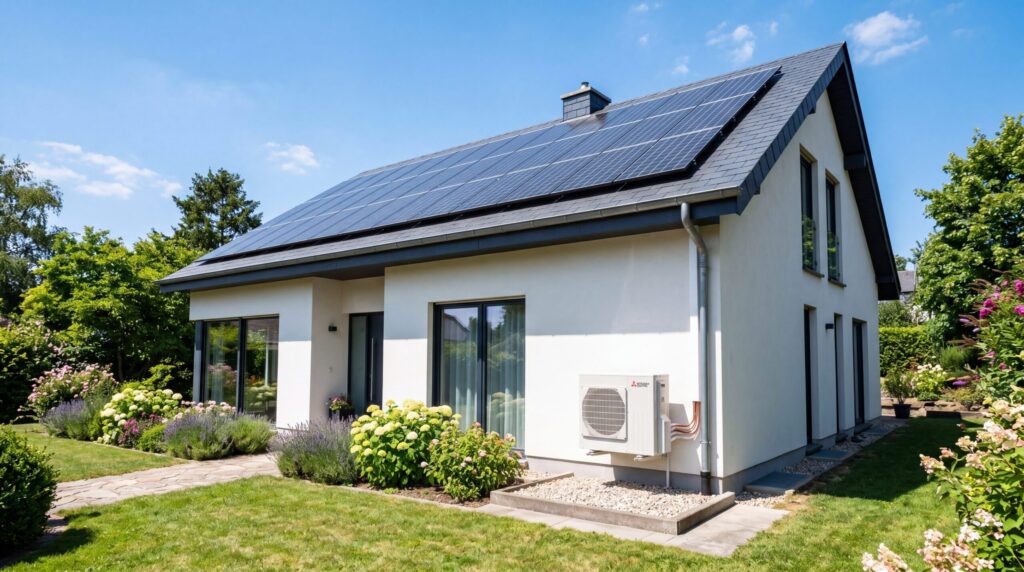
To know whether an appliance “matches” a photovoltaic installation well, you need to look at two levels at the same time.
- Seasonal alignment: does the appliance mainly consume in summer, during the shoulder seasons, or in winter?
- Daily alignment: can the appliance operate between late morning and afternoon, when the roof produces the most?
An appliance can therefore be very energy intensive while still being interesting for self consumption, provided it can be controlled. Conversely, a major consumer can be structurally poorly positioned if it concentrates its demand during winter evenings.
Important point: the power rating of an appliance is not enough to judge its photovoltaic value. What really matters is when it consumes and whether that consumption can be shifted.
Quick table of the uses most compatible with photovoltaics
| Use | Seasonal alignment | Daily alignment | Control possible | Verdict |
|---|---|---|---|---|
| Heat pump for heating | Weak, high demand mainly occurs in winter | Medium, depending on settings, tank, inertia and habits | Yes, partially | Rather poorly aligned |
| Direct electric heating | Weak, same logic as winter heating | Weak to medium | Limited, except basic scheduling | Poorly aligned |
| Air conditioning / cooling | Strong, high demand when sunshine is high | Often good during the day | Yes | Very well aligned |
| Swimming pool | Good, mainly summer use | Good if filtration and heating are scheduled | Yes | Well aligned |
| EV charging station | Variable | Highly variable depending on charging time | Yes, strongly | Depends on behaviour |
| Water heater / domestic hot water | Good, year round use | Good if triggered during the day | Yes | Very interesting |
| Washing machine, dishwasher, tumble dryer | Neutral | Good if scheduled | Yes | Good quick win |
| Fridge, freezer, standby loads, IT equipment | Neutral | Partly covered during the day, but difficult to control | Weak | Useful base load, but limited |
Appliance by appliance analysis
1. Heat pump for heating: useful with photovoltaics, but not naturally synchronised
Saying that a heat pump is “perfect” with solar panels is too simplistic. The real issue is not the technology itself, but the seasonal mismatch. Heating mainly consumes when it is cold, therefore in winter. And that is precisely when photovoltaic production is the most limited.
In other words, a heat pump can greatly improve a home’s overall energy strategy, but it is not magically aligned with solar over 12 months. Its photovoltaic value is mainly real in three cases:
- the shoulder seasons, when it is still cool but solar production starts to increase again,
- domestic hot water production, which can be more easily controlled during the day,
- cooling in summer if the unit is reversible.
The right way to think about it: a heat pump is not a “bad companion” for photovoltaics, but its main load does not occur at the best time of year. You therefore need to think in terms of control, thermal inertia, domestic hot water and summer uses, not just annual kWh.
2. Direct electric heating: the hardest profile to cover well with photovoltaics
Pure electric heating, through convectors or resistance heaters, combines two problems. First, it also consumes mainly in winter. Second, it does not always offer the same ability for intelligent optimisation as a heat pump combined with a tank, regulation or modulating operation.
In a home heated with direct electric heating, adding solar panels often remains economically interesting. But it is important to be realistic: photovoltaics will not “erase” the heaviest part of the bill at the most critical time. It is one of the worst aligned profiles if the goal is high self consumption without a complementary strategy.
3. Air conditioning and cooling: one of the best natural matches with photovoltaics
This is probably the most underestimated use in standard commercial messaging. Air conditioning, or more broadly cooling, is one of the few consumptions that is naturally well synchronised with solar.
Why? Because cooling demand increases during warm periods, often during the day, exactly when photovoltaics produce the most. This is particularly true for residential air conditioning, an air to air system, or a reversible heat pump used for summer comfort.
This good alignment does not mean “free”. A poorly shaded, poorly insulated home, or a home cooled to excessively low temperatures, will consume a lot. But between two major household uses, cooling is generally much better positioned than winter heating.
4. Swimming pool: often well aligned, provided it is intelligently controlled
A swimming pool is one of the uses that generally works well with a solar installation in Luxembourg. The logic is simple: filtration, circulation, possible heating or a pool heat pump are mainly used during warm periods, therefore when photovoltaic production is strong.
Again, everything depends on the settings. A pool is not “automatically” well optimised with solar. If all filtration runs early in the morning or late in the evening, part of the advantage disappears. However, if the main cycles are scheduled between late morning and afternoon, alignment becomes very good.
5. EV charger: the case most dependent on real behaviour
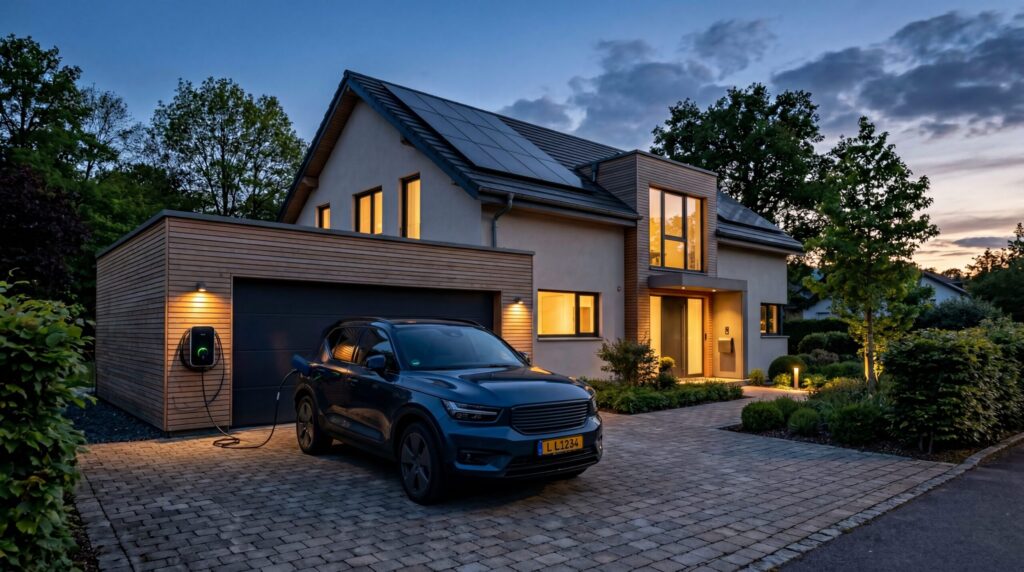
The EV charger is often presented as an ideal use for photovoltaics. Sometimes this is true, sometimes it is not. Here, everything depends almost entirely on charging time.
Less favourable case: the car comes home every day at 6:30 pm and starts charging immediately. In this case, charging happens after the main solar production window, so alignment is weak.
Favourable case: the vehicle stays at home during the day, or charging is controlled at the weekend, or the household has an energy management system that starts charging when solar surplus is available. In this scenario, the car becomes an excellent absorber of production.
Important nuance: two different objectives must be distinguished. To maximise self consumption, charging from solar during the day is often relevant. To relieve certain winter grid peaks, it can also be useful to shift part of the charging outside evening peak hours. It is therefore not a binary question, but a matter of trade off.
6. The best quick wins: water heater, dishwasher, washing machine, tumble dryer
The most profitable appliances to shift are not necessarily the most spectacular ones. Very often, quick gains come from simple uses:
- water heater or domestic hot water production,
- dishwasher,
- washing machine,
- tumble dryer if necessary.
Why are these uses interesting? Because they are easy to schedule. They do not change the whole energy structure of a home on their own, but they concretely improve the self consumption rate without major additional investment.
7. Permanent consumption: useful, but limited
Fridge, freezer, internet box, IT equipment, standby electronics, ventilation, small appliances: these uses form a permanent base load. They naturally absorb part of daytime solar production. This is useful, but it is not where the main strategic leverage lies, because these loads are difficult to control.
In short: background consumption helps, but it is mainly flexible uses and large controllable loads that truly transform the performance of a residential photovoltaic project.
Why user behaviour changes everything
Two households with the same house, the same photovoltaic capacity and the same equipment can achieve very different results.
Profile A
Home with an EV charger, but the car is away all day. Dishwasher started in the evening. Heavy heating demand in winter. In this case, the theoretical potential exists, but real alignment remains average.
Profile B
Home with reversible air conditioning, a swimming pool, partial remote work, controlled EV charging at the weekend and a water heater scheduled between 11 am and 4 pm. Here, the same solar roof can be used much more effectively.
The conclusion is simple: everything depends on individual behaviour. This is exactly why a good photovoltaic project is not sized only with an annual electricity bill, but also with lifestyle habits, home occupancy patterns, and the uses that can realistically be controlled.
How to improve alignment without unnecessary oversizing
Many households make the same mistake: they try to compensate for a poor consumption profile simply by adding more panels. This reasoning is incomplete.
Before increasing installed capacity, you should first work in this order:
- Shift simple uses: dishwasher, washing machine, domestic hot water, pool filtration.
- Control large uses: EV charger, heat pump, battery if relevant.
- Check sizing consistency: the right capacity is not “the biggest possible”, but the one that fits the roof, the budget and the household’s real profile.
- Add storage or a HEMS only if it is justified: useful in some cases, not automatically in all cases.
The often misunderstood point
A very energy intensive appliance is not necessarily the best ally of photovoltaics. A flexible appliance, even if it consumes less, can sometimes have more economic value for self consumption than a large rigid load that always occurs at the wrong time.
What this concretely changes for a project in Luxembourg
In the Luxembourg context, this way of thinking becomes even more important, because self consumption is not assessed only on a yearly basis, but also through the way you actually use the electricity produced on site.
In practice, this means:
- not sizing a project only to cover winter if the home is heavily heated with electricity,
- giving more value to summer or shiftable uses, such as air conditioning, the swimming pool, domestic hot water or controlled charging,
- thinking of the house as an energy system, not as a collection of separate devices.
At Ecoclima, this is exactly the strongest approach to designing a high performance project: looking at the roof, of course, but also the heat pump, air conditioning, EV charger, household lifestyle, and the real potential for control.
Also read on Ecoclima:
Heat pump and solar panels in Luxembourg: is it profitable in 2026?
Photovoltaics and heat pump in Luxembourg: getting the sizing right
Air to air or air to water heat pump in Luxembourg: what to choose in 2026?
FAQ
Which appliance is most naturally compatible with solar panels?
Among major household uses, air conditioning and cooling are often among the best aligned, because they consume mainly when sunshine is strong. Controllable uses such as domestic hot water or daytime EV charging can also become very effective.
Is a heat pump a bad match for photovoltaics?
No, but it is often oversold in an overly simplistic way. For pure heating, the heat pump is rather poorly aligned seasonally with solar. However, it can make very good use of photovoltaics for domestic hot water, the shoulder seasons and cooling if it is reversible.
Does an EV charger automatically justify more panels?
No. If the car is charged almost exclusively in the evening, the self consumption benefit is limited. If charging is controlled during the day or at home during the weekend, the charger can, on the contrary, strongly improve the value of solar production.
Do you need a battery to use these appliances properly?
Not necessarily. A battery can help shift daytime production towards the evening, but it does not replace proper sizing or good consumption habits. In many cases, the first gains come from controlling the uses first.
What is the best quick win in a home already equipped with photovoltaics?
Very often: scheduling the water heater, dishwasher and washing machine during solar hours, then analysing whether the EV charger or heat pump can also be partially controlled.
Useful sources
- Enovos: solar self consumption and usage optimisation
- Klima Agence: smart energy management in the home
- Klima Agence: home battery and shifted consumption
- Creos Living Lab: flexibility, peak hours and shifting uses
- Creos: information note on PV connection for self consumption
- EEA: building cooling and the link with solar irradiation
Want to know which uses in your home are truly the most compatible with solar?
At Ecoclima, we analyse your project as a complete system: roof, consumption profile, heat pump, air conditioning, EV charger, possible battery and lifestyle habits. This is the most serious way to size a high performance photovoltaic installation in Luxembourg.