
Solar Battery Guide for Luxembourg: How to Size It, Which Subsidies Apply, VAT Rules, Klimabonus, and the Traps to Avoid
Solar battery sizing is key to a successful self-consumption project in Luxembourg. The basic idea is simple: your battery should cover the average amount of energy your home consumes between sunset and sunrise. In this guide, Ecoclima explains how to estimate the ideal capacity, with concrete benchmarks, local context, Klimabonus subsidies, VAT, and the impact of network pricing. The aim is to help you choose a suitable, cost-effective and sustainable battery.
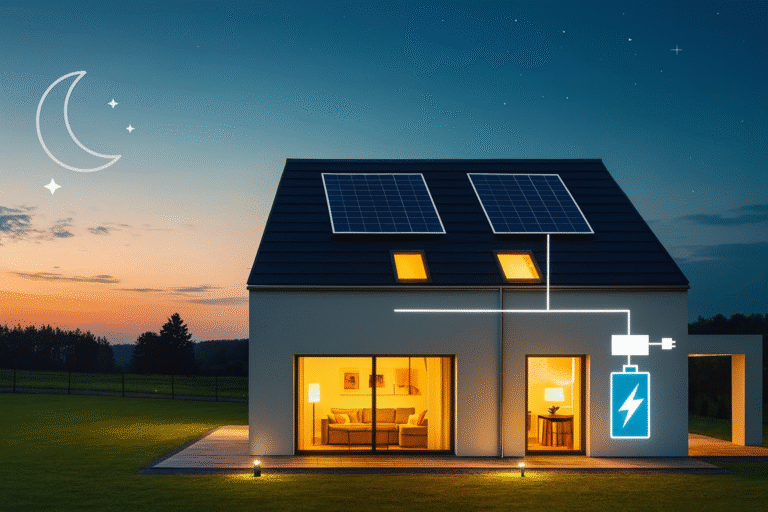
Why Proper Battery Sizing Matters
A solar battery stores the excess energy produced during the day so it can be used in the evening and at night. When correctly sized, it increases self-consumption from around 30–50% to approximately 60–80% depending on the household profile.
A battery does not cover the entire winter. Its purpose is to shift one day’s energy to the next. A battery that is too small will empty too early. A battery that is too large will remain underused and struggle to be cost-effective.
The most reliable indicator is your evening-night consumption. For example, if your home uses around 7 kWh between 6 p.m. and 8 a.m. on average, you should consider a battery of roughly 7 kWh of usable capacity, with a small comfort margin.
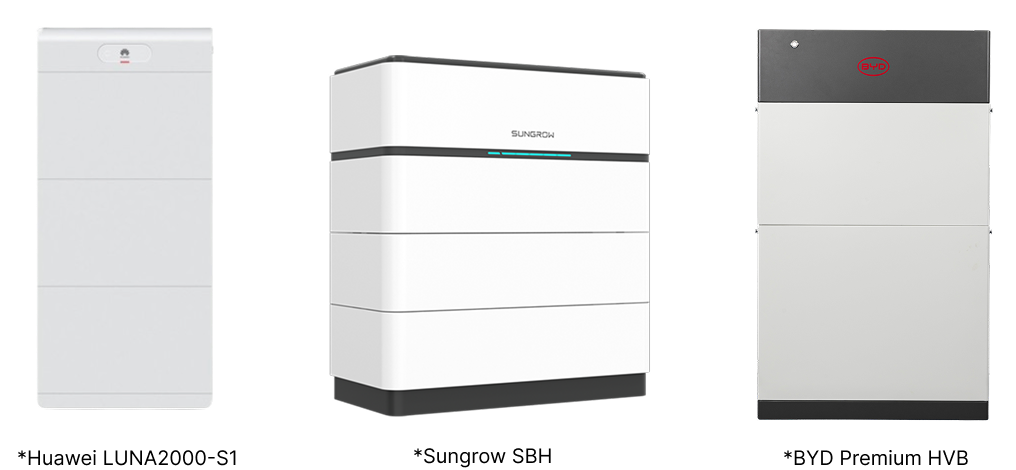
The Factors That Determine the Ideal Battery Capacity
Evening and night consumption is the number one parameter. The higher your electricity use during these hours, the larger the battery capacity should be.
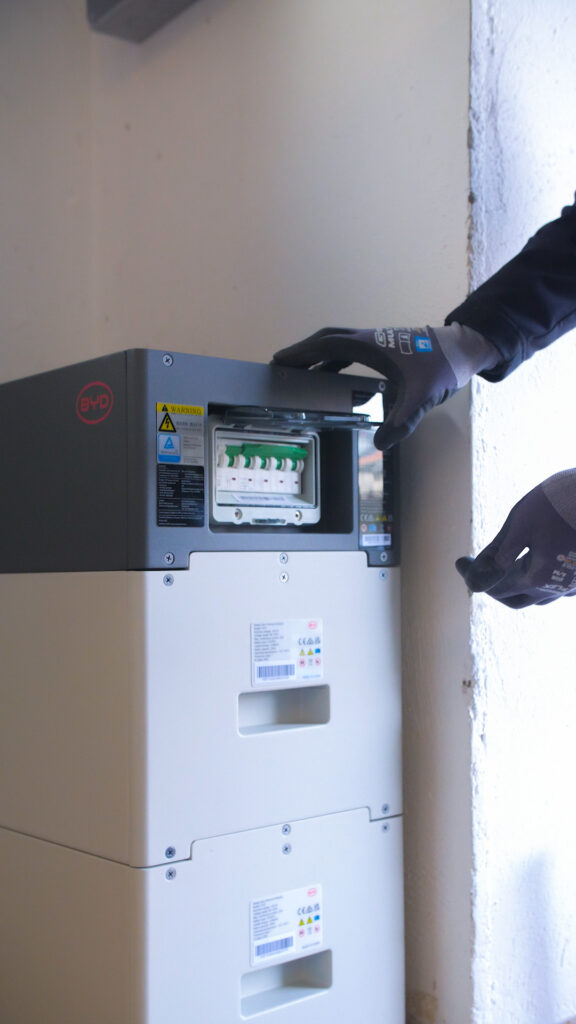
Size of the PV installation also matters, since the battery must be able to charge fully. A common residential benchmark is around 0.8 to 1.5 kWh of battery capacity per kWp installed, adjusted to your specific consumption profile.
Autonomy expectations should remain realistic. Reaching 100 percent self-sufficiency year-round is not achievable in Luxembourg. Many households already optimise their system with 60 to 80 percent self-consumption.
Budget and technical compatibility are key. LFP technology is recommended, and you need a compatible hybrid inverter, as well as a ventilated and temperature-stable installation area.
Grid tariff structure can influence the ideal sizing. A battery helps reduce evening power peaks, which improves the overall electricity bill.
For a more precise estimation, you can use a public tool such as Solarisator by Klima-Agence, or request an analysis from Ecoclima using your smart meter load curves.
Subsidies and Local Rules: What the Klimabonus Says
For a self-consumption installation with battery in Luxembourg, the Klimabonus sets capacity limits and specific conditions. Key points to verify on the official pages when submitting your application:
- PV + battery combined installation and self-consumption mode required.
- Subsidised capacity: common benchmark up to 1.5 kWh per kWp, with a typical ceiling of 12 kWh for a single-family home.
- Subsidy rate: base of 50 percent of the pre-tax costs, capped per kWp. Bonuses have existed in previous periods. Always check updated values.
VAT: solar panels and PV installation work qualify for the super-reduced 3 percent VAT rate. The battery is excluded and remains at 17 percent. See Legilux and the Klima-Agence FAQs.
| Scenario | Without Battery | With 6 kWh Battery |
|---|---|---|
| Estimated self-consumption | ~ 50% | ~ 80% |
| Self-consumed kWh | ~ 3,000 | ~ 4,800 |
| Remaining grid purchases | ~ 3,000 kWh | ~ 1,200 kWh |
| Annual savings (example 0.30 € / kWh) | Reference | ≈ 540 € |
| Estimated net investment | PV alone ~ 12,000 € | PV + battery ~ 16,000 € |
| Overall ROI | ~ 6 to 7 years | ~ 10 years |
Check the official pages for the latest criteria:
Guichet.lu,
Klima-Agence,
Legilux.
How Much Does It Cost and What Size to Choose Depending on Your Profile
In 2025, a residential LFP lithium battery installation typically ranges between 400 and 700 € per kWh depending on the brand, the inverter, and the complexity of the installation. With the Klimabonus incentives, the net cost decreases significantly.
- Small household without major night-time loads: around 5 kWh covers most evening consumption.
- Family home with a heat pump or domestic hot water tank: 7 to 10 kWh.
- Heavy night-time users or EV charging: 10 to 12 kWh, assuming the PV system size allows it and the use case makes sense.
Impact of Grid Tariffs and Peak Shaving Bonus
The new tariff structure includes a component linked to the reference power level. A properly configured battery can limit power peaks at the beginning of the evening and help improve the overall electricity bill. Refer to the information provided by Creos and the ILR.
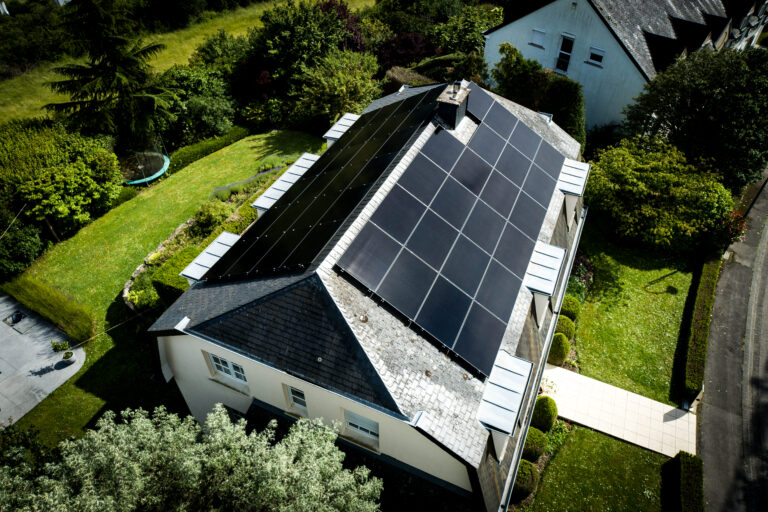
Profitability Example With and Without a Battery
Indicative assumptions, to be refined according to your energy contract, your reference power level, and your actual load curves.
| Item | Single-Family Home | Comment |
|---|---|---|
| Maximum subsidisable capacity | ≈ 1.5 kWh per kWp | Aligned with PV system size |
| Absolute ceiling | ≈ 12 kWh | Usual value, to be confirmed at application time |
| Required mode | Self-consumption | No guaranteed feed-in tariff contract |
| Base subsidy | ≈ 50 percent pre-tax, capped per kWp | Possible bonuses depending on the period |
| VAT | PV at 3 percent, battery at 17 percent | Battery explicitly excluded from the 3 percent rate |
These values illustrate that a well-sized solar battery significantly improves self-consumption while remaining aligned with investment logic. The peak shaving effect can further enhance overall profitability.
Estimate Your Evening and Night Consumption
To size your battery correctly, begin by analysing what your home consumes between sunset and sunrise.
Platforms such as My.Enovos.lu allow you to access consumption data fro
Cas particuliers et usages tertiaires en bref
Common Pitfalls to avoid when choosing your solar battery
Avoid oversizing
It can be tempting to choose a very large battery to maximise autonomy. However, an oversized battery compared to your night-time consumption or to the power of your PV system will rarely charge fully, especially in winter. The result is simple: it will remain underused and difficult to make profitable. The ideal approach is to choose a capacity that matches your evening-to-morning needs, with a small safety margin.
Consider the installed PV power
Storage is only useful if your PV installation produces enough surplus during the day. A battery that is too large compared to your PV output will not recharge correctly. In residential settings, the usual recommendation is between 1 and 1.5 kWh of battery capacity per installed kWp. This ratio ensures a system that remains relevant and usable throughout the year.
Respect the Klimabonus capacity limits
Luxembourg subsidies impose limits on the subsidisable battery capacity: roughly 1.5 kWh per installed kWp and a typical maximum of 12 kWh for a single-family home. Going beyond these limits means covering the additional cost entirely on your own, often with no real benefit. It is more strategic to stay within the thresholds covered by the State to optimise the profitability of your system.
Do not overlook the VAT Impact
Unlike photovoltaic panels and their installation, which benefit from the super-reduced 3 percent VAT, the storage battery remains taxed at 17 percent. This fiscal detail can affect your overall budget. To avoid confusion, always ask for a detailed quote, clearly separating the 3 percent VAT for PV and the 17 percent VAT for the battery.
Configure the system for peak shaving
A well-sized battery can also help reduce your reference power by limiting early-evening consumption peaks. But this benefit only materialises with proper configuration. Installing a battery without a load-management strategy means losing part of its potential gains. Make sure to activate automatic discharge during key hours and optimise system control via the hybrid inverter.
Official resources and useful tools
- Guichet.lu information on Klimabonus and procedures.
- Klima-Agence Klima-Agence advice, subsidy simulator.
- Legilux VAT and applicable legal frameworks.
- Creos and ILR for the tariff structure and reference power.
FAQ
What battery capacity is suitable for a single-family home?
In practice, 5 to 10 kWh covers most residential needs. Adjust the capacity according to your evening–night consumption and the size of your PV system.
Should the battery be installed at the same time as the solar panels?
Yes. This is required for Klimabonus eligibility and ensures optimal technical integration.
Is the battery eligible for the reduced 3 percent VAT rate in Luxembourg?
In Luxembourg, solar panels and their complete installation (including the inverter, wiring, mounting hardware, and protections) benefit from the super-reduced 3 percent VAT rate when considered part of a “real estate improvement.” However, the storage battery is explicitly excluded from this fiscal scheme, even when installed at the same time as the PV system. It therefore remains taxed at the standard 17 percent VAT rate. For clarity and proper VAT application, it is recommended to request a detailed quote or invoice with two separate lines: one at 3 percent for the PV system and one at 17 percent for the battery.
Is storage useful with the new grid tariff structure?
Yes. Peak shaving helps reduce the billed reference power and improves overall profitability.
Conclusion
The ideal solar battery size corresponds to your consumption between sunset and sunrise, while remaining consistent with your PV system size and the available subsidies. In Luxembourg, most homes fall between 5 and 12 kWh, depending on the consumption profile.
Ecoclima supports you from A to Z: personalised assessment, sizing, subsidy application, installation, and commissioning. Request your free solar quote in Luxembourg and receive a clear simulation including your optimal battery capacity.