
Sell your solar electricity without going through the State? Discover energy communities in Luxembourg
Energy communities in Luxembourg: get better value from your local solar surplus
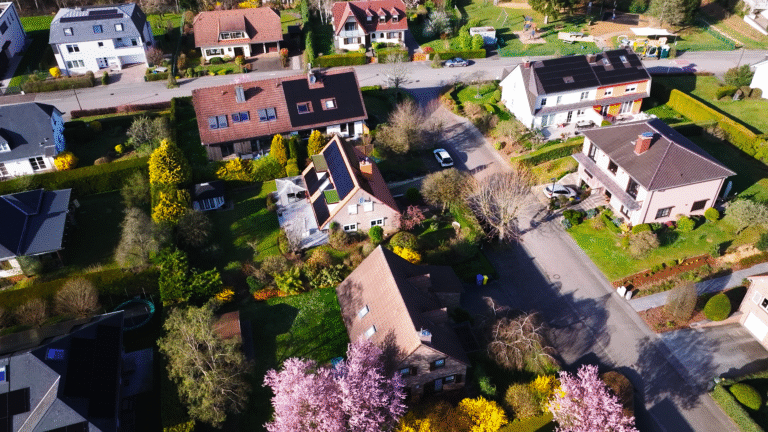
In Luxembourg, owners of photovoltaic panels often inject their surplus electricity into the public grid, in exchange for very low compensation. But a more local and much more profitable alternative exists: the energy community. This model allows you to sell your energy to your neighbours at a better price, while promoting local and green consumption. In this article, Ecoclima explains how to create or join an energy community in Luxembourg, the financial benefits, the concrete steps involved, and all the useful references to get started.
What is an energy community?
An energy community is a group of citizens, companies or local authorities who share their renewable energy production mainly solar at a local scale. Concretely, this means that a producer can sell their photovoltaic surplus to other members (e.g. neighbours), instead of injecting it into the grid at the low tariff imposed by a traditional supplier.
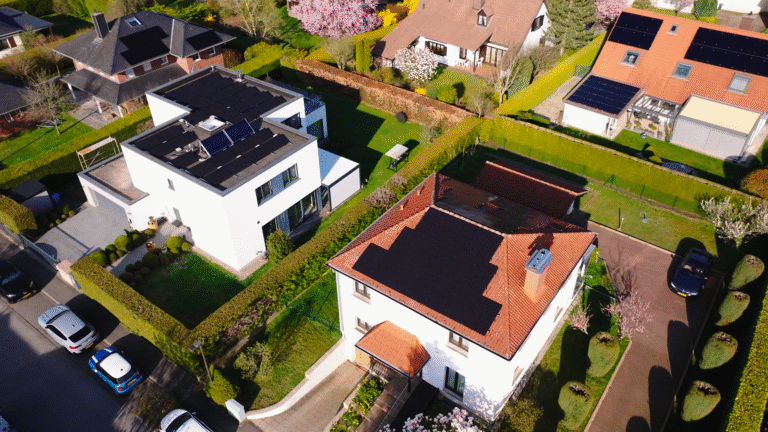
In Luxembourg, Creos allows anyone to create an energy community thanks to a regulatory framework established in 2023, aligned with European directives. The process is supervised by the Luxembourg Institute of Regulation (ILR) and relies on the technical infrastructure of Creos. Members of the community can consume the shared energy locally, with no grid fees if their home is located within a radius of 300 metres around the photovoltaic installation.
For more information : official source from Creos
The two types of communities in Luxembourg
Local Energy Community (CEL): all members must be located within a radius of 300 metres. Advantage: zero grid fees on shared energy.
National Energy Community (CER): members can be spread across the whole country, but grid fees apply.
How does solar electricity sharing work?
The principle is simple: each member of an energy community keeps their usual electricity supplier, but part of their consumption is now powered by local solar production.
In other words, instead of your surplus being entirely injected into the national grid at the standard feed-in tariff, it can be shared directly between members of the community neighbours, co-owners, or buildings within the same district.
The distribution of energy follows predefined sharing rules, chosen collectively:
- A fixed share for each member (for example, 30% of the surplus allocated to a specific neighbour),
- A distribution proportional to each member’s actual consumption.
Creos Luxembourg, the grid operator, plays a key role in the system: it provides a dedicated digital platform allowing the community to:
- Register the members of the community,
- Define their role (producer, consumer or both),
- Configure the sharing rules.
Once this information is validated, the distribution of electricity is fully automated: Creos calculates each month the amount of energy consumed or produced by each member and applies the necessary adjustments on the invoices.
All this happens without any additional installation: the existing smart meters are sufficient to accurately monitor energy flows between participants.
Concrete example: selling to neighbours instead of Enovos
Without a community: Neighbour A sells their surplus to Enovos at €0.05/kWh, while B buys electricity at €0.25/kWh. The producer earns very little, the consumer pays full price.
With a community: A sells to B at €0.15/kWh. A triples their income, B pays 40% less.
| Situation | Price/kWh (producer) | Price/kWh (consumer) | Shared gain |
|---|---|---|---|
| Sale to Enovos | €0.05 | €0.25 | Producer = €0.05 |
| Local community | €0.15 | €0.15 | Producer = €0.15 / Consumer = –€0.10 |
Simulation in a residential building
| Number of apartments | Installation size | Annual saving/apartment | Estimated payback time |
|---|---|---|---|
| 6 | 10 kWp | ≈ €280 | ≈ 9 years |
| 12 | 20 kWp | ≈ €310 | ≈ 8 years |
Request your personalised solar quote for free.
How to create an energy community in Luxembourg?
- Identify the participating members (at least one producer and one consumer).
- Choose a legal structure (ASBL, cooperative).
- Register the community with the ILR.
- Sign a sharing agreement with Creos.
- Define the sharing method: fixed or proportional.
- Start sharing and benefit from mutual gains.
Estimated implementation time: 1 to 3 months.
Legal and tax aspects
- Photovoltaic installations benefit from a reduced 3% VAT rate.
- Energy exchanges within a local energy community (CEL) are exempt from grid charges.
- There is no taxation on income declared within the community (excluding commercial activity).
Frequently Asked Questions (FAQs)
Yes, a tenant can join an energy community in Luxembourg, as long as they have the landlord’s approval. Once the owner agrees, the tenant can be added as a consumer member of the community and benefit from locally shared solar energy just like any homeowner.
The commitment period is defined in the community’s internal rules and statutes.
Setting up an energy community does not generate specific additional costs, so no dedicated financial aid is required. However, installing solar panels remains eligible for PRIMe House, Klimabonus and municipal support schemes.