
Heat pump and solar panels in Luxembourg: is it really worth combining them in 2026?
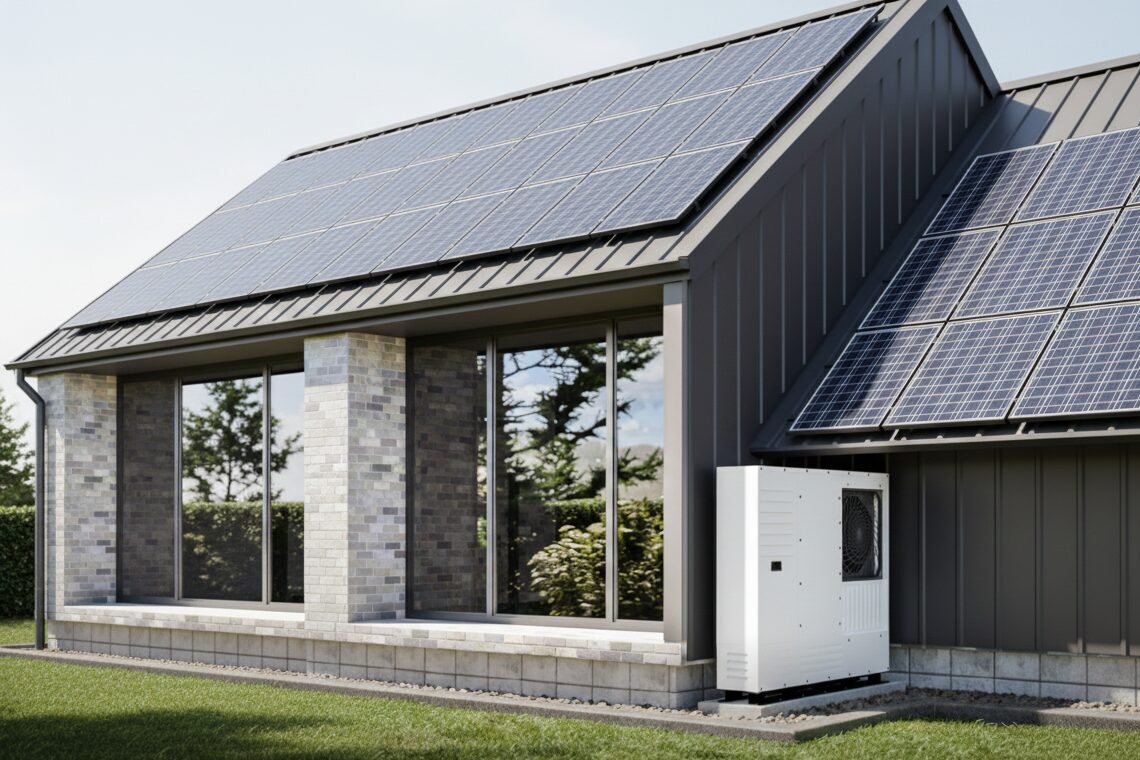
In Luxembourg, more and more households are considering replacing their old boiler with a heat pump, while installing photovoltaic panels at the same time. On paper, the promise is simple: produce your own electricity, heat your home with a renewable energy source, and significantly reduce your dependence on energy suppliers.
But one question keeps coming up with our clients:
“Is the combination of a heat pump and solar panels really profitable for my home, especially in 2025 and 2026 in Luxembourg?”
In this article, we take a fact-based look at the heat pump + photovoltaic duo: consumption profiles, solar production, financial incentives, payback time, and the situations where this combo really makes sense… and where it doesn’t..
1. Why the heat pump and solar panel combination is attracting so many households in Luxembourg
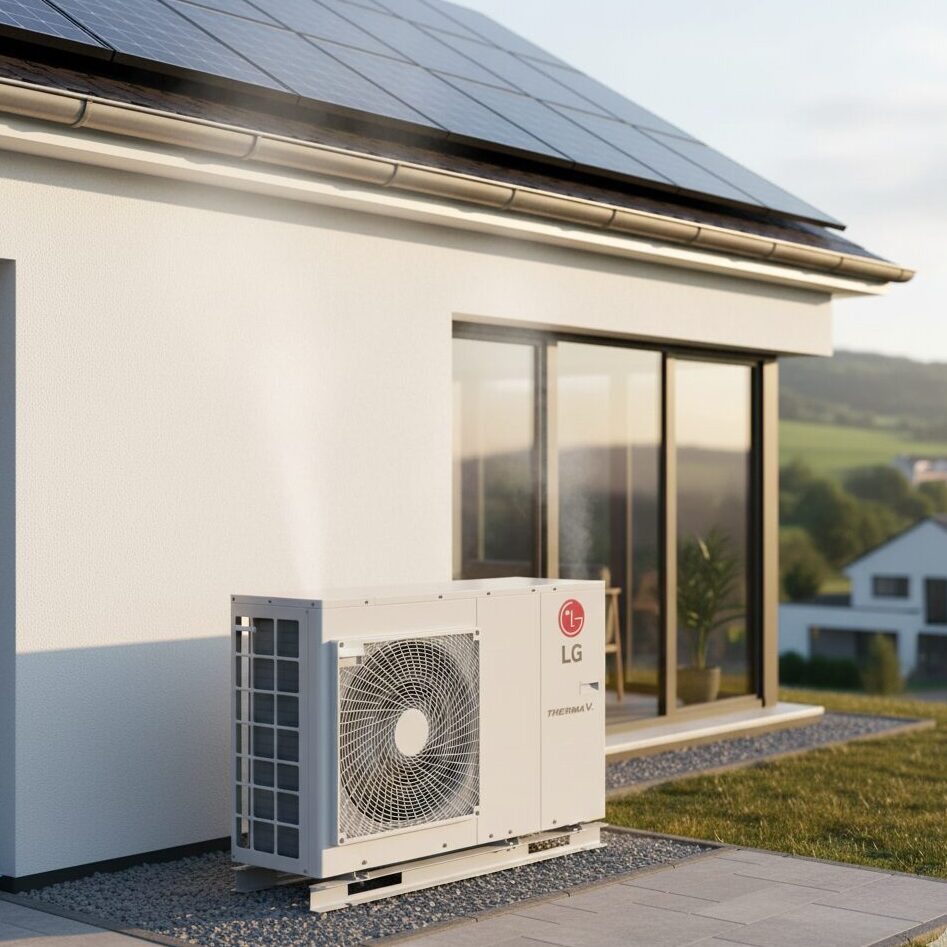
Two major trends are emerging in Luxembourg:
- Energy prices remain volatile, with strong sensitivity to international markets.
- Public subsidies (Klimabonus, enoprimes, municipal grants) clearly encourage investments in heat pumps and photovoltaics.
As a result, many homeowners are wondering whether, instead of progressing step by step (first solar, then a heat pump), it wouldn’t be more sensible to think of the home’s energy strategy as a whole.
If you are already asking yourself the question “Are solar panels still profitable in 2025 in Luxembourg?”, then combining them with a heat pump is essentially the next step: how to make the best use of this green electricity for heating and cooling.
2. How a home equipped with a heat pump consumes energy
2.1. Typical consumption profile with a heat pump
A properly sized air-to-water heat pump generally allows you to:
- Reduce final energy consumption for heating by about 2 to 3 times compared to an oil or gas boiler.
- Switch from a fossil fuel (oil, gas) to electricity consumption.
In practice, for a well-insulated single-family home, we often observe:
- Additional electricity consumption of around 3,000 to 6,000 kWh per year for the heat pump (heating and sometimes hot water).
- More concentrated consumption in winter, especially in the morning and evening.
2.2. What this means for photovoltaics
Installing a heat pump without considering local electricity production essentially means:
- Replacing one energy bill (gas, oil) with another (grid electricity).
- Remaining fully dependent on your supplier’s tariffs, even if your system is more efficient.
Conversely, adding photovoltaic panels allows you to:
- Produce part of the electricity needed for the heat pump, especially during the mid-season (autumn, spring).
- Reduce the overall energy bill by increasing your self-consumption.
But keep in mind: solar production peaks in summer when heating needs are low. It is therefore essential to understand what a photovoltaic array can actually provide for a home heated by a heat pump.
3. What a typical photovoltaic installation produces in Luxembourg
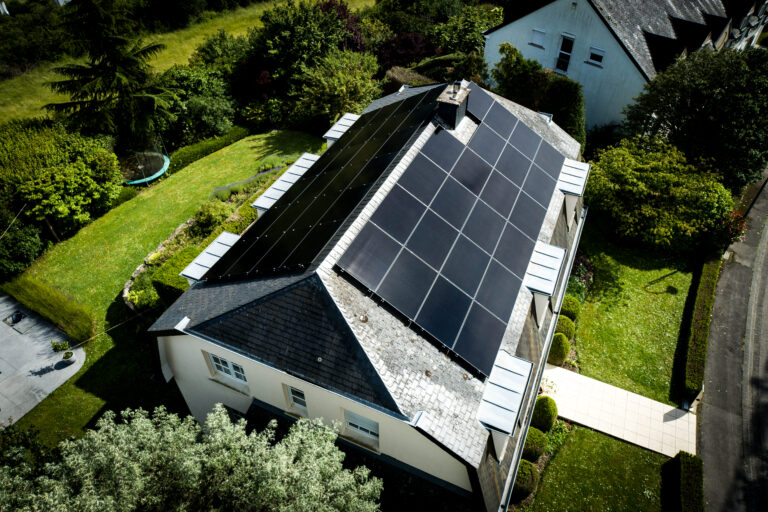
In Luxembourg, a properly sized residential photovoltaic system typically produces around 900 to 1,050 kWh per kWp per year, depending on orientation, tilt angle and the absence of shading.
A few reference values for a single-family home:
- 6 kWp of solar panels usually produce around 5,500 to 6,000 kWh per year.
- 10 kWp produce approximately 9,000 to 10,000 kWh per year.
Production is highly seasonal:
- Summer: high production, low heating demand, consumption mostly linked to daily household use (appliances, ventilation, possibly air conditioning).
- Winter: high heating demand, but low solar production.
This is why the question “heat pump + photovoltaics” must be examined using concrete scenarios and real numbers, not just theoretical assumptions.
4. Three concrete scenarios: no change, PV only, heat pump only, heat pump + PV
To illustrate typical orders of magnitude, let’s take the simplified example of a single-family home in Luxembourg:
- Current heating consumption: around 18,000 kWh per year (gas or oil).
- Electricity consumption excluding heating: around 3,000 kWh per year.
- Energy prices: indicative values, simplified for comparison purposes.
The figures below are intentionally rounded. They are meant to compare general orders of magnitude, not to replace a personalised study.
4.1. Scenario comparison
The scenarios below provide average indicative values for a typical single-family house in Luxembourg. Investment amounts and annual savings vary according to many factors: insulation level, house size, energy prices, technical configuration, subsidies actually obtained, etc. These are not 100% exact figures but reference benchmarks to help visualise the differences between each solution.
| Scenario | Typical net investment after subsidies (approx.) | Estimated annual energy cost | Estimated payback time | Main remark |
|---|---|---|---|---|
| 1. Gas or oil boiler + grid electricity (current situation) | €0 (existing installation) | €2,000 to €3,000 / year (heating + electricity) | None | Total dependence on the supplier, no equipment amortisation. |
| 2. Solar panels only (e.g., 8 kWp) | Approx. €7,000 to €10,000 net after public subsidies | Savings of €700 to €1,200 / year | Approx. 7 to 12 years depending on consumption profile | Mainly reduces electricity costs; fossil heating remains. |
| 3. Heat pump only (air-to-water) | Approx. €10,000 to €14,000 net after public subsidies | Reduction of 40% to 60% of heating costs | Approx. 6 to 10 years depending on energy prices and insulation | Switches heating to electricity without local production. |
| 4. Heat pump + solar panels (e.g., air-to-water heat pump + 8 kWp) | Approx. €16,000 to €22,000 net after public subsidies | Significant reduction of total energy bill (heating + electricity), sometimes up to 60–80% | Approx. 8 to 12 years depending on consumption and combined subsidies | High self-consumption potential, especially in mid-season, but depends strongly on the home’s profile. |
Important: these figures are not Ecoclima quotes. They are illustrative values to help understand the combined effect of subsidies and savings. Only a personalised technical study can precisely calculate the real return on investment.
5. Financial incentives and VAT for heat pumps and photovoltaics in Luxembourg
5.1. Incentives for photovoltaic panels
For photovoltaic installations, Luxembourg’s subsidies are mainly based on:
- Klimabonus for residential photovoltaics, with a subsidy percentage and a maximum amount per kWp installed.
- A reduced VAT rate of 3% on the delivery and installation of solar panels for private homes.
- Possible municipal subsidies, which vary depending on the municipality (Luxembourg City, Differdange, Dudelange, etc.).
In some cases, battery storage can also be subsidised, with capacity limits (for example 1.5 kWh of battery capacity per kWp installed, up to a certain kWh ceiling). We detail the specific rules in our dedicated guide to solar batteries in Luxembourg.
5.2. Incentives for heat pumps
For heat pumps, the main support schemes are:
- Klimabonus Wunnen for renovation and for replacing fossil-fuel boilers with heat pumps (air-to-water, geothermal, etc.).
- The enoprimes programme, which rewards energy renovation works that generate measurable energy savings, and is cumulative with Klimabonus.
- Municipal subsidies in certain communes, sometimes through the Klimabonus Gemengen framework, depending on the area of residence.
- A 3% VAT rate, which is also eligible for heat pumps if an application is submitted and approved.
In many cases, combining these subsidies helps finance a significant share of the investment, especially when the heat pump replaces an old oil or gas boiler.
6. When the heat pump + solar panel combination is truly relevant
6.1. Single-family home with high heating demand
- Medium to large single-family home with significant heating needs (surface area, occupancy, average insulation level).
- Old oil or gas boiler with low efficiency.
- Already high annual heating costs.
In this case, the heat pump provides a direct reduction in heating costs, while the photovoltaic system helps offset part of the new electricity consumption.
6.2. Well-oriented roof with enough space for panels
- Roof with good orientation (south, south-east or south-west) and adequate tilt angle.
- Few shading obstacles (trees, chimneys, neighbouring buildings).
- Available surface area for an installation of around 6 to 10 kWp or more, depending on the size of the house.
The higher the annual solar production, the greater the share of consumption that can be covered by your solar panels, including for the heat pump.
6.3. Simultaneous use of other electrical equipment
The combination becomes even more relevant if you also use other high-consumption electrical equipment, such as:
- An electric vehicle charging station.
- A solar battery to optimise evening self-consumption.
- A reversible air-conditioning system integrated into the heat pump.
In this case, the photovoltaic system is not only used to power the heat pump, but more broadly to supply a maximum number of household uses, which significantly improves overall profitability.
7. When the heat pump + photovoltaic combination is not necessarily the priority
Conversely, there are situations where the combination is not the first investment to consider.
7.1. Very well-insulated home with low heating needs
If your home is recent and very well insulated, with moderate heating requirements:
- Your heating bill is already relatively low.
- The additional savings brought by a heat pump are therefore more limited in absolute value.
In this case, it may be more rational to start with:
- A photovoltaic system sized for your electrical consumption.
- Possibly a battery if you want to maximise self-consumption.
7.2. Building with technical or grid constraints
Sometimes, technical constraints reduce the relevance of the combination:
- Insufficient or poorly oriented roof surface to install enough panels.
- Constraints on the available electrical power to supply a sufficiently sized heat pump.
- Apartment buildings where the technical configuration makes individual heat pump installation difficult for each unit.
7.3. Priority to insulation or other renovation work
In some cases, the most rational priority is neither photovoltaics nor a heat pump, but first:
- Improving insulation (attic, walls, windows).
- Reducing air infiltration and installing appropriate ventilation.
Reducing heating needs at the source then makes it possible to size a heat pump and a photovoltaic installation more modestly — and therefore often more cost-effectively.
8. Heat pump, solar panels, battery and EV charger: think system rather than products
The more equipment you add (heat pump, solar panels, battery, EV charging station, possibly air conditioning), the more important it becomes to design the installation as a coherent system rather than a simple combination of separate products.
Key points to consider:
- Heat pump sizing based on the real heating and hot water needs of the home.
- Photovoltaic capacity adapted both to your base electrical consumption and to the heat pump’s demand.
- Optional battery storage, sized within the limits of local subsidies and aligned with your evening consumption profile.
- Energy management system capable of optimising local consumption (priority for the heat pump, hot water tank, EV charging, etc.).
This is exactly where the added value of a specialised installer like Ecoclima stands out, compared to a purely “product catalogue” approach.
9. How Ecoclima sizes a heat pump + solar panel combo in Luxembourg
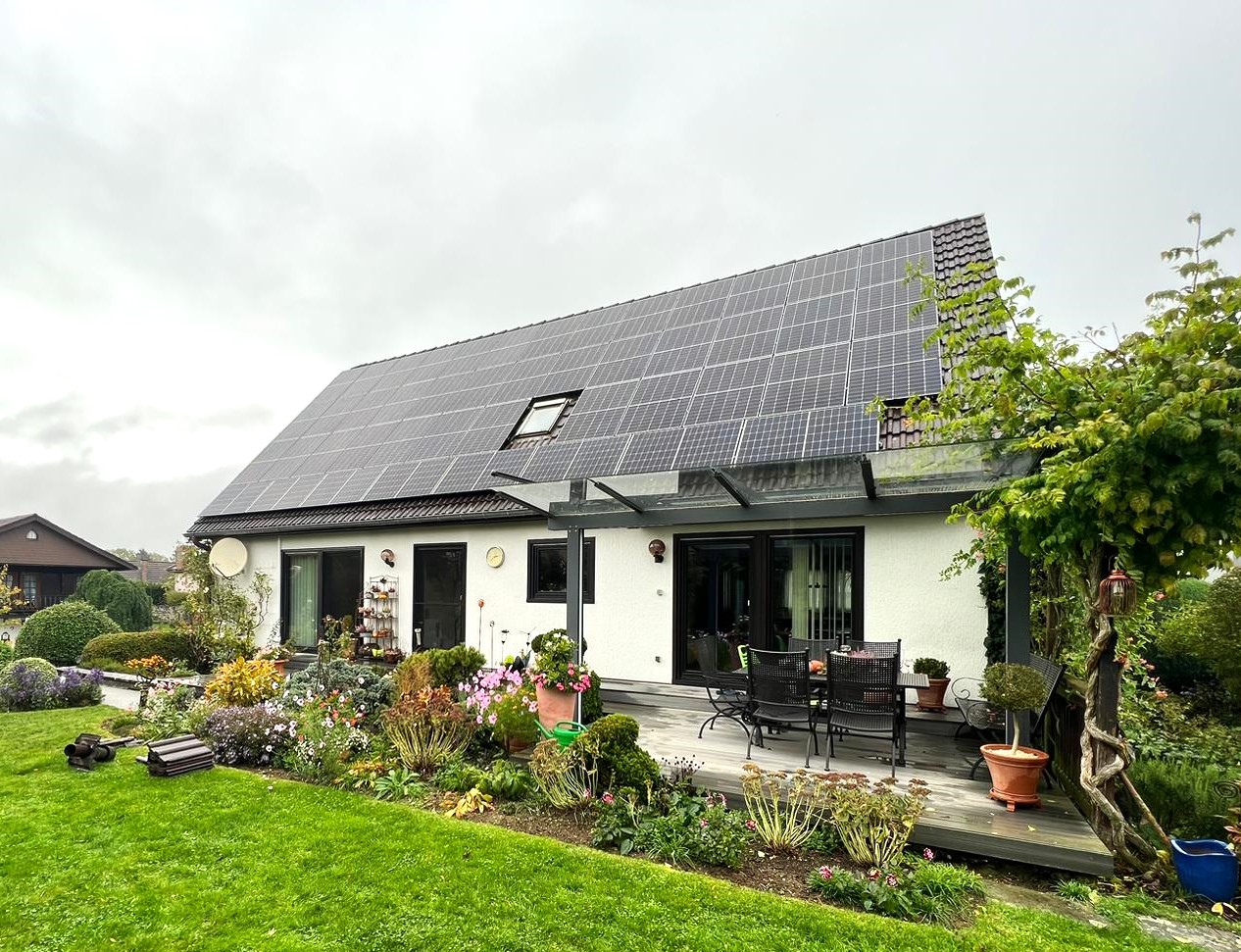
At Ecoclima, we already support several hundred households in Luxembourg in their transition toward a more autonomous home, with more than 800 photovoltaic installations completed. Our approach to designing a heat pump + PV system is based on a few clear principles:
9.1. Analysis of your real data
- Review of your energy bills (gas, oil, electricity) over several years.
- Consideration of the surface area and insulation level of your home.
- Discussion of your future plans: electric vehicle, extension, additional renovation.
9.2. Multi-year energy simulation
- Simulation of heat pump consumption under different temperature and usage scenarios.
- Simulation of photovoltaic production based on your roof (orientation, tilt, shading).
- Calculation of your self-consumption rate and the coverage rate of the heat pump’s needs by solar energy.
9.3. Integration of updated financial incentives
- Verification of Klimabonus incentives applicable at the time of your project.
- Estimation of enoprimes and any additional municipal subsidies.
- Consideration of the 3% VAT rate for photovoltaics when conditions are met.
9.4. Transparent pricing, with several options
We generally present several scenarios:
- Option 1: Solar panels only.
- Option 2: Heat pump only.
- Option 3: Heat pump + solar panels, with or without battery storage.
The goal is to allow you to compare with complete transparency — the costs, annual savings and payback times, so you can decide what is most relevant for your situation.
- Yes, in many cases, the heat pump + solar panel combination is profitable, especially when:
- The home has significant heating needs.
- The roof allows for good photovoltaic production.
- Public subsidies are maximised (Klimabonus, enoprimes, municipal grants).
- No, not systematically, if:
- Your home is already very energy-efficient.
- Your roof is not suitable for photovoltaics.
- Other renovation work (insulation, major refurbishment) is a higher priority.
What is almost always true, however:
- Switching from an oil or gas boiler to a properly sized heat pump significantly reduces CO₂ emissions and dependence on fossil fuels.
- Installing well-sized solar panels remains a strong answer to the question “Are solar panels still profitable in 2025 and 2026 in Luxembourg?”, especially with a good self-consumption rate.
- The combination of both makes the most sense when it is designed as a full system, tailored to your home and your budget.
Considering combining a heat pump and solar panels in Luxembourg?
At Ecoclima, we support you from the initial study to full installation:
- Analysis of your current situation and energy bills.
- Personalised simulations of several scenarios (heat pump only, solar only, heat pump + solar, with or without battery).
- Advice on available subsidies and assistance with preparing the application files.
- Complete installation by experienced local teams.
Request your personalised photovoltaic and heat pump study in Luxembourg. We will take the time to review with you whether the combination is truly profitable for your home, and in which order it is most relevant to carry out the work.
FAQ – Pompe à chaleur et panneaux solaires au Luxembourg
Yes, in many cases the combination is profitable, especially if your home has high heating demand and a well-oriented roof. Solar panels reduce the electricity bill of the heat pump and, with available subsidies, the payback time can be around 6 to 12 years depending on the situation.
In practice, most single-family homes with a heat pump require between 6 and 10 kWp of solar panels, adjusted to your total electricity consumption, available roof surface and budget. Sizing should be based on all your uses: heating, hot water, household appliances, electric vehicle, etc.
It depends on your situation. If your boiler is old or inefficient, the heat pump is often the priority. If your roof is ideal and your electricity bills are already high, starting with solar can be the better move. A combined study will determine the optimal order.
Installations can benefit from Klimabonus subsidies, enoprimes, possible municipal grants and, for photovoltaics, a reduced 3% VAT rate. The combination and amounts depend on the building and the type of works carried out.