
Can solar really dominate the electricity of tomorrow in Luxembourg ?
Photovoltaics 2026 | global energy | Luxembourg
Has solar become the cheapest electricity in the world?
Solar photovoltaics are now among the most competitive new sources of electricity in the world. But the real question is no longer only whether solar is cheap. The real question is how to integrate a photovoltaic installation into an almost 100% renewable power system, with wind, storage, the grid and demand management.
$0.043
Global average LCOE of utility scale solar PV in 2024 according to IRENA.
$0.034
Global average LCOE of onshore wind in 2024 according to IRENA.
70%
Share of solar + wind in global electricity in 2050 in the IEA Net Zero scenario.
40%
Possible reduction in battery storage costs by 2030 according to the IEA.
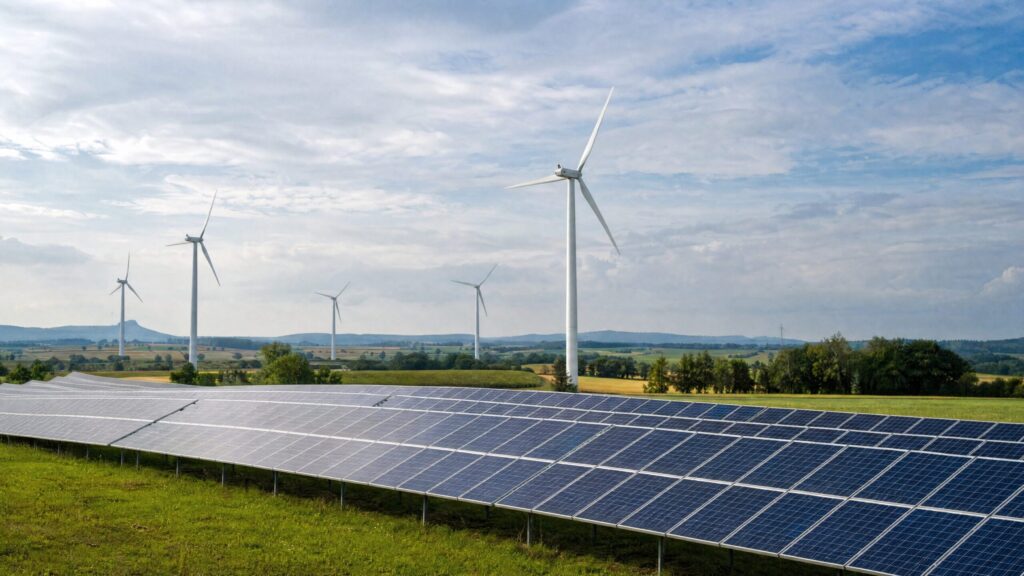
Table of contents
- The verdict: solar is highly competitive, but not magic
- How can we reach almost 100% renewable electricity?
- What share could solar represent in the future electricity mix?
- Current LCOE: which sources cost the least?
- Future LCOE: will costs continue to fall?
- The major challenges to solve
- Why storage is becoming essential
- What this changes for homes in Luxembourg
- Action plan for a coherent solar home
- FAQ
1. The verdict: solar is highly competitive, but not magic
The title “solar is the cheapest electricity in the world” is powerful. It attracts attention. But to be accurate, it needs to be framed with nuance.
Clear verdict
Solar photovoltaics are now one of the cheapest sources for producing new electricity capacity. In many countries and for many projects, solar is cheaper than new fossil fuel power plants. But on a global scale, onshore wind can still come out cheaper than utility scale solar according to IRENA averages.
In 2024, IRENA estimates the global average LCOE of utility scale solar photovoltaics at $0.043/kWh. Onshore wind is estimated at $0.034/kWh. This means solar is extremely competitive, but the claim “solar is always the cheapest” would be too absolute.
The distinction matters. The production cost of a solar kWh is not the only criterion. A power system must also supply electricity at the right time, in the right place, with enough power, even at night, in winter or during periods of low renewable production.
Solar often wins the cost battle. But a renewable power system must also win the flexibility battle.
The future of electricity therefore does not rely on one technology alone. It relies on a complete architecture: solar, wind, batteries, the grid, interconnections, demand management, hydropower where available, and sometimes other more dispatchable renewable solutions.
At the level of a home, this logic translates into a simple question: how can solar panels, the heat pump, the EV charger, the solar battery and the electrical installation be connected into one coherent system?
2. How can we reach almost 100% renewable electricity?
Achieving a very high share of renewables does not simply mean adding more solar panels. The real challenge is systemic. We need to produce a lot of renewable electricity, but also shift it over time, transport it, manage it and consume it intelligently.
This is exactly the logic of a flexible home: produce locally, shift certain uses and avoid consuming electricity at the wrong time whenever possible.
1
Produce massively
Deploy solar and wind at scale, on roofs, car parks, industrial sites and suitable areas.
2
Diversify
Combine solar, wind, hydropower, sustainable bioenergy, geothermal energy and other local resources depending on the territory.
3
Store
Use batteries, thermal storage, pumped hydropower and other solutions to shift energy over time.
4
Manage demand
Shift certain electricity uses towards hours of renewable production: charging, hot water, cooling and heating.
5
Strengthen the grid
Modernise power grids, connect new capacity and develop interconnections between countries.
In its Net Zero scenario, the IEA estimates that by 2050 almost 90% of global electricity could come from renewable sources. In this scenario, solar photovoltaics and wind together represent nearly 70% of global electricity generation.
The important conclusion
An almost 100% renewable system is not an “all solar” system. It is a system where solar becomes a major pillar, wind becomes the other major pillar, and storage connects production with real uses.
3. What share could solar represent in the future electricity mix?
There is no single percentage that applies to every country. The optimal share of solar depends on sunlight, consumption patterns, the grid, available storage, wind potential and the level of electrification of end uses.
But we can give a robust order of magnitude: in a highly renewable power system, solar could represent around 30 to 40% of electricity generation in many long-term scenarios. Wind could represent a similar share, sometimes higher in very windy countries. The rest would come from hydropower, sustainable bioenergy, geothermal energy, renewable imports, storage and flexibility.
For a home, this question also relates to energy uses: some appliances are naturally better aligned with solar production. You can explore this topic further in our guide on appliances compatible with solar panels in Luxembourg.
| Component of the future mix | Possible share in a highly renewable system | Main role | Limit to anticipate |
|---|---|---|---|
| Solar photovoltaics | Around 30 to 40% depending on regions and scenarios | Produce very competitive electricity during the day, on buildings, car parks and ground-mounted plants. | Lower production at night and in winter, especially in Northern Europe. |
| Onshore and offshore wind | Around 30 to 40%, sometimes more in very windy countries | Complement solar, especially at night, in winter and during certain less sunny periods. | Public acceptance, permits, connection and more sensitive costs for offshore wind. |
| Hydropower | Highly variable depending on geography | Provide more controllable renewable production and sometimes pumped storage. | Limited potential in many countries and dependence on hydrological conditions. |
| Bioenergy, geothermal energy and other renewables | Smaller but strategic share | Complement the system with more stable or local resources. | Limited resources, variable costs and the need for genuine sustainability. |
| Storage and flexibility | Not net generation | Shift electricity over time, reduce peaks and stabilise the grid. | Short-term storage is progressing quickly, while seasonal storage remains more complex. |
Why solar alone is not enough
Even with a very low production cost, solar does not always produce when demand is highest. In Europe, heating-related consumption often increases in winter, while solar production decreases. This is why wind, storage, the grid and demand management are essential.
4. Current LCOE: which sources cost the least?
LCOE, or levelised cost of electricity, measures the average cost of producing one kWh over the lifetime of an installation. It is a useful indicator for comparing technologies, but it is not enough on its own to assess the real value of an energy source within the power system.
Here are the 2024 global orders of magnitude for several renewable technologies, according to IRENA.
| Technology | Global average LCOE 2024 | Quick reading | Conclusion |
|---|---|---|---|
| Onshore wind | $0.034/kWh | Very competitive, often the cheapest on global average. | Major pillar |
| Utility scale solar photovoltaics | $0.043/kWh | Very competitive, quick to deploy, with costs sharply reduced since 2010. | Major pillar |
| Hydropower | $0.057/kWh | Competitive and useful for flexibility where the territory allows it. | Strategic complement |
| Geothermal energy | $0.060/kWh | Interesting because it is more controllable, but dependent on local potential. | Locally relevant |
| Offshore wind | $0.079/kWh | Very powerful in coastal countries, but more complex and more capital intensive. | Strong potential |
| Concentrated solar power CSP | $0.092/kWh | Can integrate thermal storage, but remains suited to certain climates. | Specific case |
Solar is therefore clearly in the group of the cheapest technologies. But if we want to be rigorous, we should say: solar and onshore wind are now the two major economic champions of new electricity generation.
Why LCOE is not enough
Two sources can have a very low LCOE but not have the same value for the grid. A kWh produced at midday in summer does not have the same value as a kWh available on a winter evening. This is why storage, flexibility and the grid must be included in the analysis.
For a homeowner, the analysis must also include the real cost of a project, subsidies, the possible battery and the quality of the quote. On this topic, see our guide: solar panel quote Luxembourg 2026: prices, subsidies and points to check.
5. Future LCOE: will costs continue to fall?
Solar has already experienced a spectacular decline. According to IRENA, the average cost of solar photovoltaics fell by around 90% between 2010 and 2024. It would therefore be risky to assume that the same decline will continue at the same pace.
The next improvements will not come only from the panel. They will mainly come from the whole system: power electronics, installation, standardisation, batteries, energy management, connection, financing and grid management.
The choice of equipment is therefore becoming strategic. At Ecoclima, we present some of the products and brands used for installations in Luxembourg, including panels, inverters, batteries, heat pumps and EV chargers.
| Element | Likely trend | Impact on future LCOE | What to watch |
|---|---|---|---|
| Photovoltaic modules | Costs are already very low, with possible but more gradual gains. | The panel alone is becoming less often the main cost item. | Supply chains, quality, warranties, component origin. |
| Inverters and electronics | Smarter, more integrated and more connected products. | Improved performance, monitoring and energy management. | Battery compatibility, cybersecurity, lifespan. |
| Batteries | The IEA estimates that storage costs may still fall significantly by 2030. | Solar with battery becomes more competitive and more useful to the grid. | Life cycle, recycling, safety, sizing. |
| Installation and labour | Possible standardisation, but local costs remain variable. | Significant impact for residential projects, especially in Europe. | Installation quality, availability of installers, roof complexity. |
| Grid and connection | Investments are needed to absorb more variable production. | System cost becomes more visible than panel cost. | Local capacity, delays, technical rules, flexibility. |
| Financing | The cost of capital remains decisive. | Higher interest rates can increase the final cost despite cheap technology. | Regulatory stability, subsidies, prefinancing models. |
The real change ahead
The question will no longer only be: “how much does a solar panel cost?” The question will be: “how much does a system capable of producing, storing, managing and consuming electricity at the right time cost?”
6. The major challenges to solve
Solar and wind have become competitive, but that does not make the transition automatic. The obstacles are no longer only technological. They are also electrical, administrative, industrial and social.
Intermittency
Solar varies depending on the time of day, weather and season. Wind varies depending on wind conditions. The system must absorb these variations.
Seasonality
In Europe, solar production decreases in winter while some electricity needs increase, especially with heat pumps.
Grid
More decentralised production requires more connections, more local reinforcement and more intelligent management.
Flexibility
Consumption must become more adaptable: charging, hot water, heating, cooling, storage and certain industrial uses.
Raw materials
Modules, batteries, cables, transformers and electronic components depend on global supply chains.
Public acceptance
Power lines, solar parks, wind turbines and new infrastructure can face local opposition.
The main weakness in the reasoning “solar is the cheapest, so the problem is solved” is that it confuses production cost with system cost. Producing a cheap kWh is one step. Supplying reliable electricity all year round is another.
At building level, these challenges often translate into concrete choices: electrical panel, protections, available power, compatibility between equipment and installation quality. This is why general electrical work becomes an essential foundation for solar, EV charging and energy renovation projects.
7. Why storage is becoming essential
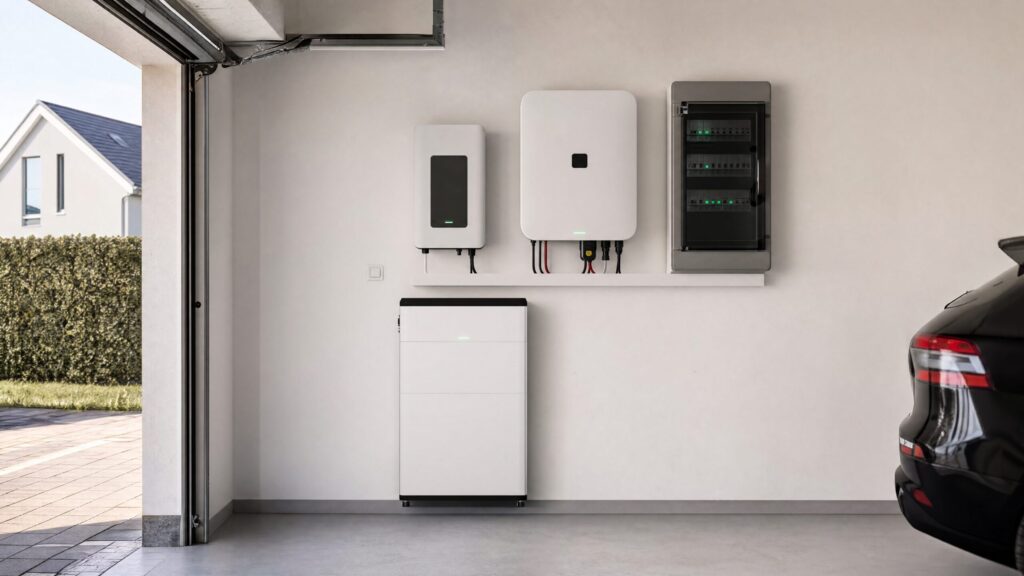
Storage is one of the elements that turns solar from simple variable generation into a much more useful resource. It makes it possible to consume in the evening some of the electricity produced during the day, reduce peaks, secure certain uses and improve self-consumption.
According to the IEA, innovation could reduce battery storage costs in the power sector by up to 40% by 2030 in its current policies scenario. This decline makes the solar + battery combination increasingly competitive.
For a home, the question is not only “do I need a battery?”, but rather “what capacity, what power and for which uses?”. Our guide solar battery Luxembourg: kWh vs kW explains this point in detail, especially for demanding uses such as electric vehicle charging.
| Solution | Typical duration | Usefulness | Concrete example for a home |
|---|---|---|---|
| Residential battery | A few hours | Shift solar production towards the evening. | Use solar electricity for lighting, cooking or certain appliances after sunset. |
| Grid battery | A few hours | Stabilise the grid and absorb renewable surplus. | Less visible for homeowners, but essential at system scale. |
| Smart charging | Variable | Charge an electric car during solar hours. | Schedule charging during the day when the home is producing. See also our guide to charging an electric car with solar panels. |
| Thermal storage | Hours to days | Store energy as heat or cooling. | Heat a domestic hot water tank or preheat the building at the right time. |
| V2H and V2G | Variable | Use the vehicle battery as an energy resource. | To be monitored depending on car compatibility, charger compatibility, grid rules and economic model. |
| Long-duration storage | Days to season | Respond to long periods of low renewable production. | Less suited to an individual home, more relevant at grid or industrial scale. |
Storage does not mean total independence
A home battery improves self-consumption, but it does not automatically make a house independent from the grid all year round. In Luxembourg, the best approach is often to remain connected to the grid while maximising locally consumed solar energy.
8. What this changes for homes in Luxembourg
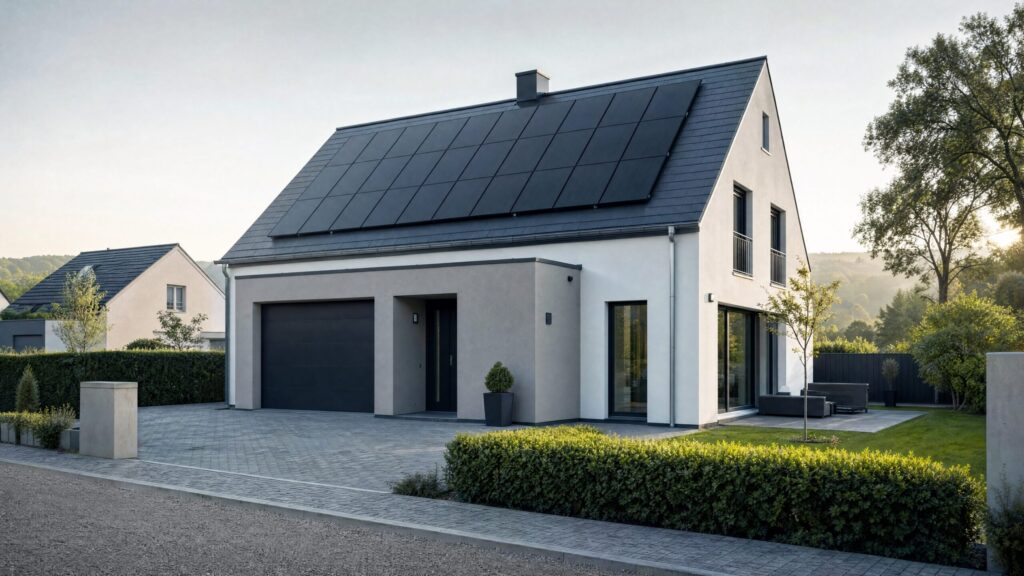
In Luxembourg, photovoltaics are no longer a marginal topic. Klima-Agence indicates that the country had 32,000 photovoltaic installations connected to the grid at the end of 2025, around 26,000 self-consumption installations and around 1,200 sharing groups.
Luxembourg is also a highly interconnected country. A solar home should therefore not be designed as an energy island. It should be designed as an intelligent building block within a wider grid.
The right logic for a Luxembourg home
Photovoltaics must be considered together with the other uses of the building: heat pump, air conditioning, EV charger, battery, electrical panel, consumption habits and management potential. A solar installation isolated from the rest of the home loses part of its value.
Example of good alignment with solar
Air conditioning, daytime EV charging, programmable hot water, shifted household appliances and certain professional uses from home.
Example of poor natural alignment
Direct electric heating or a heat pump heavily used in winter, when solar production is lower. This does not mean these systems are bad, but that they must be designed as part of an overall system.
The photovoltaic prefinancing introduced in 2026 in Luxembourg also increases the relevance of the topic, because it allows the Klimabonus subsidy to be deducted directly from the final invoice under certain conditions. This does not change the physics of the system, but it can reduce the initial financial barrier.
To see concrete projects, you can also consult our Ecoclima references in Luxembourg.
9. Action plan for a coherent solar home
A good installation is not about installing as many panels as possible. It is about designing a system adapted to the building, the real uses and the future evolution of electricity consumption.
| Horizon | Action | Goal | Priority | Effort | Impact |
|---|---|---|---|---|---|
| Quick win | Analyse annual consumption and hourly peaks. | Size the solar system according to the real building profile. | High | Low | Strong |
| Quick win | Shift certain uses to daytime. | Increase self-consumption without heavy investment. | High | Low | Medium to strong |
| Medium term | Study a battery if the consumption profile justifies it. | Use more solar electricity in the evening. | Medium to high | Medium | Strong if properly sized |
| Medium term | Install a controllable EV charger. | Turn the electric car into a priority solar use. | High if electric vehicle | Medium | Strong |
| Medium term | Coordinate solar, heat pump, air conditioning and electrical panel. | Build a coherent energy system. | High | Medium | Strong |
| Long term | Prepare for more management, sharing and flexibility. | Prepare the home for future electrical uses. | Medium | Variable | Strong long term |
To move from theory to a concrete project, the most reliable step is to request a clear study: roof, power, equipment, possible battery, EV charger, subsidies, prefinancing and electrical constraints. You can start with our page on photovoltaic installation in Luxembourg or by contacting Ecoclima directly.
Most frequently asked questions (FAQ)
Is solar really the cheapest electricity in the world?
Solar photovoltaics are among the cheapest sources for producing new electricity capacity. But according to IRENA’s 2024 global averages, onshore wind still comes out cheaper than utility scale solar. The most rigorous wording is therefore: solar and onshore wind are now the two major economic pillars of new electricity generation.
Can we reach 100% renewable electricity with solar only?
This is not the most robust assumption. Solar mainly produces during the day and more in summer. An almost 100% renewable system must combine solar, wind, storage, the grid, demand management and other renewables depending on local resources.
What share could solar represent in the future electricity mix?
In many long-term scenarios, solar could represent around 30 to 40% of electricity generation, with strong variation depending on the region. Wind could represent a comparable share, sometimes higher in very windy countries.
Why is wind still important if solar is so competitive?
Wind often produces at different times from solar, especially at night and during certain winter periods. This complementarity reduces the need for storage and makes the power system more stable.
Is a battery essential with solar panels?
Not always. A battery becomes interesting when the household’s consumption, the price of electricity, available subsidies and building uses justify it. Before adding a battery, the real consumption profile must be analysed. See also our guide on the solar battery in Luxembourg.
Does LCOE correspond to the price paid on the electricity bill?
No. LCOE measures the average production cost of a technology. The price paid by a household also includes the grid, taxes, supplier fees and market conditions. For a home, the value of solar depends mainly on self-consumption and sizing.
What is the right solar system for a home in Luxembourg?
There is no single answer. The right system depends on the roof, orientation, consumption, the presence of an electric car, a heat pump, air conditioning, a possible battery and the electrical constraints of the building. To go further, consult our renewable energy FAQ in Luxembourg.
Would you like to study a solar project in Luxembourg?
At Ecoclima, a photovoltaic installation is not designed as an isolated product. It is studied as a complete energy solution for the building: solar production, self-consumption, possible battery, EV charger, heat pump, air conditioning and electrical constraints.
The goal: design a reliable, coherent installation adapted to the real uses of your home.
Sources used for this article
- IRENA, Renewable Power Generation Costs in 2024
- International Energy Agency, Renewables 2025
- International Energy Agency, Net Zero by 2050
- International Energy Agency, Batteries and Secure Energy Transitions
- Klima-Agence, 2026 press conference
- Guichet.lu, prefinancing of solar photovoltaic installations
Also read on Ecoclima