
Solar Panels in Luxembourg in 2026: Prices, Subsidies, Profitability and Pre-Financing
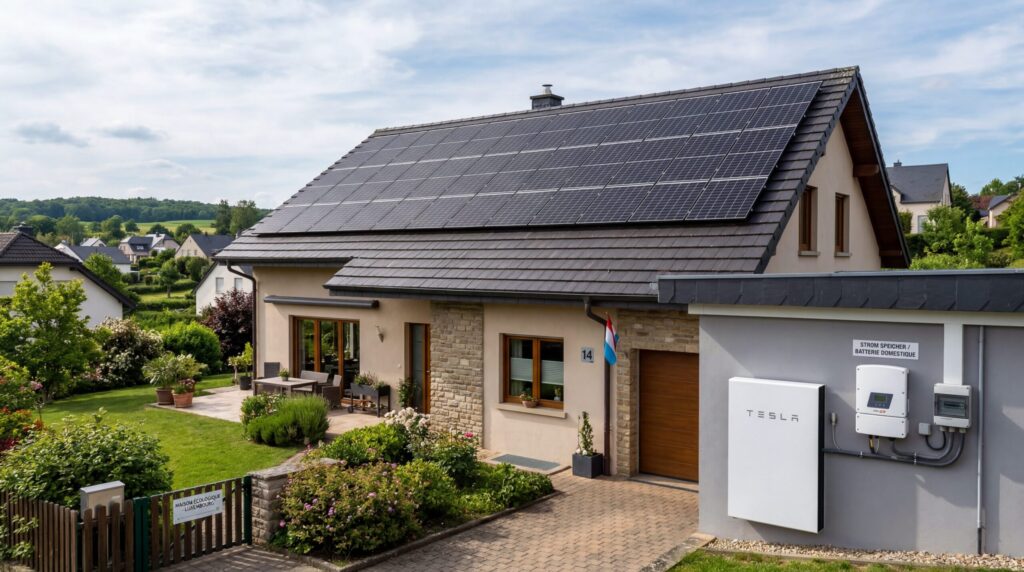
Installing solar panels in Luxembourg remains a very good decision in 2026, but not under just any conditions. A good project is not simply about “putting up as many panels as possible.” You need to look at the real cost, the available subsidies, pre-financing, self-consumption, the possible addition of a battery, and the overall quality of the system sizing.
This guide gets straight to the point. The goal is simple: to help you understand what really matters before signing, with a clear, practical, and locally relevant overview.
Key takeaways in 30 seconds
- Solar remains highly relevant in Luxembourg in 2026, especially when the project is designed around self-consumption.
- Pre-financing can significantly reduce the upfront financial effort, since the subsidy is deducted directly from the final invoice.
- The best project is not necessarily the largest one, but the best sized.
- A battery can be very interesting, but it is not automatic and must be justified by actual usage.
- Before signing, you should review the quote, the subsidies, the deposit structure, the grid-related procedures, and the overall consistency of the system.
Contents
What changes in 2026
In 2026, residential solar in Luxembourg becomes easier for homeowners to understand for three main reasons:
- pre-financing allows the subsidy to be deducted directly from the final invoice;
- self-consumption becomes the central logic behind truly optimized projects;
- official subsidies provide a clearer framework, including for storage.
In practical terms, the market is becoming more professional. Clients are no longer looking only for a price. They want to understand what they will actually pay, what they can realistically expect from the system, and whether the installation makes sense for their home.
Useful official links:
Klimabonus 2026 on Guichet.lu
Solar pre-financing on Guichet.lu
Official steps for a photovoltaic project
Klimabonus 2026 on Guichet.lu
Solar pre-financing on Guichet.lu
Official steps for a photovoltaic project
Solar panel prices in Luxembourg
There is no single price that applies to every home. The total cost depends mainly on the installed capacity, the roof type, site accessibility, the inverter, the electrical panel, and whether or not a battery is included.
In Luxembourg, it is more relevant to think in terms of power ranges rather than a single price per kWp. For a standard residential project, budgets mainly vary depending on system size, installation complexity, and the options selected. Below are typical price ranges before subsidies, consistent with the most common scenarios.
| Indicative size | Typical profile | Budget before subsidies |
|---|---|---|
| 4 to 6 kWp | Detached house with standard consumption | Around €9,000 to €11,000 |
| 7 to 9 kWp | More electrified home or household with higher energy needs | Around €12,750 to €14,750 |
| 10 to 15 kWp | Large roof or more comprehensive residential project | Around €17,000 to €20,000 |
The key point is not to get “the cheapest quote,” but to understand what is included and why. Two offers that look similar at first glance may in reality correspond to two very different project strategies.
To go further on budgets, you can also read our dedicated guide: solar panel prices in Luxembourg in 2026.
2026 solar subsidies and grants in Luxembourg
The 2026 framework clearly supports residential photovoltaic projects. For self-consumption projects or energy communities, the subsidy follows an official formula with a maximum amount of €10,000 for photovoltaics, reached from 15 kWp. With storage, the total subsidy can rise to €12,250, which means a maximum additional bonus of €2,250 linked to the battery. This encourages well-designed projects rather than automatic oversizing.
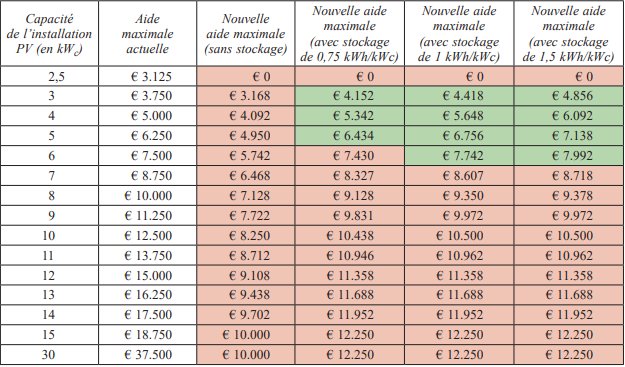
In addition, some municipalities also offer local grants of up to 50%. The easiest way to check this is through the official Klima-Agence simulator.
You can also consult our dedicated page: solar subsidies in Luxembourg.
Solar pre-financing
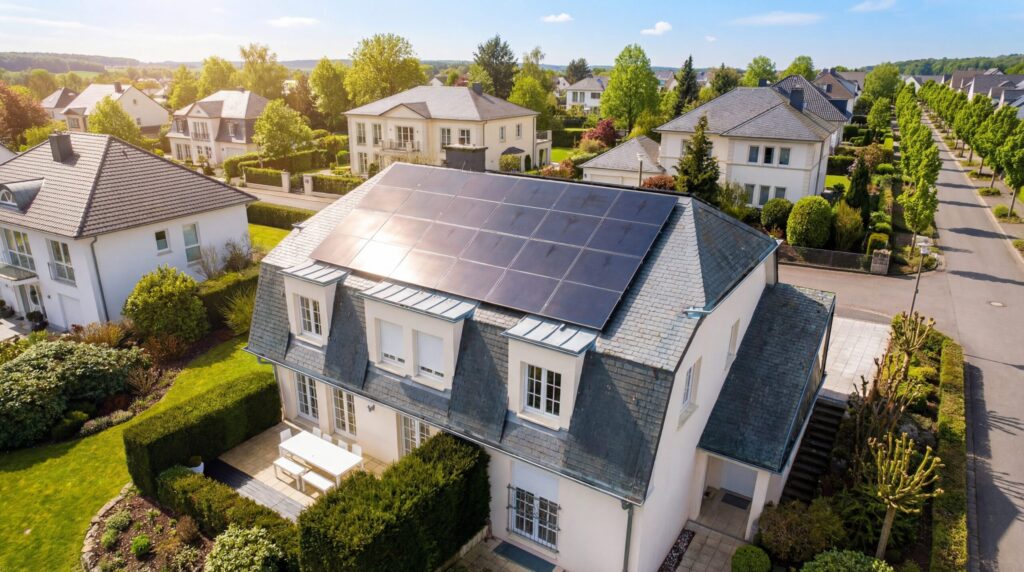
Pre-financing is probably the most important topic on the market in 2026. Its principle is simple: you no longer need to wait for the subsidy to be paid out in order to benefit from it, because it is deducted directly from the final invoice by the installer.
But be careful, this mechanism is regulated. Before signing, you should check three things:
- the installer is properly registered on the official list of approved installers;
- the project is genuinely eligible for pre-financing;
- the total deposits before the final invoice do not exceed 30% of the projected total VAT-inclusive amount.
Pre-financing applies to new photovoltaic installations, with or without a battery. On the other hand, a battery added on its own to an existing installation goes through the standard route, not pre-financing.
We also have a full guide on this topic in our editorial content, but if you are already at quote stage, the most useful next step is still a clear study with transparent pricing and a deposit structure that complies with the rules.
Want to know whether your project is eligible for pre-financing?
The simplest starting point is your roof, your electricity use, and your real objective. We can guide you with a clear study including pricing, subsidies, and pre-financing.
Should you add a battery?
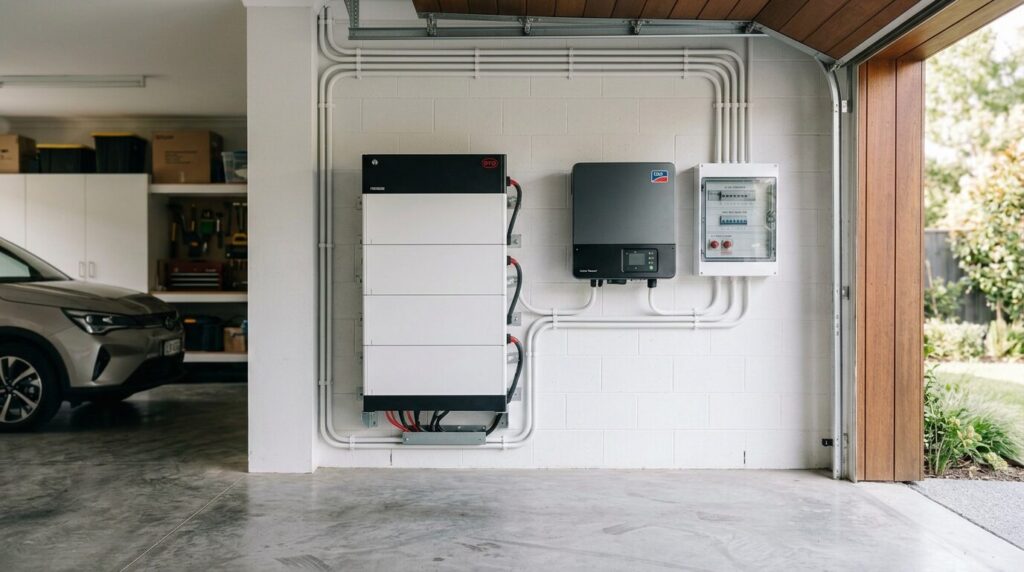
Adding a battery to a solar installation is becoming more and more relevant in Luxembourg depending on your project. A battery is useful when it allows you to shift part of your solar production in a meaningful way towards the evening and the beginning of the night. Its role is not to make your home autonomous “by magic.”
It becomes especially relevant if:
- you already have a coherent solar production setup;
- you consume a meaningful amount of electricity after daytime hours;
- you want to increase self-consumption;
- you are preparing a more global system, for example with an EV charger or smartly managed loads.
An important budget point: in Luxembourg, the battery is excluded from the 3% VAT rate applied to new photovoltaic systems. It therefore needs to be read separately in a quote.
To go further, you can read our guide: Solar battery in Luxembourg: why profitability has improved significantly in 2026.
How to assess profitability
A profitable solar project is not one that simply shows a nice number in large font on a quote. It is a project that holds up under realistic assumptions. To assess profitability, you need to look at:
- the real net cost after subsidies;
- the credible production level based on the roof;
- the share of self-consumption;
- future uses, such as an EV charger or a heat pump;
- the possible role of a battery.
The right approach is to stay measured. A project that still makes sense under a prudent scenario is generally a good project. A project that only works under ideal assumptions deserves more caution.
You can complement this with our article: solar panel profitability in Luxembourg.
Administrative steps not to overlook
A good photovoltaic project does not stop at the equipment. You also need to plan ahead for:
- grid-related procedures;
- the self-consumption framework if you choose that route;
- possible municipal checks or requirements;
- the right sequence for subsidies and pre-financing.
For the Creos grid, the self-consumption process goes through myCreos and Easy Grid Connect. This is an official point worth knowing, because it directly affects the smooth rollout of the project.
Official source: the steps for a self-consumption photovoltaic project.
How to choose the right installer?
The best installer is not the one who promises the most. It is the one who explains things best, prices clearly, sizes correctly, and knows how to handle both the technical and administrative sides.
- Is the system sizing consistent with your home?
- Is the quote clear and easy to read?
- Is the self-consumption logic well explained?
- Is the battery justified, or simply added on?
- Are the deposits and pre-financing terms clearly explained?
At Ecoclima, we support you from start to finish, from analysing your roof and designing the project to handling the administrative steps and commissioning the system. The goal is simple: to offer you a clear, coherent, and properly sized project, with no grey areas.
To go further, you can read our guide: choosing the best solar panel installer in Luxembourg.
Explore further depending on your project
- Heat pump and solar panels in Luxembourg
- Charging your electric car with solar panels
- Renewable energy FAQ in Luxembourg
A good solar project starts with a clear study
Roof, consumption, subsidies, pre-financing, battery, EV charger, heat pump: everything must be understood as one system. That is what helps avoid a quote that looks attractive but is poorly designed.
FAQ
What is the average price of solar panels in Luxembourg in 2026?
For a detached house, many projects are around €2,100 to €2,300 per kWp before subsidies, but the real cost depends on the roof, system size, installation complexity, and selected options.
Is pre-financing automatic?
No. You need an eligible project, an installer registered on the official list, and a compliant payment structure, especially regarding deposits.
Is a battery always profitable?
No. It becomes interesting mainly if it genuinely increases self-consumption and remains properly sized for the household’s usage.
Does the battery also benefit from the 3% VAT rate?
No. The reduced 3% VAT rate applies to new photovoltaic systems, excluding the battery.
How do I know if my home is suitable for solar?
You need to look at the roof, shading, usable surface area, annual consumption, future uses, and the operating logic you intend to adopt. A personalised study remains the best basis for making the right decision.