
Installing Solar Panels in Luxembourg: 10 Mistakes to Avoid in 2026
Luxembourg Solar Guide 2026
Before installing solar panels in Luxembourg, the real objective is not to fit the highest possible number of panels. It is to design a system that matches the home, its electricity use and its future needs.
Two systems with a similar capacity can deliver very different results depending on the roof, inverter, battery and the times when electricity is used. Here are the ten mistakes to avoid before signing a solar quote.
Size it correctly
Do not confuse available roof space with the capacity that is genuinely useful.
Compare the full system
Assess the quote, inverter, battery and services as a complete package.
Plan for future demand
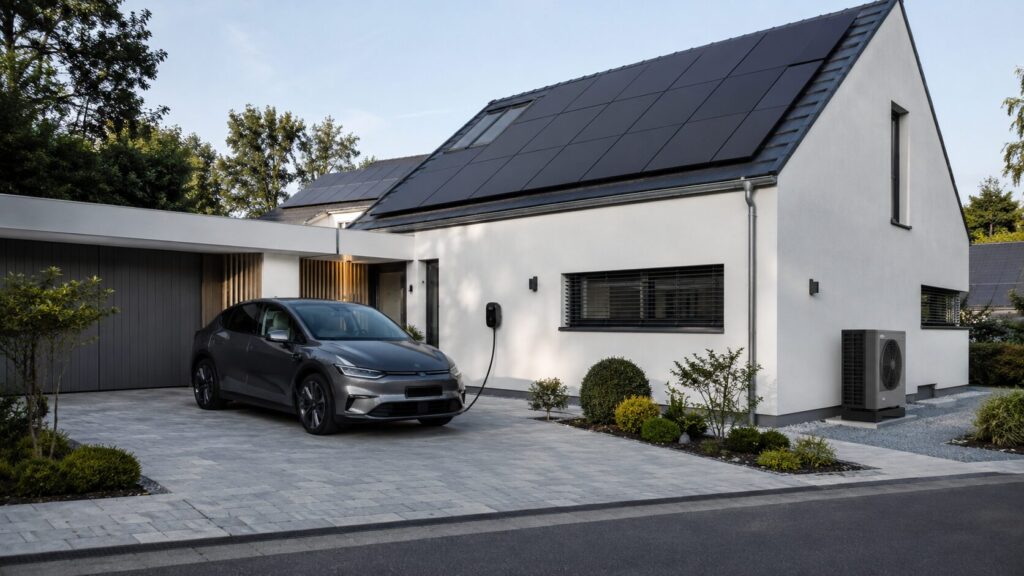
Anticipate an EV charger, heat pump or other new electrical loads.
1. Sizing the system only according to the available roof space
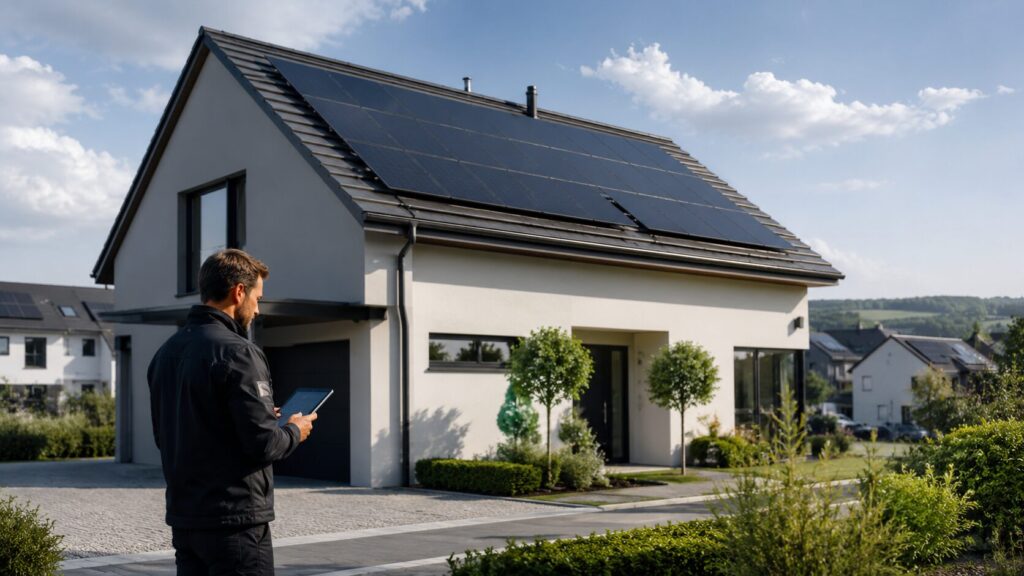
The available surface tells you how many panels can physically be installed. It does not automatically determine the most suitable capacity for the home.
Filling the entire roof can generate a large export surplus if the household uses little electricity during the day. At the other extreme, choosing too little capacity can become restrictive when an electric vehicle, heat pump or air-conditioning system is planned.
What to check: compare several system sizes using expected production, self-consumption, exported surplus and future electricity demand.
Our guide to solar system sizing in Luxembourg explains this calculation in more detail.
2. Comparing solar quotes only on price
Two 10 kWp quotes do not necessarily describe the same installation. The exact panels, inverter, electrical protections, mounting system, monitoring and administrative support can differ substantially.
The cheapest offer may still be the best one. However, that decision is only reliable when the scope is clear and the projected performance is based on comparable assumptions.
Compare at least these elements
- Exact equipment references
- Product and performance warranties
- Electrical protection and upgrade work
- Mounting suited to the roof
- Monitoring and commissioning
- Procedures and post-installation support
Use our complete checklist for comparing solar panel quotes in Luxembourg.
3. Ignoring the home’s future electricity needs
A photovoltaic system is expected to operate for many years. The last twelve months of electricity bills are therefore not always enough to size the project properly.
A future EV charging station, an air-to-water heat pump, air conditioning or a change in household occupancy can significantly increase demand.
What to check: list the equipment likely to be added over the next five to ten years before fixing the inverter and electrical architecture.
4. Adding a battery without analysing how it will be used
A solar battery can increase self-consumption by shifting part of the daytime production into the evening or night. However, it does not offer the same value for every household.
Its capacity must be compared with the available surplus, overnight consumption and the power required by the home’s appliances. An oversized battery may remain partly unused, while an undersized battery may regularly reach its limit too early.
Storage capacity and power are not the same
kWh indicates how much energy the battery can store. kW indicates how quickly it can absorb or deliver power. Both values must be checked.
Read our analysis of solar battery profitability in Luxembourg in 2026.
5. Overlooking roof orientation, shading and roof condition
A south-facing roof offers favourable conditions, but an east-west layout can also be highly relevant. It spreads production more evenly between the morning and afternoon, which may align better with household demand.
Shading from a chimney, tree or neighbouring building must be assessed at different times of day and throughout the year. The roof covering should also be inspected to avoid removing and reinstalling the solar system a few years later for roof renovation.
What to check: request a realistic panel layout that accounts for every roof section, obstacle, shade pattern and mounting method.
Our solar panel mounting guide for Luxembourg roofs explains the main checks for tiles, slate, metal and flat roofs.
6. Treating the inverter as a secondary component
The inverter converts the electricity produced by the panels, but it also affects monitoring, the management of different roof orientations and the integration of a battery or future system extension.
Its specification must match the panel capacity, expected voltages, shading conditions, available inputs and the wider energy strategy for the home.
A battery does not automatically provide backup power
Operating during a grid outage requires a dedicated electrical architecture. If backup is part of your objective, the function and the circuits supplied must be stated clearly in the proposal.
7. Confusing annual solar production with actual savings
Producing 10,000 kWh per year does not mean avoiding the purchase of 10,000 kWh from the grid. Some electricity is consumed immediately, some may be stored and the remainder is exported.
These energy flows do not necessarily have the same financial value. Two systems with the same annual production can therefore deliver different savings depending on consumption times and the amount of surplus exported.
What to check: request an estimate that separates total production, self-consumption, grid export and the electricity price assumptions used.
Our guide to self-consumption, surplus and the value of each solar kWh explains why this distinction matters.
8. Leaving permits, grid procedures and grants until too late
A solar project also includes procedures involving the municipality, grid operator, meter, commissioning and available financial support.
In 2026, Luxembourg’s pre-financing scheme may allow the Klimabonus grant to be deducted from the final invoice when the project and installer meet the official conditions. This should never be treated as guaranteed before eligibility has been checked.
Ecoclima explains which documents need to be prepared. When municipal authorisation is required, the application must be submitted by the property owner.
What to check: identify who is responsible for each procedure and which rules were used to calculate the grants shown in the quote.
See the full process in our guide to installing solar panels in Luxembourg, from permits to commissioning.
9. Choosing an installer without assessing the quality of the study
A serious proposal should explain why a specific capacity was selected, how the production estimate was calculated and how roof constraints were included.
The installer should also be able to explain the project’s limitations. Low daytime consumption, a complex roof or uncertain future demand may require compromises. A clear explanation is more valuable than a profitability promise without context.
What to check: you should be able to understand the reasoning behind the quote, not only the final price and panel brand.
10. Waiting indefinitely for the next solar technology
Solar panels, batteries and inverters will continue to improve. Waiting can be sensible if the roof is about to be renovated or if electricity demand will change substantially within the next few months.
However, repeatedly postponing a sound project while waiting for perfect technology also has a cost. Savings do not begin, while grants and economic conditions may change.
What to check: base the decision on the roof, budget, needs and solutions available today, rather than on a hypothetical future improvement.
A solar installation must be designed as a complete system
After equipping more than 1,000 buildings in Luxembourg, Ecoclima has found that the best results do not come from maximising installed capacity alone. They come from matching the installation to the building, consumption profile and future plans.
We assess the roof, electricity use, inverter, storage, grants and future equipment before recommending a solution.
Checklist before signing a solar panel quote
- Gather at least one year of electricity consumption data when available.
- List the electrical equipment likely to be added in the future.
- Have the roof, orientations and shading assessed.
- Compare several photovoltaic capacity scenarios.
- Assess the value and capacity of the battery separately.
- Compare equipment, services, warranties and procedures.
- Confirm grant eligibility before approving the final budget.
Frequently asked questions before installing solar panels
What is the biggest mistake before installing solar panels?
The biggest mistake is choosing the system capacity and equipment without analysing actual electricity use, the roof and the home’s future needs.
Is an east-west roof suitable for solar panels?
Yes. It can spread production between the morning and afternoon. Its suitability still depends on roof pitch, shading and the household’s consumption profile.
Is a solar battery compulsory?
No. Its value depends on the available surplus, evening consumption, appliance power requirements and the total cost of storage.
How should two quotes with the same capacity be compared?
Compare the exact equipment, inverter, electrical protections, mounting, monitoring, warranties, administrative procedures and production assumptions.
How many solar panels does a house in Luxembourg need?
There is no universal number. The correct size depends on consumption, roof conditions, shading, panel output and future electrical equipment.
Conclusion: do not choose solar panels in isolation
A high-performing photovoltaic installation is not based on one product alone. It depends on the relationship between the roof, system capacity, inverter, electricity use, possible storage and future demand.
Checking these ten points makes it easier to compare offers fairly and reduces the risk of installing a system that is difficult to optimise or upgrade.
Have your solar project assessed by Ecoclima
Ecoclima analyses your roof, electricity consumption and future equipment to design a photovoltaic installation suited to your home in Luxembourg.
Request a personalised assessment