
Can you add a battery to an existing solar panels installation in Luxembourg?
Yes, you can add a battery to an existing solar PV installation in Luxembourg without necessarily replacing the panels or the inverter. The right solution depends on your existing equipment, the surplus solar electricity available and your household’s energy use. Electrical and administrative checks are essential before choosing a storage system.
Does your home generate electricity during the day, while you still buy electricity in the evening? Before comparing batteries, find out what can stay, what needs adapting and what the upgrade would actually deliver.
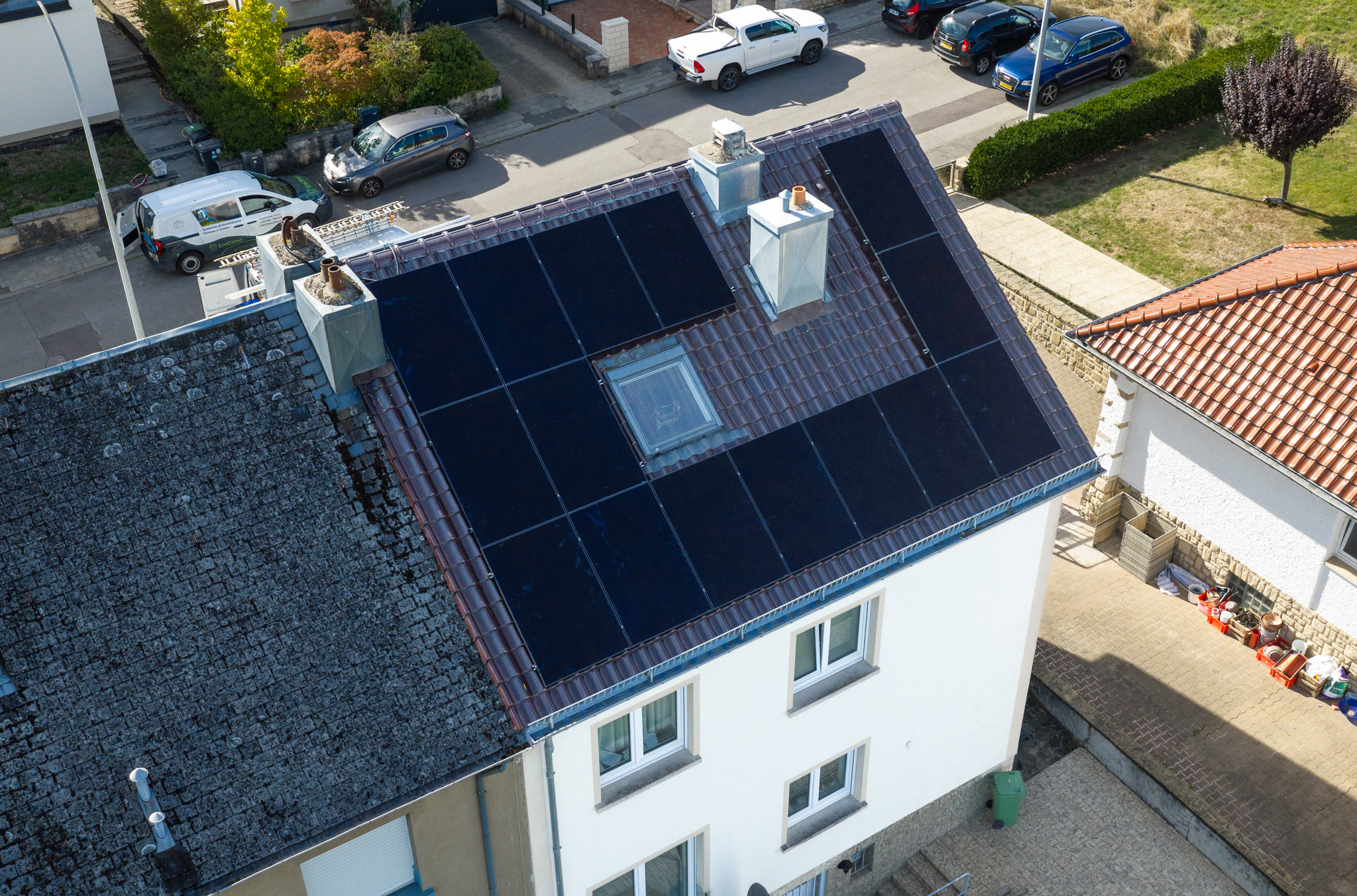
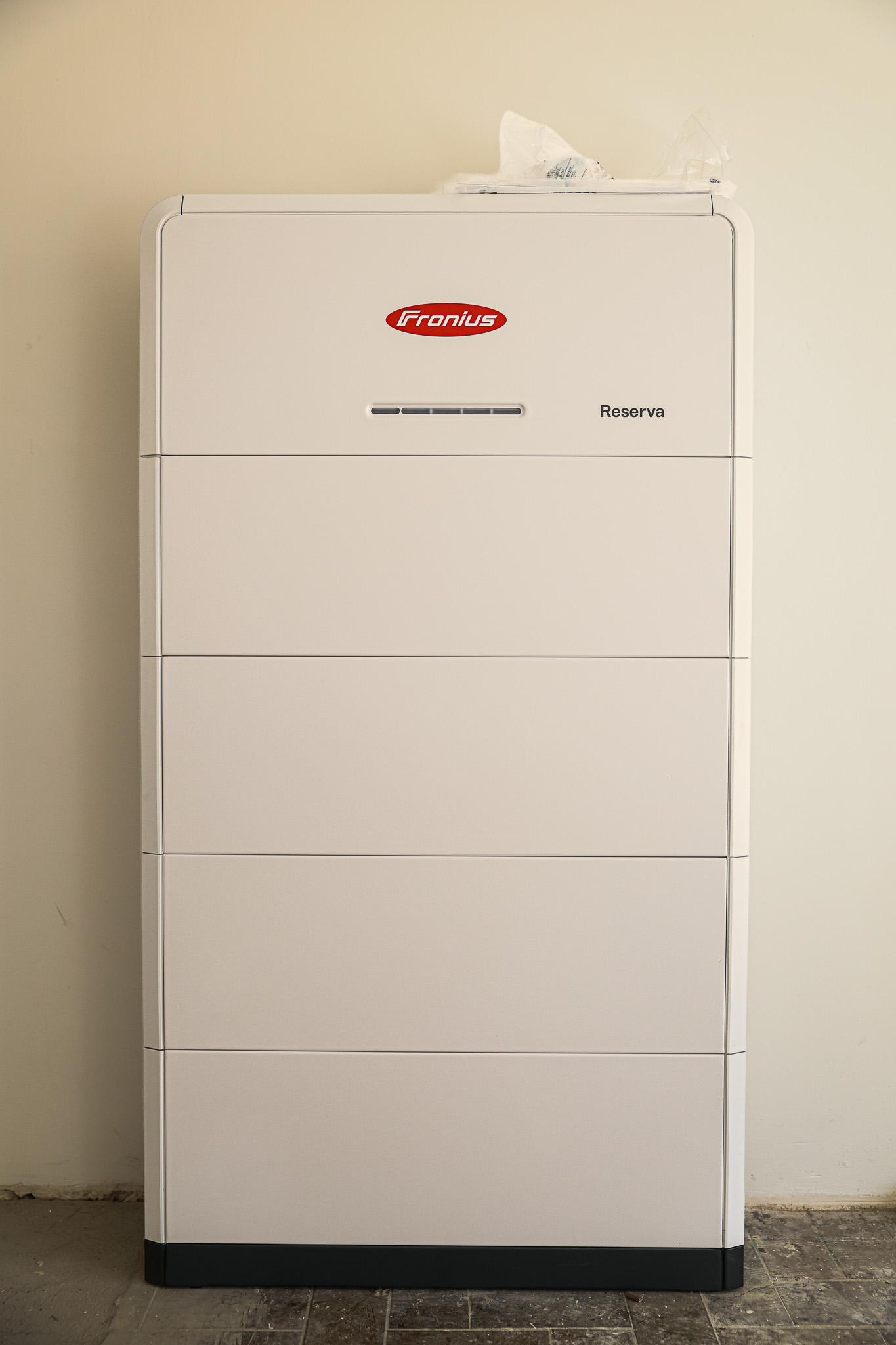
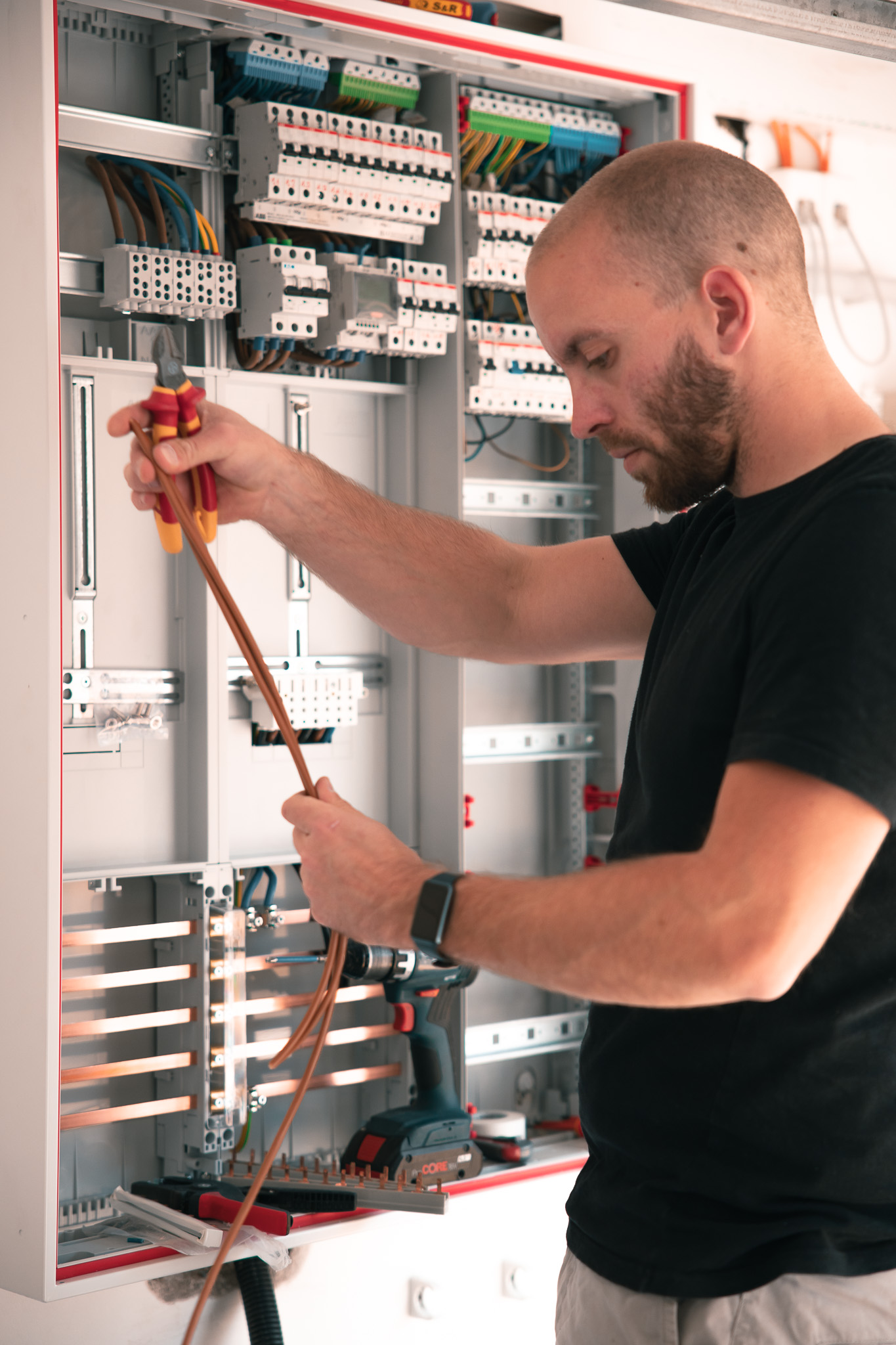
Solar panels, battery storage and electrical installation: adding a battery should be assessed as an upgrade to the whole system.
When is adding a battery worth considering?
The starting point is the mismatch between when you generate electricity and when you use it. A battery stores some of your surplus solar electricity for later use. It does not generate additional electricity and is not a seasonal storage solution for keeping summer production until winter.
Ideally, compare twelve months of generation, grid exports and consumption, using hourly data or shorter intervals. High annual consumption alone is not enough: you need surplus electricity to charge the battery and demand later on to use that energy.
Energy ID and Leneda help you access your electricity data. With existing solar panels, grid imports are not the same as total household consumption: add the solar electricity used directly in the home when assessing the energy flows.
Also consider your EV charger, heat pump and appliances that can be scheduled. Using solar electricity directly when it is available can reduce the need for storage. Our guide to home energy management explains this approach in more detail.
Do you need to replace the inverter to add a battery?
No, not necessarily. Three configurations need to be distinguished before preparing a quotation.
You already have a compatible hybrid inverter
A hybrid inverter can manage both solar panels and a battery connected on the direct current, or DC, side. However, the exact model, approved batteries, voltage, communication and any software requirements must be checked. The word “hybrid” does not guarantee compatibility with every battery.
For example, SMA’s technical documentation requires an approved battery and a compatible communication interface.
You keep your inverter or microinverters
An AC-coupled solution, on the alternating current side, adds a dedicated battery inverter/charger, sometimes integrated into the battery. This can allow the existing solar PV equipment to remain in place. Energy flow measurement, protection devices and overall system compatibility must be validated.
This setup is particularly worth considering with microinverters or a conventional inverter that is still working properly. It does not mean that any battery can be connected to any installation. SMA explains the principles of adding storage to an existing installation.
Replacing the inverter with a hybrid model is preferable
If your inverter already needs replacing, compare this option with adding a separate storage system. Keeping the panels requires checking their wiring and compatibility with the new inverter’s inputs, particularly the voltage and current limits specified in its electrical documentation.
| Your situation | The option to consider | The deciding factor |
|---|---|---|
| Compatible hybrid inverter already installed | Add an approved battery | Exact compatibility and additional equipment |
| Conventional inverter in good condition | Keep the solar PV system and add AC-coupled storage | The full cost of integration |
| Existing microinverters | Assess a compatible AC-coupled solution | Measurement, communication and available functions |
| Inverter needs replacing | Compare a hybrid inverter with separate storage | Panel compatibility and scope of work |
What battery capacity should you choose for an existing installation?
kWh measures an amount of energy; kW measures power. A 10 kWh battery therefore cannot automatically supply an instantaneous demand of 10 kW.
Compare usable capacity, charging and discharging power, losses and any capacity reserved for backup. Sizing should be based on the surplus actually available and consumption after solar production hours, not just the number of panels.
An example: a 10 kWh battery with a maximum discharge power of 3 kW cannot, on its own, supply appliances requiring a total of 5 kW. With no solar production and while the grid is available, the grid supplies the difference. These figures illustrate the distinction between capacity and power; they are not a sizing recommendation.
Two things not to confuse: increasing self-consumption does not guarantee a financial return. The assessment must account for the investment, avoided electricity purchases, the feed-in income forgone on stored kWh, losses and battery ageing. Find the financial criteria in our article on whether a solar battery is worth it in Luxembourg.
What financial aid is available for adding a battery in Luxembourg in 2026?
The Klimabonus 2026 scheme allows applications for a battery added to an existing, identifiable solar PV installation. The storage system must be connected to a self-consumption installation and provide at least 2 kWh of usable capacity.
The aid scale reaches a maximum of €2,250 from 9 kWh of usable capacity. Below this threshold, the amount follows a progressive formula: it is not a flat rate per kWh. Exceeding 9 kWh does not increase this ceiling and should not, on its own, determine the battery size.
| Usable capacity | Calculated grant, rounded |
|---|---|
| 2 kWh | €889 |
| 5 kWh | €1,806 |
| 6 kWh | €2,000 |
| 9 kWh or more | €2,250 maximum |
For a usable capacity Q between 2 and 9 kWh, the calculation is Q × (500 − 500/18 × Q). Amounts are rounded to the nearest euro and remain subject to eligibility. Above 9 kWh, the ceiling remains €2,250.
If this PV system already has subsidised storage: additional storage is eligible only five years after the purchase of the last storage system that received financial aid for the same PV installation. The invoice date is decisive. This does not mean waiting five years after installing the panels before adding a first battery.
For a battery-only addition, the procedure is post-financing, not pre-financing. The application is submitted after the work, with documents including paid invoices, proof of payment and technical documentation. The conditions and deadlines are detailed on Guichet.lu, Klimabonus 2026 scheme.
Does adding a battery mean losing your feed-in tariff?
Adding a battery should not automatically be equated with giving up your existing tariff. The official PHOT-2026 form states that the field concerning the operating mode and the waiver of regulated remuneration is not required when adding storage to an existing installation.
Nevertheless, your contract, current feed-in arrangement and any aid already received must be reviewed before making changes. The PHOT-2026 form, page 2 distinguishes between the different types of application. Confirm the implications for your particular installation with the grid operator and the authority responsible for the aid.
At Creos, switching to self-consumption and terminating a feed-in contract are separate procedures.
Will the battery work during a power cut?
Not automatically. You need a compatible backup function, safe isolation from the public grid and suitable wiring. A battery alone does not guarantee that your home will remain powered.
Ask which circuits will be supplied, how much power will be available, how long switching takes and whether the panels will operate during the outage. The remaining energy also depends on the state of charge. The SMA backup power instructions illustrate these limitations: only the designated loads are supplied, subject to the energy available.
A heat pump or EV charger should therefore not be assumed to have backup power without verification. Ask for the selected backup function to be tested during commissioning.
What should a quotation for adding a battery include?
Compare the complete installed system, not just the price of the battery module. Request a quotation itemising the battery, any inverter, protection devices, wiring, energy flow measurement, configuration and work on the distribution board. The scope of backup power must be clearly defined.
Ask for the usable capacity, power ratings, applicable warranties and expansion options to be specified. The net cost should distinguish between the invoiced price and estimated aid, subject to eligibility.
The assessment must also confirm the installation location, temperature conditions, manufacturer-required clearances and access for maintenance. Your electrician will check the procedures with your grid operator, particularly if the connection or operating mode changes.
What to obtain at commissioning
Ask for a demonstration of charging, discharging and monitoring in the app. You should be able to distinguish solar generation, consumption, grid imports and exports, and battery status. Keep the updated installation diagram, equipment model details, warranties and documents needed for the aid application. Any backup reserve should be explained, as it reduces the energy available for everyday self-consumption.
Adding a battery to existing solar panels: your questions
Can you add a battery several years after installing solar panels?
Yes, subject to feasibility. Age alone is not enough to determine this. The inverter must be identified, the electrical installation checked and compatible solutions compared for the equipment still in service.
Can you keep your microinverters?
Yes, an AC-coupled storage solution may allow you to keep them. The complete system’s compatibility, energy flow measurement and functions must be confirmed before ordering.
Does the battery need to be the same brand as the panels?
Not necessarily. The key checks concern, in particular, the combination of battery, inverter/charger and control system. A combination of brands must be explicitly compatible according to the manufacturers’ documentation.
Do you need to choose 9 kWh to receive financial aid?
No. A smaller capacity can be eligible from 2 kWh of usable capacity, subject to conditions. The 9 kWh threshold corresponds to the aid ceiling, not a mandatory minimum capacity.
Does a larger battery guarantee greater savings?
Only if the additional energy can regularly be stored and then used. Capacity that is rarely used increases the investment without necessarily delivering a proportional benefit.
Have Ecoclima assess adding a battery to your installation
For your home in Luxembourg, prepare your inverter model details, a few photos that can be taken without opening any equipment, your generation and consumption data, and your feed-in contract. Also mention any plans for an EV charger or heat pump.
These details help prepare the assessment and compare what can be kept with the adaptations required.

About the author
Abel Lovasz · Sales Director at Ecoclima
More than seven years of experience in the energy transition, supporting hundreds of customers, including with their solar energy projects.
Explore his background