
Energy ID and Leneda in Luxembourg: prepare your solar project
From 15 October 2026, Energy ID is required for new energy procedures. Learn how to set up Leneda and use your electricity data to plan a suitable solar installation in Luxembourg.
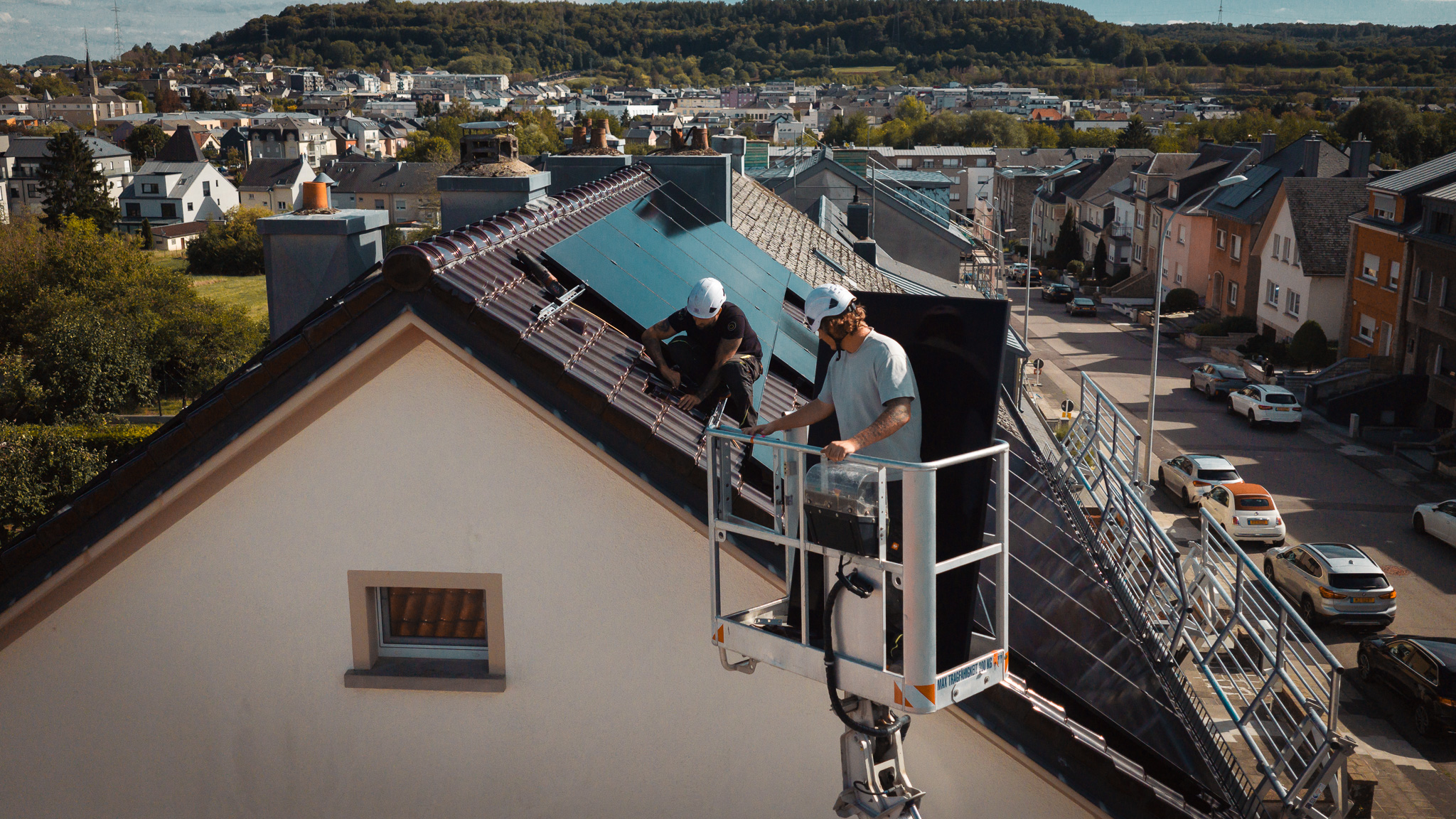
Planning solar panels in Luxembourg? Since 15 October 2026, you need an Energy ID to start a new procedure with your energy supplier or grid operator, according to the Creos announcement published on 14 October.
Your Leneda history shows when you draw electricity from the grid. Comparing it with estimated solar production helps assess how much solar electricity you could use directly and whether a battery would be useful.
Energy ID in Luxembourg: what changed on 15 October 2026?
Creos lists new energy contracts, new grid connections and changes to existing connections, including those associated with photovoltaic systems and EV charging. If you already have an Energy ID, reuse it.
You will also be asked to grant a mandate. Your identifier establishes who you are; the mandate authorises the supplier or grid operator to access the relevant data and carry out the procedures covered by your consent through Leneda. Your provider will guide you through this step.
Source: Creos, 14 October 2026 (French).
Prepare this before the connection application. An Energy ID does not constitute technical approval for the proposed solar installation.
Energy ID, Leneda, Smarty and POD: four different roles
| Term | Purpose | Not to be confused with |
|---|---|---|
| Energy ID | Identifies a person or organisation in energy procedures | A meter number or POD |
| Leneda | Provides access to energy data and manages authorised sharing | A system that directly controls appliances |
| Smarty | Records electricity imported from and exported to the grid | The platform used to view these readings |
| POD | Identifies the metering point to be linked | An Energy ID or the meter’s serial number |
See the Leneda account guide and official FAQ.
How to create your Energy ID and find your data
- Open the official Leneda platform and register. Verify your identity using LuxTrust Mobile or IDnow with an identity card or passport.
- Complete your contact details. Keep the Energy ID assigned at the end of registration.
- Check the associated metering points. If they are not matched automatically, follow Leneda’s access procedure using the POD on your bill or the meter serial number.
For a company or an owners’ association, the entity must be registered by its legal representative after that person has registered. An occupant’s personal account does not replace the organisation’s account. Read the official registration guide.
How Leneda helps size a solar installation
Leneda provides historical electricity data in 15-minute intervals. Klima-Agence describes availability up to the previous day. This is historical metering, not live monitoring of each appliance. Source: Klima-Agence (French).
Look at timing, not just annual kWh
Two homes can buy the same amount of electricity each year but have very different solar potential for direct use. One may consume power during the day; the other mainly after sunset. The useful overlap between demand and production will differ.
Compare weekdays, weekends and seasons. Ideally, use twelve months of history to avoid basing the assessment on a summer week. This is a planning recommendation, not an administrative requirement. A new home can be assessed using clearly stated assumptions that are refined later.
Consumption data does not replace a roof survey. Orientation, shading, usable area and the electrical installation still need assessment. There is no universal conversion from annual consumption to the right number of panels.
Existing panels: grid imports are not total consumption
The connection meter does not include solar electricity used directly inside the home in its grid-import figure. Before extending a system or assessing a battery, identify which flows the available readings represent and obtain inverter production data where needed.
Worked example: a home without a battery
Assume the following readings cover the same year:
-
Electricity imported from the grid
-
1,500 kWh
-
Photovoltaic production on the AC side
-
4,500 kWh
-
Electricity exported to the grid
-
1,000 kWh
Solar electricity used on site: 4,500 − 1,000 = 3,500 kWh.
Total household consumption:
1,500 + 4,500 − 1,000 = 5,000 kWh
Indicative estimate, to be adapted to your installation and usage.
Using only the 1,500 kWh bought from the grid would underestimate this home’s needs. A large annual surplus alone does not show how much evening demand a battery could cover.
Home battery: what the data can tell you
The useful question is whether you regularly have daytime solar surplus and demand after production has fallen. Compare those periods, then check usable battery capacity and charge/discharge power limits.
A chart cannot establish financial payback by itself. Compare scenarios using costs, losses and explicit electricity-price assumptions. Shifting a suitable use into the daytime may also be worth evaluating before adding equipment.
Include future equipment without counting it twice
Past readings do not yet include a heat pump or electric car you plan to buy. Estimate those needs separately, including timing and seasonality. Do not add them again if they are already present in the history. Simultaneous loads also require a power assessment: a yearly kWh total cannot show whether the connection and electrical panel are suitable.
What to prepare for your solar assessment
- Your annual bill and, if available, a Leneda export spanning the seasons.
- The relevant metering point and exact dates covered by the data.
- For existing panels: inverter production, imports and exports for the same period.
- Planned equipment and its usage times, including heating and vehicle charging.
Share data through the intended permissions
Use Leneda’s sharing permissions or agree on a limited export. Keep data sharing for an assessment separate from a mandate allowing an energy provider to act on your behalf. Do not share passwords, verification codes or LuxTrust access with an installer. Leneda explains the role of consent and mandates.
Frequently asked questions about Energy ID, Leneda and solar
Do I need a new Energy ID for solar panels?
No. Reuse your existing Energy ID, as Creos instructs. It does not replace the requested mandate or the grid operator’s technical approval.
Can I register without LuxTrust?
Yes. Leneda also offers identity verification through IDnow using an identity card or passport. Follow the official registration steps.
Does Leneda replace a home energy management system?
No. Viewing historical data is different from controlling equipment. A HEMS can coordinate compatible devices according to its supported functions and settings. The two approaches can complement each other.
Can I use Leneda to compare electricity suppliers?
Yes. The ILR states that Calculix can use your annual load curve downloaded from Leneda or a representative profile. This helps compare offers whose prices vary over time. See the ILR explanation (French).
Do I need a complete history before asking for an assessment?
No. Begin with the consumption figures available, building details and planned equipment. The assessment should distinguish measured data from estimates and refine its assumptions as more readings become available.
Prepare your solar assessment with Ecoclima
Start with the project address, your annual electricity bill and a list of existing and planned equipment. If you have a Leneda history, let us know so we can agree which data is useful. Our solar assessment in Luxembourg combines roof potential, consumption patterns and your objectives, with or without a battery.
Official sources
Further reading

About the author
Abel Lovasz · Sales Director at Ecoclima
More than seven years of experience in the energy transition, supporting hundreds of customers, including with their solar energy projects.
Explore his background