
Reversible air conditioning in Luxembourg: can it heat your home in autumn?
Heating with reversible air conditioning can be useful in Luxembourg during autumn. It can be particularly useful for warming a living room, home office or extension when the other rooms need little heating. Whether it makes sense depends on insulation, heat distribution, electricity prices and the heating system it replaces.
Before switching the whole heating system back on, should you use your air conditioner’s heating mode? And if you are considering an installation for summer 2027, does this additional use strengthen the case? Here are the points to check before deciding what suits your home.
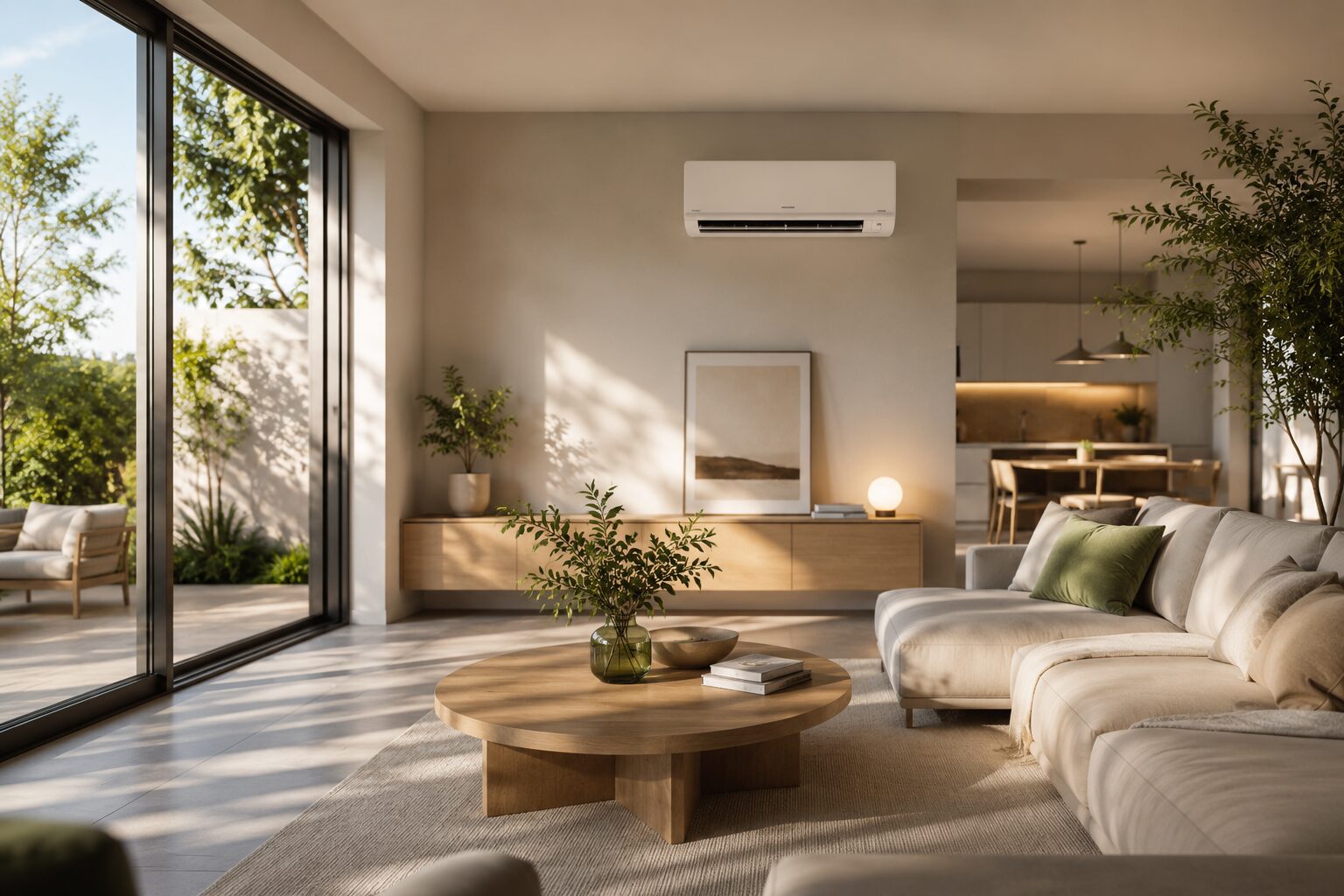
How does reversible air conditioning heat your home?
In heating mode, the outdoor unit extracts heat from the air and the indoor unit delivers it to your home. Electricity powers components including the compressor and fans. The system can therefore provide more heat energy than the electrical energy it consumes.
During spring and autumn, the difference between the outdoor temperature and your desired indoor temperature is generally smaller than in the middle of winter. This can help efficiency. However, a cold, damp morning, poor airflow or dirty filters can affect the result.
This system heats air. A standard residential split system does not produce domestic hot water or supply water-filled radiators. If you are considering a full boiler replacement, also read our comparison of air-to-air and air-to-water heat pumps.
When does heating with air conditioning make sense in Luxembourg?
The most favourable situation is a local heating need in a room properly served by the unit. The benefits are more limited if you need to heat an entire house with separate rooms using just one indoor unit.
| Your situation | Potential benefit | What to check |
|---|---|---|
| Living room with reversible air conditioning | Occasional heating in the occupied area | Coordination with the central heating thermostat |
| Home office or extension with an electric heater | Lower heating consumption and summer cooling | Insulation, usage times and installation cost |
| Several bedrooms with closed doors | Room-by-room heating with suitable heat distribution | Number of units, noise and simultaneous heating capacity |
| Whole house to be heated throughout winter | Possible if the system is designed for this use | Heat losses, capacity in very cold weather and hot water |
In Luxembourg, heating with existing air conditioning can provide an additional benefit from autumn onwards. For a new installation, a few evenings of heating are not enough to demonstrate that the investment will pay off: cooling needs, operating hours and the work required also matter.
How much electricity does air conditioning use for heating?
The heating capacity shown in kW is not the electrical power input. With a coefficient of performance of 3, delivering 3 kWh of heat requires approximately 1 kWh of electricity under the conditions considered.
Cost per kWh of heat delivered = electricity price per kWh ÷ coefficient of performance
A calculation example to adapt to your electricity contract
Let us assume a demand of 12 kWh of heat over one day and a hypothetical electricity price of €0.25/kWh, including variable charges. Adapt this price to your electricity contract.
| System or assumption | Electricity | Variable cost |
|---|---|---|
| Direct electric heater | Approximately 12 kWh | €3.00 |
| Air conditioning: average performance factor of 2 | 6 kWh | €1.50 |
| Air conditioning: average performance factor of 3 | 4 kWh | €1.00 |
| Air conditioning: average performance factor of 4 | 3 kWh | €0.75 |
Indicative estimate for the same heat demand, using the assumed performance factors above. Excludes purchase, maintenance, fixed charges and auxiliary consumption not included in those factors.
The comparison with a gas or oil boiler is different: the fuel price must be related to the heat actually delivered, taking efficiency into account. Air conditioning is therefore not automatically cheaper to run than every other heating system.
Heating with air conditioning: which performance figures matter?
For heating, look at the SCOP, the seasonal coefficient of performance in heating mode, and its reference climate. The SEER relates to cooling. A SCOP is neither a constant performance level at every temperature nor an exact forecast of your bill.
The European Commission explains the information on the energy label: heating, cooling, standardised energy consumption and sound power levels. Compare the same indicators under the same conditions.
- Available capacity in cold weather: request the manufacturer’s figures at the temperatures used for the assessment.
- Minimum output: check that the unit can run at low demand without repeatedly starting and stopping.
- Multi-split systems: check the available capacity when several rooms require heating at the same time.
Heating with air conditioning: choosing autumn settings
Select heating mode, often indicated by a sun symbol. Depending on the unit, automatic mode may switch between heating and cooling: check the manual before using it during spring or autumn.
- Choose a moderate temperature setting, for example 19 to 20 °C as a starting point in an occupied living area, adjusted to the occupants’ comfort needs.
- Allow air to circulate and direct the airflow away from the sofa, bed or desk.
- Schedule operation around occupancy; avoid constantly changing the set temperature or overheating the room before going out.
- Clean the filters as instructed in the manual and keep air inlets and outlets clear.
In cold, damp weather, the system may temporarily stop blowing warm air to defrost the outdoor unit. The Daikin manual gives an example of this operation. A prolonged lack of heat, a fault code or unusual behaviour warrants an inspection.
An often overlooked point: the central heating thermostat
Imagine an air conditioner heating the living room, which also contains the thermostat controlling the whole heating system. The living room reaches its set temperature; the thermostat may then stop calling for heat, while the bedrooms remain cool.
Have the thermostat’s role, the areas served and the temperature settings checked. Coordination between heating controls depends on the wiring and settings.
What if you have solar panels?
Your panels can supply some of the electricity if solar generation and heating demand coincide. Daytime scheduling can be useful when the home needs heat. However, solar power does not automatically cover early mornings, evenings or days with little sunshine. Avoid overheating your home simply to use a surplus: read our guide to matching energy use to solar generation.
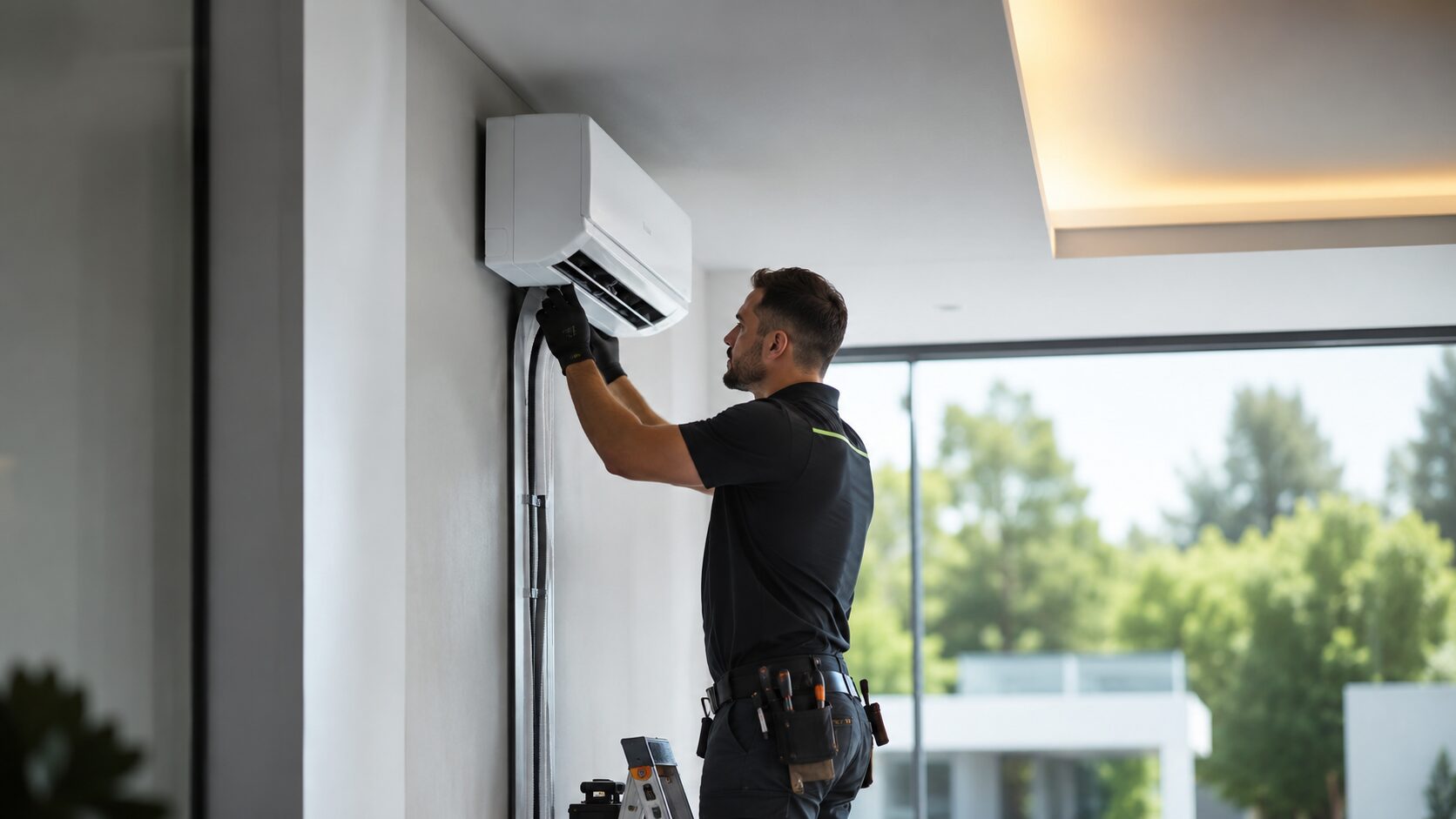
Heating with air conditioning in Luxembourg: checks before installation
Municipality and building. Ask your municipality which permissions are needed for the proposed location. In a jointly owned building, clarify with the property manager which approvals are required for the façade, roof or shared areas before scheduling the work.
Noise and drainage. Consider neighbouring windows, vibration, airflow and the water produced outdoors during heating and defrosting. Drainage should keep water away from walkways where it could freeze.
Work on the refrigerant circuit. Luxembourg’s Environment Agency sets out the certification requirements for people and companies working on equipment containing certain fluorinated gases.
Financial support. Klimabonus 2026 specifies categories and technical conditions for heat pumps. An air-to-air air conditioner does not qualify for the subsidies available to an air-to-water heat pump simply because it is reversible. Have the exact eligibility confirmed before deducting any grant from your budget.
Should you install air conditioning in autumn to prepare for 2027?
Autumn is an opportunity to prepare for summer comfort while also assessing heating use: the rooms concerned, unit positions, electrical supply and controls. It gives you time to compare configurations and plan any administrative steps before the first hot days.
A lower price or shorter lead time is not guaranteed outside the summer season. Both depend on the equipment, the work required and actual availability. The quotation should specify the equipment, installation, electrical supply and any finishing work.
To prepare your enquiry, gather floor plans or room sizes, photographs of possible unit positions, details of your existing heating system and your priorities: sleeping better in summer, heating a home office in autumn or serving several areas.
Heating with air conditioning in Luxembourg: your questions
Can air conditioning heat an entire house?
Yes, if the system is sized for the heating demand and distributes heat properly to every room concerned. A unit in the living room may not be enough. Domestic hot water must also be provided separately.
Does it use less electricity than an electric heater?
An air-to-air heat pump can supply several kWh of heat for each kWh of electricity consumed. It can therefore use less electricity for a comparable amount of heat. Actual savings depend on temperatures, installation and use; no fixed percentage is guaranteed.
Should I switch off the boiler when the air conditioner is heating?
Not necessarily. Other rooms or domestic hot water production may still depend on it. The decision should take account of the heated areas and the controls, especially if the central thermostat is in the room with the air conditioner.
Why does the air conditioner sometimes stop blowing warm air?
It may have reached its set temperature or be defrosting the outdoor unit. Check the information in the manual. If the interruption continues, the room no longer stays comfortable or a fault appears, have the system checked.
Does heating with air conditioning replace ventilation?
No. A standard residential split system mainly recirculates indoor air. It does not replace fresh air exchange in the home. Keep the ventilation operating and air the rooms as appropriate.
Related articles
Sources and technical references
- ADEME: study of air-to-air heat pump electricity consumption, October 2025, sample of 88 households.
- ADEME: heating with a heat pump, operating principles and choosing a system.
- European Commission: air conditioner energy labels, SCOP, SEER and acoustics.
- Guichet.lu: Klimabonus 2026, technical installations, grant conditions.
- Environment Agency: certification for fluorinated gases.
- Daikin: example operating manual, heating and defrosting; consult the manual for your own model.
- Énergie Plus: heating control efficiency.

About the author
Abel Lovasz · Sales Director at Ecoclima
More than seven years of experience in the energy transition, supporting hundreds of customers, including with their solar energy projects.
Explore his background