
HEMS grant in Luxembourg: €500 for home energy management
Find out whether your home qualifies for Luxembourg’s €500 HEMS grant, what the system can control and how to compare quotations, compatibility and ongoing costs.
The HEMS grant in Luxembourg provides €500 for an eligible home energy management system. Before having one installed, check what it can actually control in your home: solar panels, battery storage, a heat pump and EV charging. This guide explains the grant conditions and the questions to ask when comparing systems.
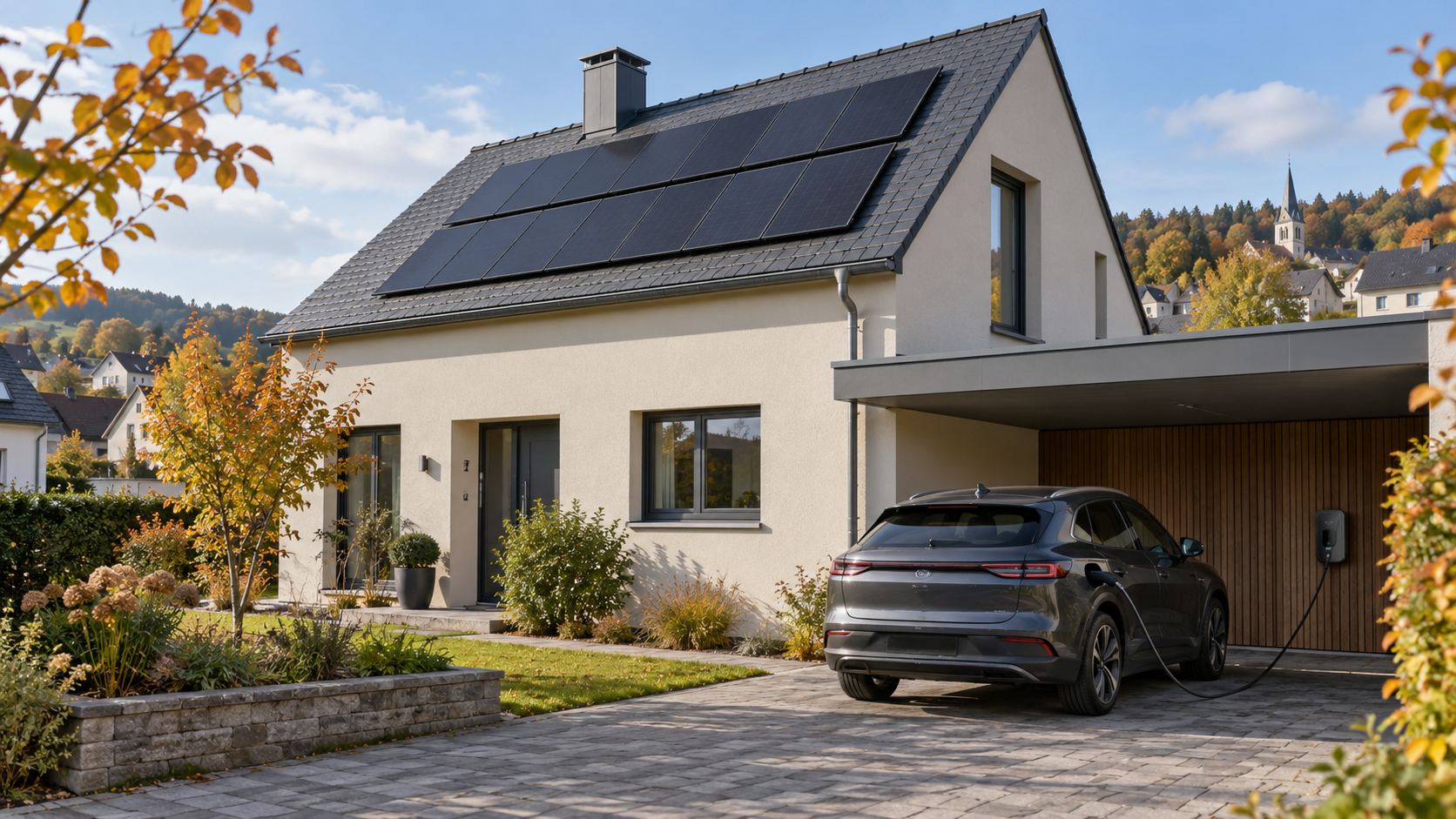
What are the conditions for the HEMS grant in Luxembourg?
The HEMS grant covers residential buildings in Luxembourg. The application is made by the owner or the holder of the required rights over the property, with specific arrangements for jointly owned buildings. The HEMS must connect and effectively integrate at least two devices from the eligible categories: photovoltaics, electricity storage, a heat pump, an EV charging point or a controllable immersion heater in a central domestic hot-water tank. Installation and commissioning must be carried out by a professional who meets the authorisation requirements. See the general and technical conditions on Guichet.lu.
One requirement to remember: all devices in these categories already connected to the electrical circuit concerned must be integrated. For example, connecting the solar installation and EV charger while leaving out an existing heat pump covered by this requirement would not meet the condition.
The law provides for one grant per single-family house. In a multi-unit residential building, it may cover each dwelling or the building as a whole, depending on the configuration: it is not €500 per device. Reference: Law of 24 July 2026, Articles 4 and 9.
Under the standard provisions, submit the application within four years of 31 December of the year in which the invoice was issued: for a 2026 invoice, the deadline is 31 December 2030. Special dates apply to work combined with an energy renovation or a sustainable construction project covered by the 2017 scheme. Check the official deadlines for your circumstances before planning the application.
Does your current app already do the work of a HEMS?
A HEMS monitors, controls and optimises the home’s energy flows. An app that only displays solar generation or electricity consumption does not, on its own, fulfil that role. The legal definition includes monitoring at least every fifteen minutes and taking automatic action according to the settings. Official definition, Article 2.
- Monitoring: you can see what the panels generate and what the home consumes.
- Simple time scheduling: a device starts at a chosen time, regardless of the conditions at that moment.
- Control: an operating setting responds to a measurement, for example by adjusting charging to the available solar surplus.
- Coordination: several devices follow shared priorities, within the limits of their compatible functions.
Before adding a controller, ask which functions your installation already provides and which are missing. A single app may offer several of these functions; its name alone does not establish what the system can actually do or whether it qualifies for the grant.
Klima-Agence also highlights the potential benefits of control using dynamic tariffs, provided the inverter, battery and other devices are controllable and compatible. Whether this is suitable depends on your electricity contract and how you use energy. Understand the uses of a HEMS.
Three situations to help you set the right priorities
These examples help you discuss settings with the installer, based on your equipment and habits.
Your car is away while the panels are generating
A HEMS cannot charge a car that is not plugged in. Consider the uses available during those hours: storage, hot water or other demand that can actually be shifted. When you are at home matters as much as the capacity of the solar panels.
You need enough charge before leaving
A “solar only” setting may not suit a fixed departure time if generation is insufficient. Define the charging requirement, departure time and priority: should charging from the grid be allowed to make up the difference, and under what conditions?
Heating takes priority in winter
Specify the required comfort settings and the heat pump’s operating limits. The control system must account for these constraints when coordinating heating, battery storage and charging. Not all energy demand can be moved freely to another time of day.
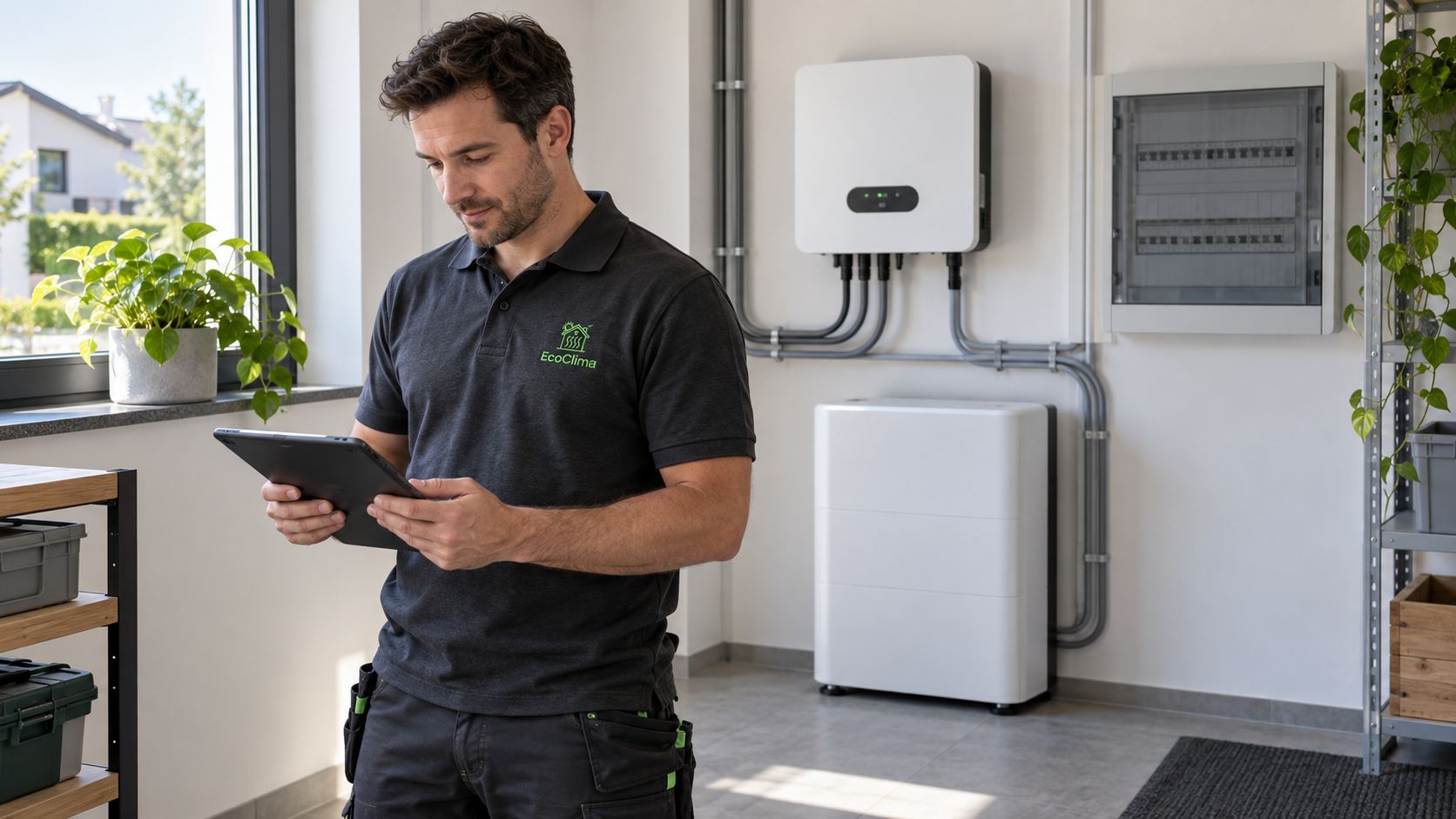
HEMS grant eligibility: what compatibility evidence do you need?
Communicating with a device does not necessarily mean being able to control it. For each device, distinguish the data the HEMS can read from the commands it can send. Two models from the same manufacturer may offer different capabilities.
| Point to check | Information to request |
|---|---|
| Existing equipment | Makes, models, versions and required interfaces; devices that will actually be integrated. |
| Available functions | Measurements the system can read, commands it can send and control limitations for each device. |
| Work and hardware | Any meters, gateways, cabling, communication connections and electrical panel modifications required. |
| Internet and subscriptions | Functions that remain available without an internet connection or after a subscription ends; any paid services. |
| Future additions and support | Conditions for adding a device, updates, access to settings and the support contact. |
The Klima-Agence comparison tool for charging points and energy management systems can help you identify options. Follow this research with a check of your exact configuration: a general product sheet does not replace a compatibility assessment.
HEMS grant in Luxembourg: comparing costs and savings
A hardware-only offer and a fully configured installation do not cover the same work. To compare two quotations, use the same equipment, the same functions and the same period for recurring charges.
Budget to compare = hardware + adaptations and cabling + installation and configuration + subscriptions and support over the chosen period − the grant actually awarded.
Ask for included items, options and recurring costs to be listed separately. The €500 is support towards the investment, not an annual saving or an automatic deduction from the quotation.
To estimate the benefits, use your generation and consumption data, the hours when the vehicle is at home, electricity purchase and export tariffs, and the constraints of the devices. Ask for a comparison with how your installation currently operates: savings already achieved by the solar panels should not be counted a second time as HEMS savings. Without this information, a percentage saving or payback period would be unreliable.
Applying for the HEMS grant: commissioning and documents
Before accepting the installation, agree which functions relevant to your installation will be demonstrated: device recognition, the response to a change in solar surplus, compliance with priorities, manual changes to settings and operation without internet. Also ask who provides support and which documents you will receive.
Apply for the HEMS grant in Luxembourg after the work, through MyGuichet or using form DEPA-2026. Prepare, in particular, a recent bank account identification document (RIB), invoices and proof of payment, together with the SYGE-2026 technical form completed and signed by the appropriate professional. Additional documents depend on the application, particularly for a jointly owned building. See the full application procedure.
The SYGE form is separate from the CCSYGE certificate of conformity. The latter can replace an itemised invoice for documenting the cost breakdown, but must be accompanied by invoices and bank payment records: it is not a complete application on its own.
Helmdange: a practical example of coordination
Solar generation, storage and charging in one installation
Our Helmdange project brings together 20 AIKO Neostar panels, Enphase IQ8HC microinverters, an IQ Gateway Metered, two IQ Battery 5P batteries with FlexPhase providing 10 kWh in total, and an IQ EV Charger 2. The project presentation describes how generation and consumption data are coordinated with battery storage and solar charging.
This installation shows the value of considering the home as a whole. Grant eligibility depends on the system installed and the supporting documents.
Prepare your project with Ecoclima
To assess the options for coordinating your equipment, send us your municipality and the model references of any existing inverter, battery, heat pump and EV charging point. Include your usual charging times and your main objective: using more solar electricity, setting priorities or improving consumption monitoring.
FAQ: the HEMS grant in Luxembourg
Do a battery and an EV charger automatically qualify for the grant?
No. An eligible management system, devices that are actually integrated and a compliant application are required. Having two devices does not, on its own, demonstrate that the conditions are met.
Can I keep equipment from different manufacturers?
This is possible for some combinations. The model references, interfaces and commands supported by the chosen system must be checked. Stated compatibility with a manufacturer does not guarantee every function on every model.
Does a HEMS work without internet or a subscription?
It depends on the system. Some functions may run locally, while others rely on a remote service. Ask for written details of operation during an internet outage, recurring charges and what happens when a subscription ends.
Do I need to replace my solar monitoring app?
Not necessarily. Start by identifying the measurements, controls and coordination already available. The assessment should explain what the HEMS adds and how you will use the interfaces day to day.
For more on everyday uses, read our guide to home energy management, and explore our photovoltaic systems and EV charging solutions.
Sources and verification
The official sources let you verify the rules that apply to your application. The documents linked below are in French.
Further reading

About the author
Abel Lovasz · Sales Director at Ecoclima
More than seven years of experience in the energy transition, supporting hundreds of customers, including with their solar energy projects.
Explore his background