Solar panel profitability in Luxembourg remains attractive in 2026, but it cannot be reduced to the number of panels or the maximum grant available. A worthwhile project combines a suitable roof, a system size aligned with the household’s actual needs and a sufficient share of electricity used on site.
The short answer
Yes, solar can be profitable in 2026.
The right question is not “how many panels can we fit?”, but “which configuration offers the best balance between investment, self-consumption and future needs?”
7–12 yearsindicative range, not guaranteed
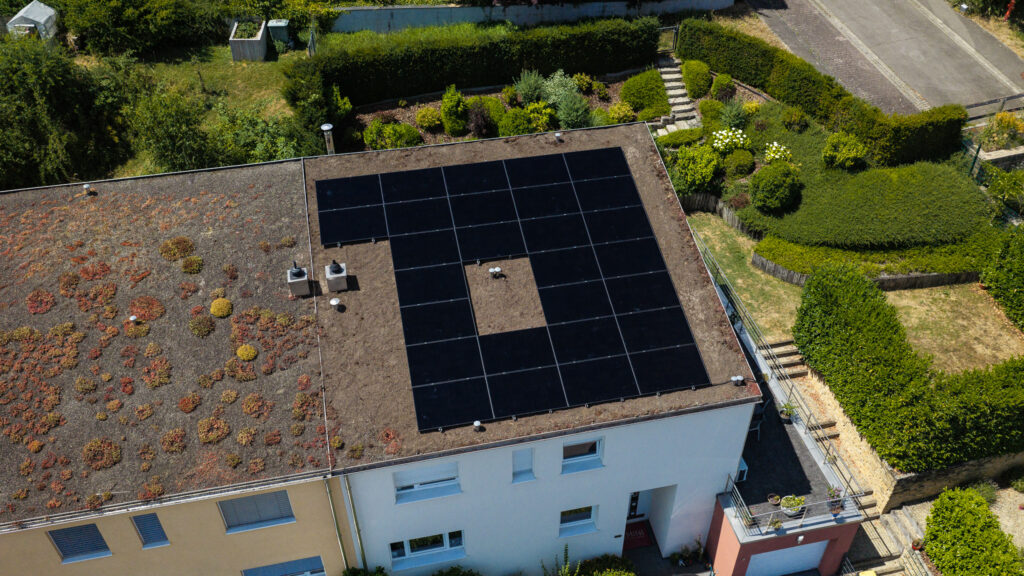
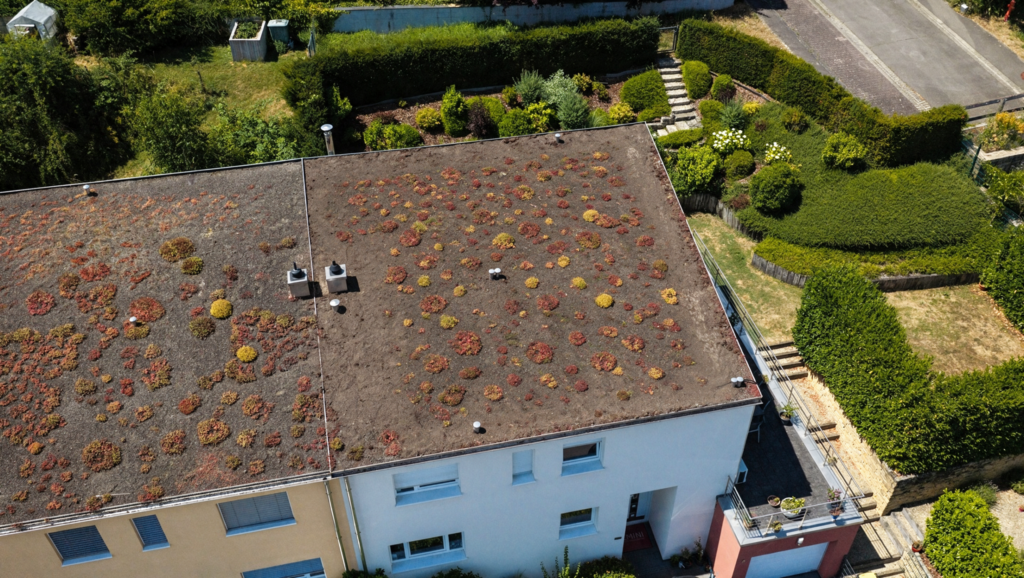
BeforeAfter↔
Move the slider to see the same Schuttrange home before and after Ecoclima’s work.
28 panelsAIKO Neostar modules
≈ 13 kWpPhotovoltaic capacity
15 kWhHuawei LUNA2000 S1 battery
Green roofCustom-designed mounting system
Real-world profitability
What actually creates value in a solar installation
A sound estimate starts with the remaining cost after applicable grants, then assesses annual generation and the value of each kilowatt-hour. Solar electricity used immediately replaces electricity that would otherwise be bought from the grid. Surplus electricity can be exported and sold at the rate offered by your supplier, which may change with the market.
This distinction matters. In 2026, profitability generally depends more on well-managed self-consumption than on export revenue alone. Analysing when a household uses electricity is therefore more useful than adding panels without considering the building’s actual demand.
01
The roof’s real potential
Orientation, pitch, shade, chimneys, vegetation and the layout of each roof section all affect generation. A site-specific simulation is more reliable than applying a national average without adjustment.
02
The consumption profile
A household occupied during the day, a heat pump, an EV charger or a controlled water heater can use more solar electricity directly. When electricity is consumed matters just as much as the total annual volume.
03
Net cost and stated assumptions
The calculation should clearly separate the price including VAT, estimated state support, any municipal grants and the final amount payable. It should also state the electricity price and surplus export rate used in the projection.
04
Long-term technical quality
The choice of panels, inverter, electrical protection and mounting system influences reliability. A profitability figure that ignores warranties, monitoring and possible future equipment replacement is incomplete.
Klimabonus and pre-financing
The key 2026 information, without getting lost in formulas
The Klimabonus 2026 scheme supports photovoltaic systems operated for self-consumption. The amount is calculated according to installed capacity, while separate support may apply to a battery. The upper limit is not a sizing target: choosing 15 kWp solely to reach the maximum grant can weaken the economics if household demand does not justify it.
Up to €10,000Photovoltaic system
The maximum grant is reached from 15 kWp. Below that level, the amount follows the official capacity-based formula.
Up to €2,250Home battery
The upper limit is reached from 9 kWh of usable capacity. Subject to the applicable conditions, the minimum eligible capacity is 2 kWh.
3% VATPrivate homes
The supply and installation of solar panels on a private home are directly subject to Luxembourg’s super-reduced VAT rate.
What pre-financing changes
For an eligible project, an installer listed in the official register deducts the grant from the final invoice. The customer therefore does not have to advance the full subsidy and wait for reimbursement. Deposits paid before the final invoice may not total more than 30% of the price including VAT.
What still needs to be checked
Among other conditions, the project must be operated for self-consumption and have a capacity of at least 2 kWp. Surplus electricity may be sold at market price, but the beneficiary gives up the guaranteed feed-in tariff. Municipalities and certain programmes may provide additional aid, so availability should be checked for the property’s address. From 1 October 2026, an eligible home energy management system connecting at least two devices may also qualify for a flat-rate grant of €500.
2026 update: photovoltaic pre-financing is already available through its dedicated scheme. From 1 January 2027, it will be incorporated into the Klimabonus 2026 framework. For homeowners, the immediate priority remains the same: confirm eligibility before placing an order and work with an installer approved for the procedure. Ecoclima appears in the official register.
Correct system sizing
Panels, self-consumption and battery: decide in the right order
The most profitable system is not necessarily the one that appears to cover all annual consumption on paper. A home also uses electricity at night and usually needs more energy in winter, when solar output is lower. The aim is to compare the generation curve with the household’s usage curve, then decide what should be used immediately, shifted to another time, stored or exported.
1. Size the solar array
Start with recent bills, daytime habits and planned equipment such as an electric car, heat pump, air conditioning or a home extension. The objective is to cover a meaningful share of demand without producing a disproportionate surplus.
2. Shift flexible demand
Scheduling the water heater, EV charging or selected appliances during solar hours can raise self-consumption without major extra investment. A home energy management system can coordinate several devices and make more precise use of the available generation.
3. Assess the battery
A battery can make sense when daytime surplus is regular and evening consumption is high enough to discharge it frequently. It is not automatically profitable. Oversized storage ties up capital and may remain underused, while too little capacity may not deliver the intended benefit.
4. Plan for the surplus
Electricity not used on site can be exported to the grid, shared under certain arrangements or sold under the chosen contract. Because offers and purchase rates vary, use a documented assumption and compare the available terms regularly.
Remember this about batteries: storage can improve energy autonomy, but autonomy and profitability are not the same thing. If backup power is required during an outage, that function must also be designed into the inverter and electrical architecture; a battery alone does not automatically keep the home running off-grid.
Decide with reliable data
How can you recognise a serious solar quotation?
Comparing only the total price often leads to the wrong decision. Two quotations for the same capacity may differ in their mounting method, shade management, electrical protection, warranties, included administrative work and quality of aftercare. The proposal should make clear what will be installed and which assumptions support the projected profitability.
Total capacity, number of panels and exact equipment references.
Estimated annual generation, including the roof’s constraints.
Assumptions for self-consumption and the value of surplus energy.
Price including VAT, estimated grants and final balance clearly separated.
Mounting system, protection, grid connection and administrative steps included.
Product and performance warranties, plus support after commissioning.
01
Technical assessment
Roof, shade, access, electrical panel and grid-connection constraints.
02
Energy assessment
Current consumption, daytime use and equipment planned for the coming years.
03
A clear proposal
Equipment, estimated generation, applicable grants, useful options and profitability assumptions.
04
Installation and follow-up
Site coordination, commissioning, agreed formalities and access to generation data.
Get an estimate tailored to your home
An Ecoclima assessment brings together your roof, consumption and 2026 grants to recommend a coherent system size—with or without a battery—and a final amount you can understand.
How long does it take for solar panels to pay for themselves in Luxembourg?
A simple range of around 7 to 12 years after grants can be used as an initial guide for a well-sized residential project. The actual result depends on the net cost, the roof’s generation, self-consumption, the electricity contract and any battery. A project-specific assessment remains essential.
What is the maximum solar grant available in 2026?
The 2026 scheme provides up to €10,000 for the photovoltaic installation, reached from 15 kWp, and up to €2,250 for a battery, reached from 9 kWh of usable capacity. Amounts follow the official formulas and remain subject to eligibility conditions.
Does a battery always improve profitability?
No. It can increase self-consumption when the home produces a daytime surplus and uses enough electricity in the evening. If the battery is oversized or rarely used, its cost may instead lengthen the payback period. Storage should be assessed using the home’s measured or estimated energy flows.
What happens to solar electricity that is not used?
Surplus electricity can be exported to the grid and sold under the supplier’s offer, and its price may vary. Under the 2026 self-consumption scheme, the beneficiary gives up the guaranteed feed-in tariff but may sell excess electricity at market price. Electricity-sharing options may also be available, depending on the situation.
Are solar panels still worthwhile in cloudy weather?
Yes. Panels also generate electricity from diffuse light, although less than in full sunshine. Profitability should be based on estimated annual generation at the project address, including orientation and shade, rather than on one day or an overly broad average.
Why ask Ecoclima to carry out the assessment?
Ecoclima assesses the roof, consumption, electrical installation and applicable grants before recommending a configuration. The company is based in Munsbach, operates throughout Luxembourg and appears in the official register of installers approved for photovoltaic pre-financing.

 Before
After
Before
After